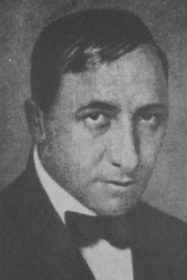
The mind and face of Bolshevism (1926)

.
You can download an illustrated full-tex
t PDF of The Mind and Face of Bolshevism by clicking on the embedded link. What follows is an introduction to it and some thoughts on an all-too-familiar claim that Marxism is merely a form of secular religion.

René Fülöp-Miller’s 1926 book, The Mind and Face of Bolshevism: An Examination of Cultural Life in the Soviet Union, offers a unique window into the profound transformations underwent during the first decade of communism in the USSR. Fülöp-Miller sets out to capture the psychology and physiognomy of the October Revolution, and largely succeeds in this task. The picture he paints of the period is unforgettable, covering a great deal of ground without boring his readers. He accomplishes this by including some of the more bizarre phenomena associated with the Bolshevik regime, its most eccentric and utopian elements. Notably, Fülöp-Miller goes over Aleksei Gastev’s Institute for Labor in Moscow, Platon Kerzhentsev’s League of Time, the militant godless movement, God-building [богостроительство], and the Commissariat of Enlightenment. But he also manages to fit in some of his own analysis, which is admittedly hit-or-miss. Upton Sinclair, whose 1927 review from New Masses follows below, is right to say that Fülöp-Miller is better at reading the surface features of Bolshevism’s “face” than he is at discerning the deeper aspects of its “mind.”

It should be stated from the outset that Fülöp-Miller was not a Bolshevik. As Bertrand Russell put it: “Fülöp-Miller is himself a socialist, but of the Western kind.” However, he was not unsympathetic to the Soviet project. Despite serious reservations about the fervor and rapidity with which the Bolsheviks were looking to implement reforms, and revolutionize everyday life, Fülöp-Miller endorsed their efforts insofar as they represented an extension of Enlightenment to the masses. Some tendentiousness can nevertheless be detected in his ham-handed dismissal of Bolshevism as a form of surrogate religion. Many have leveled this criticism, or some version of it, against Marxism as a whole. On this, a few thoughts: An overview of the major proponents of Marxism after Marx’s death in 1883 reveals that they understood themselves in terms of their “faithfulness” to the tradition first established by Marx. The various stances adopted toward this tradition were often couched in explicitly religious language: in terms like heresy, orthodoxy, schism, sectarianism, and dogmatism. Could it be that Marxism’s critics are right to say that it merely secularizes spiritual impulses?

My former mentor, Chris Cutrone, handles this charge in a characteristic manner. Rather than challenge its validity, he seeks to divest the criticism of its power by “owning it” — i.e., consciously admitting that it is in fact true. Supposedly this softens the blow, since it’s true of everyone and at least Cutrone is transparent about it. I would like to resist this gesture, as I consider it empty. He states in his otherwise brilliant critique of Badiou, “The Marxist Hypothesis”:

It is significant that they themselves sought to justify their own political thought and action in such terms — and were regarded for this by their political opponents as sectarian dogmatists, disciples of Marxism as a religion. But how did they think that they were following Marx? What are we to make of the most significant and profound political movement of the last two centuries, calling itself “Marxist,” and led by people who, in debate, never ceased to quote Marx at each other? What has been puzzled over in such disputes, and what were — and are still, potentially — the political consequences of such disagreement over the meaning of Marx?

Certainly, Marxism has been disparaged as a religion, and Marx as a prophet…Marxism cannot help today (after its failure) but become something like a religion, involving exegesis of “sacred texts,” etc.

Of course, this runs directly counter to some of the statements in the “sacred texts” Cutrone seeks to excavate. For example, Lukács in his article on “Orthodox Marxism”: “Orthodox Marxism…does not imply the uncritical acceptance of the results of Marx’s investigations. It is not the ‘belief’ in this or that thesis, nor the exegesis of a ‘sacred’ book.” A quandary, it would seem, which cannot be done away with simply by pointing to changed historical conditions. Even avowed opponents of Marxism and psychoanalysis such as Michel Foucault will these discourses against charges of crypto-religiosity: “It goes without saying that it would be completely wrong to identify [forms of knowledge like Marxism or psychoanalysis] with religion. This is meaningless and contributes nothing.” Religious analogies only go so far, anyway. Marxists today are forced to reflect on classic texts, to be sure — if they are to educate themselves at all — because there is no living practice worthy of the name that would allow theorists today to build upon the insights of the past. Without such a practice, the best Marxists can do is look back upon works written at a time when communism as a “real movement” had not yet ground to a halt.

Beyond superficial similarities, however, this has nothing in common with patristics. This does not prevent the charge from being periodically recycled. Chris Taylor of the blog Of CLR James has had occasion to mock my “hot combo of flat-materialist anti-clericalism and religiously inflected hermeneutical/exegetical approach to Marxist-Leninist holy writ.” My only reply would be that it is quite all right to disagree with Marx, Lenin, or any other figure from the history of Marxism. In doing so, though, one should be quite clear how and why one is departing from Marx’s (or Lenin’s, or anyone else’s) conclusions. None of them were infallible figures, but as Marxists and followers of Lenin or whoever they ought to be taken seriously. Such was Walter Benjamin’s attitude toward the claim made by Fülöp-Miller in The Mind and Face of Bolshevism, as expressed in a 1927 letter written to Kracauer. He recommended the book but disagreed sharply with its portrayal of Bolshevism as a form of religious sectarianism. Oskar Negt and Alexander Kluge also rely heavily on the book in their own work on the Public Sphere and Experience: Toward an Analysis of the Bourgeois and Proletarian Public Sphere (1972).

Upton Sinclair’s review appears below. His points about Bolshevism being a positive outcome of Western civilization and about collective freedom being the key to unlock individual freedom are as relevant today as ever. Enjoy.

Cover of New Masses, November 1927

Review of The Mind and Face of Bolshevism, by René Fülöp-Miller

Upton Sinclair
The New Masses
November 1927
.

There comes in my mail a large and costly volume from England, The Mind and Face of Bolshevism, by René Fülöp-Miller. Inside I find a card, informing me that the book is sent with the author’s compliments, and giving me his address in Vienna — which I understand to mean that he wishes me to tell him what I think of his book. So I send him what as children we used to call “my private opinion publicly expressed.”

Mr. Fülöp-Miller has visited Soviet Russia for a long time, and collected a mass of information, and presented it accurately, with many illustrations, and not too much prejudice; so he gives us the face of Bolshevism very acceptably. But when he comes to interpret the mind of Bolshevism, his class prejudices inevitably get in the way, and he misses the point completely.

I, who have never been to Soviet Russia, but who have managed to free myself from class prejudices, venture to tell Mr. Fülöp-Miller a few things about the mind of Bolshevism, as follows:

  1. Bolshevism is neither incompatible with nor destructive of Western civilization. It is a product and evolution of Western civilization.
  2. Bolshevism’s setting up and glorifying of the masses is not a denial and destruction of individuality, but an effort to make individuality possible to those persons who have hitherto been denied it. Mr. Fülöp-Miller’s class prejudice is manifested in the fact that the beginnings of individuality in a hundred million peasants and workers mean so little to him, in comparison with the limitations of individuality in the case of a million or so aristocrats and intellectuals. Under Russian Tsarism all individuality was denied to the workers and peasants; and the gentlemen who wrote large and costly books were as a rule quite untroubled by this fact. The same condition prevails now to a great extent in Austria, where Mr. Fülöp-Miller’s book was written, and in England where it is published, and in America, where I am reviewing it; and for the most part the intellectual class remains quite untroubled.
  3. If the masses are to have individuality, they must first gain political and economic power; and to get that, and hold it, they must have solidarity and discipline. That means temporarily a certain amount of surrender of individuality — as when men enlist in an army to fight for a cause. In the late unhappy disagreement among the capitalist masters of the world, some twenty or thirty million men were forced to enter armies and risk agony and death; but this loss of individuality did not as a rule trouble the gentlemen who wrote large and costly books, whether in Russia, Austria, England, or America.
  4. It is quite true that Bolshevism represses its internal enemies. Mr. Fülöp-Miller tells us at some length how it does this, and he is much distressed thereby. But reading his book I found myself desiring to ask him this one simple question: what does he think would happen to Bolshevism if it let its internal enemies alone? What would happen to any state which suddenly declared complete freedom of conspiracy and assassination? Will Mr. Fülöp-Miller tell us in another volume what did happen to Bolshevism in Hungary, where it failed to be stern enough? Will he write a book telling us about the White Terror in Finland, and Poland, and Romania, and Hungary — yes, and Austria, and England, and Boston? Will he give us the best estimate he can make as to the number of lives taken by the “reds” in Finland, and then by the “whites” when they came back into power?
  5. In short, what I want Mr. Fülöp-Miller to do is to write me another volume, equally large and costly, entitled, The Mind and Face of Fascism. Now that I have been told about the “G.P.U.” in Russia, I surely ought to be told about Mannerheim and Petlura, and Denekin and Kolchak and Judenich and Horthy; yes, and about the Hakenkreutzler and their murders in Austria, and about the New Fascist organizations in England, and about the American Legion, and the Centralia massacre, and the “deportations of delirium” and the Sacco-Vanzetti case — If my Austrian confrere will prepare such a book, he won’t have to send it to me free — I will agree to pay the full retail price, and tell him of some other persons who will do the same. But I fear that, in spite of such inducements, the book will never be published by the patriotic Major Putnam!

Continue reading

Under artificial skies: Planetaria and modernism

Mikhail-Osipovich-Barshch-Planetario-de-Moscú

A couple years ago or so, I posted a number of photos of the Moscow planetarium designed by Mikhail Siniavskii and Mikhail Barshch. The planetarium was built in 1929, and still stands today — albeit in an awful state of disrepair. I included the wonderful fragment “To the Planetarium” by Walter Benjamin, from his 1928 work One-Way Street. You can read more about the planetarium and its preservation here.

Recently I’ve found a bunch of new images to post, however, from the same cache as the Dom Narkomfin photos I posted the other day. So I thought I’d put them up for everyone to see, along with another fragment by the theorist of modernity Hans Blumenberg. Not too familiar with Blumenberg’s work, admittedly, but from what I can tell he’s less hostile to Weber than his rejection of the “secularization thesis” (what Weber called “the disenchantment of the world”) would suggest. Anyway, this bit from The Genesis of the Copernican World is quite nice. Enjoy.

The ambiguous meaning of the heavens

Hans Blumenberg
The genesis of the
Copernican world
West Berlin, 1975

.

The planetarium is the mausoleum of the starry heavens as the ideal of pure intuition. As a technical phenomenon it is deeply rooted in the nineteenth century’s longings for a popular knowledge of the starry heavens, longings that expressed themselves in “people’s astronomers” and “people’s observatories.” They retrieved the reserved property of science as a relic for a “natural” mass religion of the solved “riddles of the universe” and of ersatz emotions. To that extent the planetarium too is an end, an end of what Ernst Haeckel wrote in his Welträtsel [Riddles of the Universe] (a book that was distributed in many hundreds of thousands of copies): “The astonishment with which we gaze upon the starry heavens and the microscopic life in a drop of water, the awe with which we trace the marvelous working of energy in the motion of matter, the reverence with which we grasp the universal dominance of the law of substance throughout the universe-all these are part of our emotional life, falling under the heading of ‘natural religion.'” Modern man, Haeckel went on, does not need the narrow enclosed space of a special church in order to live in this religion; he finds his church “through the length and breadth of free nature, wherever he turns his gaze, to the whole universe or to any single part of it…” It is harsh, but indispensable in order to display the arc of this theme’s development, to quote immediately after the enthusiasms of this certainly important zoologist and theoretician of “family trees,” from 1899, what Hitler said on the subject in conversation during the noon meal in his headquarters on 5 June 1942: He had “directed that every town of any importance shall have an observatory, for astronomy has been shown by experience to be one of the best means at man’s disposal for expanding his view of the world and thus saving him from any tendency towards mental aberration.”

Under the artificial skies of the planetariums, the upright carriage of the observer of the heavens can be practiced sitting down, with the gentlest constraint to adopting the attitude of the onlooker in repose. Here, if anywhere, one should inevitably expect the demonization of the technical surrogate for the most sublime object — of the projected heavens as the false heavens. If one disregards the context of the [particular] concept of reality, into which this simulation fits as one of its logically most consistent elements, it is easy to make sarcastic fun of the false starlight and the false salvations that are sought under it. Nevertheless, this marvel has seldom been so little marveled at as in the work of Joseph Roth, who had his “first encounter with Antichrist” under this technical backdrop.

Roth writes a book of unmaskings. He follows the old pattern of the Platonic discovery that the realities with which we deal are only shadows and imitations; but he goes a step further beyond this schema when he establishes that everything that is even capable of being imitated is thereby lowered in its rank in reality. It is an attempt to oppose even the concept of reality that allows imitations to be real [wirklich] because they are efficacious [wirksam], without prejudice to what they may be derived from. Not only the shadows of the Platonic cave are convicted of their existential weakness, but the Ideas themselves are too, because it is still possible for those shadows to be their final derivative and the extreme indicator of their origin. What we have before us is a mirror-image reversal of Platonism: If in it the null grade of reality, in the shadows, was only possible because as images they were subordinate to the essentially imageable Ideas, now the unreality of the projections is only possible because their “originals” already suffer from unreality, so that “the reality that they imitate so deceivingly was not at all difficult to imitate, because it is not real.” This description of the cinema could in its turn be an imitation of the classic of this sort of cultural criticism, Max Picard’s Das Menschengesicht [The Human Face] of 1929: “Indeed, the real human beings, the living ones, had already become so shadowlike that the shadows on the screen had to seem real.” The unreality of reality is responsible for the artificial reality of unreality.

What Joseph Roth calls “the Antichrist” is the sum of the false realities. The boy encountered them for the first time at the beginning of his paideia [ education], in his Platonic cave: Not only the shadows but the cave itself was, so as to make the shadows possible, an artifact.

In those days a great wagon came along, drawn by invisible powers, and remained standing on an open space before the city. To begin with it sent a great machine forward, which was covered with a little tent made of linen, and on this a great tent, also made of linen, was spread out and set up like a dome, and if one went inside, the inside of the dome was a blue sky with many gold and silver stars…The dome was blue, and the stars were just as inaccessible and just as close as real stars are. For since a human being is not even tall enough to reach the roof of a circus tent erected by others of his kind, it did not matter to the person who sat beneath the dome whether it was the genuine sky or a copy of it. He could grasp neither the one nor the other with his hands. Consequently he was glad to believe that the one was the other, or vice versa. And since it became quite dark beneath and inside this dome made of tent linen, he was convinced that he sat in the midst of a clear, starry summer night…

Of course, under false heavens one can encounter false salvations. But they come from false expectations of an “authentic” and ultimate reality, of the genuine substance of nature that, because it is genuine, is at the same time not ready to hand. The demand for an authentic reality presupposes that one could tell by looking at the real that it is not the unreal-as long as one does not have to deal exclusively with the latter. But the production of this exclusiveness is what the Platonic cave and its technical successors imply.

The modern age added to this premise a further one. In Descartes’s consideration of doubt, the possibility is accepted that all the characteristics of the real could be imitated without the production of these characteristics having to generate, at the same time, the objective equivalent of reality. Leibniz was the first to urge, against Descartes, that the complete simulation of reality would in the end no longer be deception, because a deception requires both the implication of an assertion of what does not exist and that the person affected could suffer from being disillusioned, neither of which is the case here. The Baroque idea that life could be a dream has no terrors for Leibniz because expectation is determined by a new concept of reality in which the internal consistency of everything that is given is identical with all the ‘reliability’ of reality that is still possible.

There is something questionable and productive of misgivings in the demand for ultimate authenticity in all experiences, for an unmediated relation to the original, in a world that is characterized by overcrowding and can no longer keep open all paths to everything. This is no longer and not only a matter of the sincerity of one’s desire, not least of all because simulation surpasses artificially unaided [naturwüchsig] intuition. The starry heavens of intuition in the life-world are motionless for their viewer; if one also assumes that the everyday opportunity to view the heavens occurs at about the same time of day, there remain only the gradual seasonal displacement of the constellations, the Moon’s changes of phase, and the (even more difficult to perceive) motion of the planets. It is just not true that the natural heavens rotate soundlessly around the viewer; only the herdsmen of Chaldea were credited with having this experience without having any professional interest in having it. In contrast to this, the planetarium is a short of temporal telescope, which puts the static heavens in motion and by means of technical projection makes visible things that were never seen, that were really only disclosed by comparison of observations. Here it is a question not of duplicating experience that, with some effort, would also be possible ‘in the original’ for anyone at any time, but rather of augmenting what can be seen at all.

Moisei Ginzburg’s constructivist masterpiece: Narkomfin during the 1930s

.
Recently I happened across a cache of extremely rare photos of Moisei Ginzburg’s constructivist masterpiece, Dom Narkomfin, in Moscow. They are reproduced here along with a brief popular exposition of the building’s history and current status by Athlyn Cathcart-Keays, which I thought quite good (despite an overly personalized narrative). Most of the photos were taken by three different individuals:

  1. Charles Dedoyard, a Frenchman and contributor to the avant-garde journal L’Architecture d’aujourd’hui;
  2. Vladimir Gruntal, a noted constructivist photographer and member of Rodchenko’s October Association; and
  3. Robert Byron, a British travel writer and Byzantine historian known for his deep appreciation of architecture.

It’s difficult for me to say whose photographs of Narkomfin I like best, as each capture very different “moods” of the building. Byron’s are dark, brooding, and ominous, while those of Gruntal and Dedoyard are comparatively sunny, vivacious, and light. Someone who knows more about photography, especially architectural photography, might say more about them. Ginzburg’s revolutionary communal housing structure is as photogenic as ever, though the real complexity of the building tends to get lost in single snapshots (whether taken indoors or from the outside). Hopefully I’ll be writing a longer article on Narkomfin soon. Please contact me if you’d like to publish it.

Lately, apart from work, I’ve been wasting far too much time antagonizing tankies on Twitter — defending friends and Slavoj Žižek along the way — instead of spending it on more productive ventures. They’re young, and I’m bored, but it’s not like my trolling and ceaseless mockery will persuade them of anything. So I apologize to anyone I’ve offended these past several weeks. From now on, I’ll try to redirect my energies to more fruitful ends. Besides a few pieces I’ve already written and have stowed on the backburners, I think I’m going to finally finish that book for Zer0. Enjoy these for now.

Charles Dedoyard
Dedoyard, C. Exterior view of the People's Commissariat for Finance (Narkomfin) Apartment Building, 25 Novinskii Boulevard, Moscow September 1932 Dedoyard, C.  Exterior view of the Narkomfin (People's Commissariat for Finance) Apartment Building, 25 Novinskii Boulevard, Moscow, September 1932b Dedoyard, C.  Exterior view of the Narkomfin (People's Commissariat for Finance) Apartment Building, 25 Novinskii Boulevard, Moscow, September 1932a Dedoyard, C.  Exterior view of the Narkomfin (People's Commissariat for Finance) Apartment Building, 25 Novinskii Boulevard, Moscow, September 1932 Dedoyard, C.  Exterior view of the People's Commissariat for Finance (Narkomfin) Apartment Building, 25 Novinskii Boulevard, Moscow, September 1932

Vladimir Gruntal

Robert Byron

Unknown

Unknown  Interior views of the House-commune of transitional type communal centre, some showing Solomon Lisagor, Rostokino, Moscow, 1928-1930 [www.imagesplitter.net]-1-1 Unknown  Interior views of the House-commune of transitional type communal centre, some showing Solomon Lisagor, Rostokino, Moscow, 1928-1930 [www.imagesplitter.net]-1-0 Unknown  Interior views of the House-commune of transitional type communal centre, some showing Solomon Lisagor, Rostokino, Moscow, 1928-1930 [www.imagesplitter.net]-0-1 Unknown  Interior views of the House-commune of transitional type communal centre, some showing Solomon Lisagor, Rostokino, Moscow, 1928-1930 [www.imagesplitter.net]-0-0

Moisei Ginzburg’s Narkomfin building in Moscow: A Soviet blueprint for collective living

Athlyn Cathcart
The Guardian
May 5, 2015

.
In the shadow of one of Stalin’s Seven Sisters skyscrapers in Moscow’s Presnenskii District, an unkempt park gives way to a trio of yellowing buildings in varying states of decay. The crumbling concrete and overgrown wall-garden don’t give much away, but this is the product of the utopian dreams of a young Soviet state — a six-storey blueprint for communal living, known as the Narkomfin building.

Designed by architects Moisei Ginzburg and Ignatii Milinis in 1928, the building represents an important chapter in Moscow’s development — as both a physical city and an ideological state. Built to house the employees of the Narodnyo Kommissariat Finansov (Commissariat of Finance), Narkomfin was a laboratory for social and architectural experimentation to transform the byt (everyday life) of the ideal socialist citizen. Continue reading

Cognord: The Syriza trilogy

.
COGNORD
is unfortunate enough to have been born in Greece, and fortunate enough to have participated in the social movements which attempted to put a halt to the capitalist devaluation of that country. Shortly after the farewell party of the movement (the magnificent general strike and intense riots of February 12th, 2012) he left Greece and settled in a cold place. Occasionally, he writes articles about his native land. He is also a member of the Communists in Situ collective, whose blog everyone should check out.

In my opinion, Cognord’s articles provide far and away the best Marxist analysis of Syriza and Greece.

i3xjVsu copy

Is it possible to win the war after losing all the battles?

Cognord
Brooklyn Rail
February 2015

.
Prehistory of a success

.
The announcement of national elections in Greece, roughly two years before the coalition government of New Democracy and Pasok completed their term, immediately sparked a renewed interest in this southern and economically peripheral European country. The relative silence that preceded this novel attention for the last two years was, at least in media terms, understandable. If Greece enjoyed an earlier moment of fame, it was primarily due to the unprecedented austerity measures imposed by the troika — the European Commission, European Central Bank (ECB), and International Monetary Fund (IMF) — in exchange for new loans, designed to “assist” the Greek state after it officially announced, in April 2010, that it was unable to repay its existing, “non-viable” sovereign debt (120 percent of GDP at the time). The reactions to the implementation of the austerity program were also pivotal in bringing Greece into the spotlight: general strikes, violent demonstrations, and the movement of the squares ensured, between 2010 and 2012, that the future of Greece’s “fiscal consolidation program” (to borrow the official economic jargon) was seriously threatened. Along with the memorandum imposed by the troika, what came under attack was the legitimacy of the political system,1 generating wild speculation about the future of Greece’s membership in the Eurozone, as well as the unpredictable consequences this could have for the EU, not to mention the global economy.

However, the movement which tried to halt the austerity program failed. The reasons are varied, and it is not within the scope of this article to explain them in detail. Suffice it to say that, as in every other social movement, this failure should be traced to both the violent determination of the government(s) to proceed with austerity at all costs (for which the ruling factions have paid a price) and the inability of the movement to transform itself from a defensive mobilization to protect existing conditions into an offensive attack on the conditions that created the crisis.

Nonetheless, the attention that Greece received was justifiable. Without exaggeration, one could argue that many of the political strategies of resistance which the international left has only read about in books were tried and tested in Greece in the years after the crisis: general strikes with massive participation, bringing economic activities to a halt; militant and violent demonstrations with constantly growing numbers of participation; neighborhood assemblies that sought to act as minuscule formations of self-organization, attempting to deal with immediate issues caused by the crisis; one of the most militant squares movements, which managed to call for two successful general strikes; a climate of continuous antagonism that gradually but steadily involved more and more people.

It is, however, no exaggeration to say that none of these inspiring moments managed to counteract the effects of the crisis and its management by the state. However exhilarating, promising, and tense these outbreaks were for those of us who participated in them, it has become imperative to understand their failure to achieve even a small (however reformist) victory.

In official terms, the crisis has only become worse in the last years. Overall unemployment has risen to 27 percent (from 12.5 percent in 2010), primarily hitting young people (60.6 percent for those aged 17-25); wage cuts across the public sector are between 30 and 40 percent, while in the private sector the number is only slightly lower (25 percent on average).2 Small businesses (the backbone of the Greek economy, constituting around 95 percent of all business activity) have been devastated by the crisis and the austerity measures (more than 250,000 have been closed), while cuts in the Health and Education budgets amount to more than 25 percent. Total GDP losses amount to 24 percent, while despite these cuts (or, as some would say, as a result of them), state debt in Greece has dramatically risen from 120 percent in 2010 to 176 percent of GDP today.

Continue reading

The death of Marat and the death of art

.
Jean-Paul Marat, the famous French revolutionary and member of the Club des Cordeliers, was assassinated by the Girondin sympathizer Charlotte Corday two hundred twenty-two years ago today. David’s rendering of Marat lying dead and bloodied in his bathtub, Corday’s concocted note still held in his left hand, is perhaps the most iconic political image of all time. On numerous occasions it has been parodied, satirized, and otherwise détourned (most notably in 1860, under Louis Bonaparte’s reactionary Second Empire, by the “patriotic” painter Paul Jacques Aimé Baudry).

An account of Marat’s death and subsequent canonization as a martyr of the Revolution appears below, taken from Arno Mayer’s The Furies (2000). This is then followed by several hilarious, more recent parodies of David’s painting. I’ve already stated on numerous occasions that art is, for all intents and purposes, dead. So it should come as no surprise that The Death of Marat itself would itself fall victim to the death of art. Enjoy.

jacques-louis david, mort de marat (1793)the-death-of-marat-1793-oil-on-canvas-joseph-roques

The death of Marat
.

Had it not been for the rising storm [of Terror], the assassination of Marat, on July 13, 1793, the eve of the fourth anniversary of the fall of the Bastille, most likely would have been an isolated and harmless bolt of political lightning. But with the turbulent weather, Marie-Anne-Charlotte de Corday d’Armont’s fatal deed touched off a political firestorm. In death even more than in life, Marat lent himself to being at once apotheosized and demonized — as the incarnation of good or evil, light or darkness, virtue or vice, purity or impurity.

Disenchanted with the Revolution, Charlotte Corday claimed that by killing Marat she meant to “avenge untold innocent victims” as well as “save thousands of lives…and prevent many other disasters.” When the judges, before sentencing her to death, asked whether she “thought she had slain all the Marats,” she replied that with “this one dead, all the others will be put in fear.”

Almost instantly Corday was both excoriated and extolled as the arch-avenger. One of the revolutionary papers reported that on hearing of Marat’s assassination, several women exclaimed that death by guillotine would be “too mild for such a heinous crime” and vowed to “cut up and devour the scoundrel who had deprived the people of their best friend.” After noting in Père Duchesne that to curse Corday was to “fire the people’s vengeance,” Hébert likewise insisted that to “fit the crime” the punishment would have to be “more terrible and degrading than death by guillotine.” As for Charlotte Corday, on being turned over to the Abbaye prison, she apparently feared “that the people would tear her limb from limb.” She did not breathe easier until she thought she stood fair to be “beheaded by the guillotine, which would be a gentle death.”

Charlotte_Corday Carlota_Corday_1889_by_Arturo_Michelena

There was, indeed, considerable apprehension that an overwrought crowd would once again invest the Abbaye prison, this time to touch off an uncontrollable massacre with the vindictive slaying of Marat’s assassin. At the Convention several deputies, worried that a popular “clamor for vengeance” would set off “a terrible explosion,” urged citizens to remain both calm and vigilant at the same time that they reassured them that they “would be avenged.” Likewise François Hanriot, the hardline commander of the capital’s national guard, simultaneously approved the cry for vengeance and stressed that “the best way to keep in check the aristocracy was to trust and support our courts of law.” Presently even the firebrand Hébert sought to calm the atmosphere, insisting that “the day of vengeance was not yet at hand” partly because Paris still needed to persuade the provinces that the capital was not “a city of cannibals.”

In the meantime, at the main Jacobin club there was a move to enshrine Marat, the martyr of liberty, in the Pantheon. But Robespierre objected, contending that by giving people a false sense of “redress,” such a spectacular homage would assuage their “thirst for vengeance.” On July 15 a delegation of the Society of the Men of August 10 came to the Convention to “demand that Marat be avenged” rather than given “the honors of the Pantheon,” not least because he was, in any case, assured of a “permanent Pantheon in everyone’s heart.”

By this time several bards of the Revolution were entrusted with planning a solemn funeral rite for Marat. It stands to reason that the iconoclastic intelligentsia, including the unbound artists of the new order, should have turned to celebrating and commemorating the Revolution’s major events and heroic leaders or martyrs. In this way they hoped to challenge and replace the resplendent public ceremonials of the ancien régime. Jacques-Louis David is emblematic of these self-conscious activist illuminati who came forward to assist in laying the foundations for a future full of promise. An early partisan of reform, he was radicalized by the force of circumstance. With time he became a fervent champion of the nascent republic and Jacobin patriotism. David was elected one of the capital’s deputies in the National Convention and eventually served on its Committee of General Security. He had a sympathetic understanding for Robespierre and Marat, with whom he consorted off and on.

David_Self_Portrait2013 04 27 Le serment du Jeu de Paume, le 20 juin 1789 - Jacques-Louis David - Carnavalet 2

David emerged, of course, as not only the peerless painter-artist of the Revolution but also its master metteur en scène. Characteristically he idealized and ideologized one of the Revolution’s grand founding events in The Oath of the Tennis Court, his first and arguably one of his most compelling historical paintings, started in mid-1790. No less exemplary, David was the guiding spirit of the ceremonial transfer of Voltaire’s ashes to the Pantheon in June 1791. This sober and grandiose funeral procession, partly mimetic of yesterday’s religious prototype and featuring Greco-Roman imagery, was staged to symbolize and herald “the victory of reason over superstition, philosophy over theology, justice over tyranny, tolerance over fanaticism.” David was responsible for the overall “organization” and “decoration” of this and several later public rites, while François Gossec and Marie-Joseph Chénier provided, respectively, the music and lyrics.

David does not seem to have had a hand in conceiving and staging the cavalry of Louis XVI — procession, execution, burial — on January 21, 1793, which was designed to consummate the king’s profanation as a symbol of monarchy while diligently precluding his living on as a martyr. Indeed, David’s calling and vision was to construct, represent, and memorialize heroes, not anti-heroes; martyrs, not demons. Nowhere was his revolutionary commitment more intensely tested and expressed than in his orchestration of the funeral of Jean-Paul Marat and his martyr painting of this uncommon revolutionary. A few months earlier David had experimented with new techniques of funeral pageantry and iconography in rendering honor to Michel Lepeletier de Saint-Fargeau. As deputy from Yonne, this aristocrat had voted the death penalty for Louis XVI. In revenge for this apostasy, Lepeletier was mortally stabbed by a former royal bodyguard. David arranged for his semi-nude corpse, with its fatal wound unhidden, to lie in state on the Place Vendôme preceding a memorial service on the floor of the Convention. Shortly thereafter David captured the atmosphere and message of the ceremony in his painted exaltation of Lepeletier. In every respect, Lepeletier’s apotheosis prefigured Marat’s. Continue reading

Gosprom: The State Industry building in Kharkov, 1925-1928

Robert Byron, Gosprom in Kharkov (1929)a Robert Byron, Gosprom in Kharkov (1929)b Robert Byron, Gosprom in Kharkov (1929)c Robert Byron, Gosprom in Kharkov (1929)d

.
The most breathtaking of all constructivist projects has to be the Gosprom complex (or “Palace of Industry”) in the Ukrainian city of Kharkov. There can’t have been anything else of this scale and ambition anywhere else in Europe at the time: indeed, it resembles more some particularly ambitious work of the late 1960s than the mid-twenties, an unacknowledged prototype of that sixties motif, the elevated walkway, the street in the sky. Constructed between 1926 and 1928, apparently by volunteers from the local Komsomol, this is Metropolis — or Aelita — actualized. Concrete and glass blocks from 7 to 13 storeys connected by skyways, curving round a huge public square, this resembles a small city in its own right. Its designers, Serafimov, Kravets, and Felger, appear to have been as obscure at the time as they have been since, yet only an El Lissitsky, a Gropius, or a Corbusier were designing anything as ambitious in 1926. Eisenstein and Vertov both used it on film (The General Line and Three Songs of Lenin, respectively), aptly, as the contrasts, angles and multiple levels had spatial affinities to their montage techniques: more literally, Friedrich Ermler used it in Fragment of Empire, a communist Rip van Winkle tale, as exemplar of the incomprehensible new world that the sleeper awakes to.

(From Owen Hatherley’s Militant Modernism)

Continue reading

Against accelerationism, for Marxism

.
In­tro­duct­ory note

I re­pro­duce here a short post by my friend Re­id Kane cri­tiquing the fun­da­ment­al premises of “left ac­cel­er­a­tion­ism.” For those un­fa­mil­i­ar with this the­or­et­ic­al form­a­tion, I ad­vise they check out #Ac­cel­er­ate: An Ac­cel­er­a­tion­ist Read­er, which presents its self-se­lec­ted ante­cedents as well as some ori­gin­al ma­ter­i­als writ­ten by pro­ponents of the move­ment. Ben­jamin Noys’ book Ma­lign Ve­lo­cit­ies, which is brief but quite good, is also worth look­ing in­to for any­one seek­ing a more crit­ic­al per­spect­ive. McK­en­zie Wark, Ant­o­nio Negri, and nu­mer­ous oth­ers have writ­ten re­sponses as well. A few months back I sum­mar­ized a de­bate between Peter Wolfend­ale and An­thony Paul Smith and ad­ded some of my own thoughts on “The Fu­ture of En­light­en­ment.” Then later I wrote a bit de­fend­ing the Pro­methean as­pect of Marx’s thought, “Against In­ad­vert­ent Cli­mate Change.”

My only oth­er re­mark re­gard­ing Re­id’s piece is that it is use­fully sup­ple­men­ted by an­oth­er short doc­u­ment, this time by Karl Marx. His “Speech on the Tenth An­niversary of the People’s Pa­per is avail­able at the Marx­ists in­ter­net archive, and is to my mind the most con­cise sum­mary of Marx’s con­tri­bu­tion to polit­ic­al thought out­side of the Mani­festo. In it, he un­leashes a series of com­pact dia­lect­ic­al in­ver­sions that cap­ture the am­bi­val­ence of cap­it­al­ist de­vel­op­ment that Re­id is driv­ing at. An ad­um­brated ver­sion of its main points ap­pears be­low:

The so-called re­volu­tions of 1848 were but poor in­cid­ents — small frac­tures and fis­sures in the dry crust of European so­ci­ety. However, they de­nounced the abyss. Be­neath the ap­par­ently sol­id sur­face, they be­trayed oceans of li­quid mat­ter, only need­ing ex­pan­sion to rend in­to frag­ments con­tin­ents of hard rock. Nois­ily and con­fusedly they pro­claimed the eman­cip­a­tion of the pro­let­ari­an, i.e. the secret of the nine­teenth cen­tury, and of the re­volu­tion of that cen­tury.

That so­cial re­volu­tion, it is true, was no nov­elty in­ven­ted in 1848. Steam, elec­tri­city, and the self-act­ing mule were re­volu­tion­ists of a rather more dan­ger­ous char­ac­ter than even cit­izens Barbés, Raspail, and Blan­qui…On the one hand, there have star­ted in­to life in­dus­tri­al and sci­entif­ic forces, which no epoch of the former hu­man his­tory had ever sus­pec­ted. On the oth­er hand, there ex­ist symp­toms of de­cay, far sur­pass­ing the hor­rors re­cor­ded of the lat­ter times of the Ro­man Em­pire. In our days, everything seems preg­nant with its con­trary: Ma­chinery, gif­ted with the won­der­ful power of short­en­ing and fructi­fy­ing hu­man labor, we be­hold starving and over­work­ing it; the new­fangled sources of wealth, by some strange weird spell, are turned in­to sources of want; The vic­tor­ies of art seem bought by the loss of char­ac­ter.

At the same pace that man­kind mas­ters nature, man seems to be­come en­slaved to oth­er men or to his own in­famy. Even the pure light of sci­ence seems un­able to shine but on the dark back­ground of ig­nor­ance. All our in­ven­tion and pro­gress seem to res­ult in en­dow­ing ma­ter­i­al forces with in­tel­lec­tu­al life, and in stul­ti­fy­ing hu­man life in­to a ma­ter­i­al force.

This ant­ag­on­ism between mod­ern in­dustry and sci­ence on the one hand, mod­ern misery and dis­sol­u­tion on the oth­er hand; this ant­ag­on­ism between the pro­duct­ive powers and the so­cial re­la­tions of our epoch is a fact, palp­able, over­whelm­ing, and not to be con­tro­ver­ted. Some parties may wail over it; oth­ers may wish to get rid of mod­ern arts, in or­der to get rid of mod­ern con­flicts. Or they may ima­gine that so sig­nal a pro­gress in in­dustry wants to be com­pleted by as sig­nal a re­gress in polit­ics. On our part, we do not mis­take the shape of the shrewd spir­it that con­tin­ues to mark all these con­tra­dic­tions. We know that to work well the new­fangled forces of so­ci­ety, they only want to be mastered by new­fangled men — and such are the work­ing men. They are as much the in­ven­tion of mod­ern time as ma­chinery it­self.

His­tory is the judge. Its ex­e­cu­tion­er, the pro­let­ari­an.

En­joy Re­id’s art­icle, along with some im­ages from pro­duc­tions of the Czech play­wright Karel Čapek’s RUR (or Ros­sum’s Uni­ver­sal Ro­bots).

Against ac­cel­er­a­tion­ism, for Marx­ism

Re­id Kane

Reb­logged from bar­bar­ie della re­flessione

.
To the ex­tent that left ac­cel­er­a­tion­ists draw upon Marx, they are re­flect­ing Marx’s re­cog­ni­tion of the pos­it­ive his­tor­ic­al role cap­it­al­ism can and must play, spe­cific­ally in its ca­pa­city to de­vel­op the forces of pro­duc­tion, in­creas­ing in­tens­ively and ex­tens­ively the pro­ductiv­ity of hu­man activ­ity.

Yet in­so­far as they re­ject the dia­lectic, they lose Marx’s cru­cial polit­ic­al in­sight. This de­vel­op­ment­al dy­nam­ic is in­tim­ately tied to the struggle of the work­ing class to in­crease value of its labor power, and thus to di­min­ish the need to work. Yet tech­no­logy is em­ployed not to eman­cip­ate the work­er from the need to work, but from the op­por­tun­ity to do so, and thus to eman­cip­ate the cap­it­al­ist from the work­er. It is em­ployed in or­der to drive down the value of labor power, pre­cisely to the point at which their labor-power be­comes cheap­er than “labor-sav­ing” al­tern­at­ives. Continue reading

Dmitrii Moor, Bolshevik cartoonist and propagandist (1883-1946)

My favorite Bolshevik propaganda artist of all time might be Dmitrii Orlov, better known as “Moor,” who was active in revolutionary struggles from 1905 through the Russian Civil War and World War II. His drawings are just so fucking hardcore. Readers of this blog will have seen some of his illustrations for the militant godless journal Bezbozhnik, as well as other assorted propaganda posters. Trotsky named him as one of the USSR’s finest young cartoonists.

In this post I’m just including some of the ones I like the most. No real rhyme or reason to it. Enjoy!

 tumblr_npzq00jK1g1ta0q7zo1_1280 IN_1134_B_l Плакаты СССР- Ты записался добровольцем? (Моор Д.) 1920 00-unknown-artist-the-golden-idol-of-the-lord-of-world-capitalism-1918-20 Плакаты СССР- Помоги. (Моор Д.) 1921 Continue reading

Tankie Twitter on 9/11 “truth”

.

was gonna abolish the state
but then i got high
i won the struggle for power
but then i got high

now i’m signin’ treaties w/ Ribbentrop against the Allies
’cause i got high ’cause i got high ’cause i got high

Jet fuel can’t melt the man of steel [Stalin], bro.

Bong-hit time. When you gonna learn to taste yr weed, JoeSta?

Enjoy.
.

FireShot Capture 33 - Ross Wolfe on Twitt_ - https___twitter.com_rosswolfe_status_610625253216284674

No tears for tankies

.
.
Amber A’Lee Frost had an article published on The Baffler yesterday, “Flakes alive! On not attending the Left Forum.” It is, among other things, a hilarious send-up of the weird, wacky, and hopelessly insular world of fringe leftist subcultures. Plus, it’s extremely well written, so I highly recommend that everyone read it.

Not everyone was pleased by Frost’s various jabs at “tankies, truthers, and tofu,” however. Unsurprisingly, her piece managed to ruffle a few feathers.  Some of the responses have been a bit more measured. Others, who were the butt of her jokes, were predictably a little less kind. But nowhere has the backlash been worse than on Stalinist Twitter: a peculiar mélange of social justice paraphernalia, Komsomol Manga, and Red Army porn. Edgy conspiracy theories — debunking the misinformation spread by the “mainstream media,” exposing government infiltrators and agents provocateurs, flagging “false flag” operations by imperialist powers — are also common in this milieu.

I know what you’re thinking. “Stalinist Twitter?” you’ll ask yourself, incredulously. “That can’t be real.”

Were that it wasn’t. Yes, it’s a real thing. And to those of you who don’t believe me, I invite you to dip your toe into the tepid kiddie-pool that is the tankie Twitterverse. For most reasonably well-adjusted people, it’s “an absolute shitshow of nerds and social rejects,” as Amber accurately put it. Reader discretion is advised, however. It’s not exactly the most enlightening experience out there, but at the very least it makes for some good entertainment. Welcome to the leper colony that is the contemporary Left.

Briefly, a word on the provenance and history of the term “tankie,” for the uninitiated. Amber’s definition — “slang for Soviet apologist, or actual Stalinist” — is serviceable, but rather imprecise. “Tankie” was an epithet coined on the British left several decades ago to denote anyone who still supported the Kremlin line after the Soviet invasion of Hungary in 1956. Khrushchev had delivered his so-called “secret speech” on Stalin’s cult of personality and its consequences earlier in the year, but the tanks rolling into Budapest signaled a quite obvious return to form.

So to be clear, the term isn’t necessarily anti-Marxist or anti-communist: it’s anti-Stalinist, and anti-Maoist insofar as Mao continued to defend and draw upon Stalin’s legacy. For Marxists like me, or indeed anyone of a more Trotskyist or left communist persuasion, the term is inoffensive. The same goes for nondenominational socialists like Amber, whose membership in the DSA is openly admitted in her article (though Frost’s critics continue to point this out as if it’s some earth-shattering revelation). Personally, I have my issues with the DSA’s mild-mannered Menshevism and tailing of Bernie Sanders. But compared to the old guard Stalinists in the CP-USA, who’ve backed the Democrats in every major national election since the seventies, DSA cadre end up looking like urban guerrillas. Don’t forget that Lenin, too, was for most of his political career a Social Democrat.

Sarcophhaguspg144

I feel it is necessary to point this out, since some self-proclaimed Stalinists have expressed consternation and confusion over the “tankie” label. One young member of the Stalinist Twitter crowd has even gone so far as to suggest that the term “increasingly [just] means ‘principled anti-imperialist’.” Maybe so, if anti-imperialism means mindlessly boosting Putin, Assad, and the late Colonel Gaddafi against local insurrections of various ideological flavors. But I’ve opposed every U.S. military intervention during my lifetime, without at the same time lending support to tin-pot dictators and their henchmen who proclaim themselves “anti-imperialists.” So what would I know about anti-imperialism?

Anyway, it’s not as if they don’t resort to petty name-calling themselves. The Twitter Stalinists seem to oscillate wildly between Third Period-style accusations of “social fascism” (whereby any socialist or communist who disagrees with them is immediately branded “no better” than fascists) and Dmitrov-era popfront calls for unity and discipline (so as to keep up comradely appearances, or else rationalize coalitions with reactionary religious groups). Moreover, it’s hard not to laugh at all the tankie tears shed about being “purged,” considering their continued outspoken admiration for Stalin, who had more communists killed and imprisoned than any right-wing, red-baiting American politician. And when these Twitter Stalinists worry about being “purged,” what they really mean is they fear their panels won’t pass muster and be accepted. Not purged in the time-tested tankie sense of a show trial in front of Yezhov or Beria, followed by either an NKVD bullet to the back of the head or decades of frostbitten exile in some remote corner of the GULag archipelago.

Queen tankie Molly Klein — a fabulously rich heiress who grew up next to the Toscanini mansion on Wave Hill, daughter of the dude who invented PlayboyTV — routinely smears anyone who crosses her as “racist,” including the young black DSA member, Douglas Williams. Klein, alias RedKahina and numerous other sock-puppet accounts and anonymous online handles, has charged me on multiple occasions with antisemitism and antiziganism, despite my own Jewish and Roma ancestry. Now that Amber dared to make fun of her paranoiac panel from last year, accusing the Slovenian philosopher Slavoj Žižek of being a CIA plant and psyop, they’ve begun making borderline misogynist remarks like “Amber Frost has to be a porn name” and “yuk, Frost wanders through the Left Forum like a dog with her tongue out thinking ‘whose leg can I hump?’.” Tarzie, the self-described “rancid honeytrap,” hoped that Amber would be hit by a bus. Charming lot, truly. Continue reading