Leon Trotsky, “demon” of the revolution

.

Com­rades, we love the sun that gives us light, but if the rich and the ag­gressors were to try to mono­pol­ize the sun, we should say: “Let the sun be ex­tin­guished, let dark­ness reign, etern­al night…”

— Le­on Trot­sky (Septem­ber 11, 1918)

То­ва­ри­щи, мы лю­бим солн­це, ко­то­рое да­ет нам жизнь, но если бы бо­га­чи и аг­рес­со­ры по­пы­та­лись за­хва­тить се­бе солн­це, мы бы ска­за­ли: «Пусть солн­це по­гас­нет, пусть во­ца­рит­ся тьма, веч­ная ночь…»

— Лев Троц­кий (11 сен­тяб­ря 1918 г.)

.
Dmitrii Volko­gonov, former court his­tor­i­an of Sta­lin­ism turned ra­bid an­ti­com­mun­ist, fam­ously dubbed Trot­sky the “de­mon” of the Oc­to­ber Re­volu­tion. When he com­manded the Red Army, dur­ing the Civil War, this was in­deed the im­age en­emies of the So­viet Uni­on had of him. He would ap­pear in Theodor Ad­orno’s dreams, and Wal­ter Ben­jamin de­voured his auto­bi­o­graphy and His­tory of the Rus­si­an Re­volu­tion. The psy­cho­ana­lyst Helmut Dah­mer, a stu­dent of Ad­orno, has writ­ten on the vari­ous in­tel­lec­tu­al res­on­ances and par­al­lels between Trot­sky’s Left Op­pos­i­tion and Horkheimer’s In­sti­tute of So­cial Re­search. I’ve poin­ted out both the ten­sions and con­nec­tions of Trot­sky with the Itali­an com­mun­ist lead­er Amedeo Bor­diga, if not Trot­sky­ism and Bor­di­gism (which are much fur­ther apart than their re­spect­ive founders).

Some of his works could already be found in a pre­vi­ous post, but here are a few more titles:

  1. Le­on Trot­sky, 1905 (1907)
  2. Le­on Trot­sky, Ter­ror­ism and Com­mun­ism: A Reply to Karl Kaut­sky (1920)
  3. Le­on Trot­sky, Mil­it­ary Writ­ings, 1920-1923
  4. Le­on Trot­sky, Lit­er­at­ure and Re­volu­tion (1923)
  5. Le­on Trot­sky, The Chal­lenge of the Left Op­pos­i­tion: Writ­ings, 1923-1925
  6. Le­on Trot­sky, My Life (1928)
  7. Le­on Trot­sky, The Third In­ter­na­tion­al After Len­in (1928)
  8. Le­on Trot­sky, His­tory of the Rus­si­an Re­volu­tion, Volume 1: The Over­throw of Tsar­ism (1929)
  9. Le­on Trot­sky, His­tory of the Rus­si­an Re­volu­tion, Volume 2: At­tempt at Coun­ter­re­volu­tion (1930)
  10. Le­on Trot­sky, His­tory of the Rus­si­an Re­volu­tion, Volume 3: The Tri­umph of the So­vi­ets (1931)

Here are some bio­graph­ies and mem­oirs by his friends, as well:

  1. Vic­tor Serge and Nat­alia Se­dova, Life and Death of Le­on Trot­sky (1946)
  2. Jean van Heijenoort, With Trot­sky in Ex­ile: From Prinkipo to Coyoacán (1978)
  3. Dmitrii Volko­gonov, Trot­sky: The Etern­al Re­volu­tion­ary (1992)
  4. Ian D. Thatch­er, Trot­sky (2002)
  5. Joshua Ruben­stein, Le­on Trot­sky: A Re­volu­tion­ary’s Life (2011)

More be­low.

Continue reading

A revolutionary impulse: Russian avant-garde at the MoMA

.
Four months back, the Mu­seum of Mod­ern Art opened an ex­hib­it en­titled A Re­volu­tion­ary Im­pulse: Rise of the Rus­si­an Av­ant-Garde. The show re­ceived mostly fa­vor­able write-ups in lib­er­al out­lets like New York Times and New York­er as well as art/cul­ture mags like Stu­dio In­ter­na­tion­al, Seca Art, and He­don­ist. Marx­ist and left­ish pub­lic­a­tions such as World So­cial­ist Web­site (or­gan of the So­cial­ist Equal­ity Party) and Brook­lyn Rail also ran ap­pre­ci­at­ive re­views of the ex­hib­i­tion.

Per­haps my fa­vor­ite crit­ic­al re­flec­tion on the show came from Caesura, an off­shoot from the Platy­pus Af­fil­i­ated So­ci­ety ex­clus­ively fo­cused on art, mu­sic, and lit­er­at­ure. It fea­tured a fairly char­ac­ter­ist­ic but nev­er­the­less poignant ob­ser­va­tion:

Of the stag­ger­ing num­ber of ob­jects on dis­play, most strik­ing was film­maker Dziga Vertov’s 1925 col­lab­or­a­tion with Rod­chen­ko, Kino-Pravda no.21, a pro­pa­ganda film (the title trans­lates to cinema-truth) track­ing the fail­ing health, death and fu­ner­al of Len­in. Black and white graph­ics con­trib­uted by Rod­chen­ko de­pict­ing, without com­ment, the med­ic­al stat­ist­ics of the ail­ing re­volu­tion­ary lead­er cre­ated a palp­able sense of worry as they edge, at an ex­cru­ci­at­ingly slow pace, to­wards the res­ult we all know already: Len­in’s death in 1924. The film showed the massive long-faced pro­ces­sion of mourn­ers at his fu­ner­al, ded­ic­at­ing por­trait shots and name plates to party lead­ers: a hunched over, tear stricken Clara Zetkin, a somber Le­on Trot­sky and Joseph Stal­in stead­fastly look­ing ahead. The lat­ter was ut­terly chilling — a glimpse of a fu­ture yet un­known to the film­makers but known all too well today. Stand­ing, in 2017, in the Amer­ic­an Mu­seum of Mod­ern Art in a mo­ment of ut­ter polit­ic­al con­fu­sion, the tragedy of this mo­ment was cut­ting. Could the mourn­ers have pos­sibly known that they had wit­nessed both the be­gin­ning and the end of a mo­ment of tre­mend­ous his­tor­ic­al po­ten­tial? Did Vertov and Rod­chen­ko real­ize that in their mont­age of party lead­ers it would be Stal­in who would take power? Did they know that, after the crip­pling de­feat of the Ger­man Left the year pri­or, 1924 would mark a clos­ing and not an open­ing of his­tory?

Caesura’s re­view­er fur­ther spec­u­lates that “if the art of the Rus­si­an av­ant-garde has a time­less qual­ity, it is be­cause of its unique his­tor­ic­al ori­gin. Nev­er be­fore or since have artists op­er­ated un­der the thrall of three so­ci­et­ies — crum­bling czar­ist Rus­sia, the dy­nam­ic bour­geois west, and the ad­van­cing specter of so­cial­ism — so dif­fer­ent. It ex­presses all three but be­longs to none.” A sim­il­ar sen­ti­ment is cap­tured by a line in the New York­er: “His­tory is not a con­stant march for­ward; it can stand still for dec­ades and then, as it did in Rus­sia a hun­dred years ago, ex­plode in a flash.” This line it­self merely para­phrases a quip at­trib­uted to Len­in, to the ef­fect that “there are dec­ades where noth­ing hap­pens, but then there are weeks where dec­ades hap­pen.”

I my­self at­ten­ded the ex­hib­it, and was im­pressed by what I saw. Some of the same pieces had ap­peared in spe­cial gal­ler­ies across the city over the last few years, but the sheer wealth of ma­ter­i­al con­cen­trated in one space was breath­tak­ing. Fur­ther­more, the way this ma­ter­i­al was or­gan­ized and form­ally ar­ranged was skill­ful. You can see a pic­ture of me stand­ing next to Lis­sitzky’s “new man of com­mun­ism,” taken from his series for Vic­tory over the Sun. Be­low you can read a fine med­it­a­tion on the show writ­ten by Bloom Correo, a young ul­traleft au­thor who vis­ited NYC just to see it.

Continue reading

Moar like Absurdo, amirite?

.
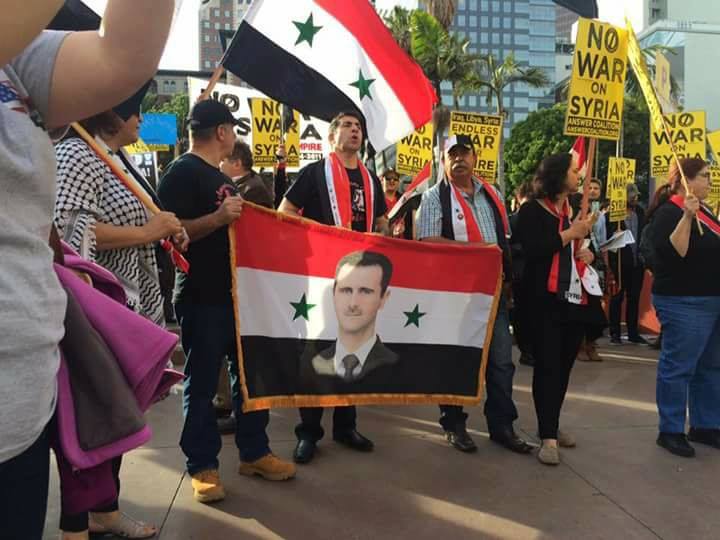
Fol­low­ing the mis­sile strike on Shayr­at in West­ern Syr­ia last Thursday, a wave of protests broke out across the United States. These proved something of a mixed bag, as one might ex­pect. In ad­di­tion to those who sup­port the Free Syr­i­an Army but op­pose fur­ther Amer­ic­an in­ter­ven­tion, a num­ber of un­sa­vory sorts also showed up. Por­traits of Putin and As­sad could be seen along­side yel­low signs put out by the AN­SWER Co­ali­tion. A few flags fea­tur­ing the mod­i­fied or­ange tor­nado-swastika of the fas­cist Syr­i­an So­cial Na­tion­al­ist Party or SS­NP, a close ally of the Ba’ath­ist re­gime, also ap­peared at the demon­stra­tions. Some or­gan­izers took a more prin­cipled stand, however, re­ject­ing calls for a heightened US mil­it­ary role while at the same time re­fus­ing to march with As­sad­ists.

While I’m heartened by such un­equi­voc­al de­clar­a­tions of prin­ciple, we are still all too ready to for­give those who make ex­cuses for re­ac­tion­ar­ies. Marx­ists must do more to dis­tance ourselves from bour­geois na­tion­al­ists, re­li­gious fun­da­ment­al­ists, and oth­ers who present false al­tern­at­ives to for­eign dom­in­a­tion. Even more so, we must stop giv­ing a pass to those who dis­cred­it the an­ti­war move­ment through ca­su­istry and mor­al equi­val­ence. Un­der the crude lo­gic of “the en­emy of my en­emy is my friend,” any­one and every­one who chal­lenges Anglo-European he­ge­mony is viewed as a po­ten­tial ally. Clif­fites, like the So­cial­ist Work­ers’ Party (SWP) in Bri­tain or the In­ter­na­tion­al So­cial­ist Or­gan­iz­a­tion (ISO) in the US, lend their “crit­ic­al but un­con­di­tion­al sup­port” to openly an­ti­semit­ic groups such as Hezbol­lah and Hamas against Is­raeli ag­gres­sion in­to Ga­za. Gio­vanni Scuderi of the Marx­ist-Len­in­ist Party of Italy (PMLI) re­cently called on his fol­low­ers to unite with the Is­lam­ic State against West­ern im­per­i­al­ism.

Of course, it’s far easi­er to skew­er ob­scure sects with barely a hun­dred mem­bers than it is to do the same to be­loved Marx­ist aca­dem­ics. Domen­ico Los­urdo, for ex­ample, en­joys the repu­ta­tion in the Eng­lish-speak­ing world of a di­li­gent and wide-ran­ging in­tel­lec­tu­al his­tor­i­an. Richard Sey­mour was among the first to her­ald his work, opin­ing in 2007: “Los­urdo is, if you ask me, the best crit­ic of cap­it­al­ist ideo­logy writ­ing today.” His ar­gu­ments were cited fre­quently, moreover, in the 2010 study Fan­at­icism: On the Uses of an Idea by Ba­di­ou trans­lat­or Al­berto To­scano. Mean­while, the mono­lin­gual Hegel schol­ar Har­ris­on Fluss praises Los­urdo’s re­search to the rafters, Ishay Landa laud­ing him for his “mas­terly dia­lect­ic­al style” [meister­hafte dialekt­ische Art]. Speak­ing just for my­self, I find his book on Hegel and the Free­dom of Mod­erns (1992) to be his strongest work, though his cri­tique of Aren­dt on to­tal­it­ari­an­ism and over­view of Heide­g­ger and the Ideo­logy of War: Death, Com­munity, and the West (1991) are also pretty good.

Glan­cing at some of the PCI philo­soph­er’s past polit­ic­al po­s­i­tions, however, one is shocked to learn that he’s con­sist­ently sought to re­hab­il­it­ate both Sta­lin­ist dic­tat­ors from the age of “ac­tu­ally-ex­ist­ing so­cial­ism” as well as na­tion­al­ist strong­men whose in­terests happened to run counter to US geo­pol­it­ic­al aims in the post­com­mun­ist era. With re­gard to the lat­ter, of these, a couple of cases suf­fice to make the point. Back in the 1990s, Los­urdo was an out­spoken apo­lo­gist for Slobodan Milošević, go­ing so far as to pre­face a pamph­let in de­fense of the dis­graced Ser­bi­an lead­er as late as 2005. Milošević was sus­pec­ted of in­cit­ing vi­ol­ence against Al­bani­ans earli­er in the dec­ade as well as sub­sequent eth­nic cleans­ing cam­paigns in Bos­nia, Kosovo, and Croa­tia. Yet Milošević is not the only na­tion­al­ist strong­man Los­urdo has sup­por­ted since the fall of com­mun­ism in East­ern Europe. He earli­er de­fen­ded the Ro­mani­an premi­er Nic­olae Ceau­ses­cu, in power for dec­ades, from charges of gen­o­cide ar­ti­fi­cially con­cocted by the “lie in­dustry” [l’in­dus­tria della men­zogna] — i.e., the West­ern me­dia — which Los­urdo con­siders an “in­teg­ral part of the im­per­i­al­ist war ma­chine” [parte in­teg­rante della mac­ch­ina di guerra dell’im­per­i­al­ismo].

Continue reading

Gary Johnson, Syria, and the apocalypse

.
The best we can do right now with re­spect to Syr­ia and vari­ous oth­er world-his­tor­ic­al phe­nom­ena is pre­dict likely out­comes, since we have no abil­ity to mean­ing­fully al­ter the course of events. Ex­cept, of course, if we’re pre­pared to fig­ure out what it would take to as­sert and ex­er­cise real agency in his­tory, something which is much harder than just shout­ing an­ti­war or hu­man­it­ari­an in­ter­ven­tion­ist plat­it­udes. It in­volves identi­fy­ing the forces with­in so­ci­ety that could bend the blind hap­pen­stance of the mar­ket and the clumsy in­trigues of state powers to its will. Po­s­i­tion-tak­ing and slo­gan­eer­ing are mean­ing­less and vain in the ab­sence of ef­fect­ive re­volu­tion­ary prac­tice.

For the time be­ing, however, it has very been en­ter­tain­ing to see Richard Spen­cer and his “Alt-Right” al­lies lose their col­lect­ive shit over Trump’s sud­den 180° with re­spect to Syr­ia. Al­most on cue and all at once, 4chan’s /pol/ seemed to suf­fer an an­eurysm. Some of its mem­bers com­plained that this would mean more Muslim im­mig­rants the West. Oth­ers called upon the an­onym­ous hordes to form a bloc with Putin and wage holy war against the Jews. Mean­while, Steve Ban­non has fallen out of fa­vor in the White House, cucked by the “glob­al­ist” New Jer­sey Demo­crat Jared Kush­ner. With this de­vel­op­ment, lib­er­als might have fi­nally got­ten their wish. Be­cause if Ivanka is now the one really pulling the strings, to stick with the pup­pet-mas­ter meta­phor, then it’s as if Hil­lary Clin­ton got elec­ted after all.

Lib­er­als’ main ob­jec­tion to Trump has al­ways been aes­thet­ic, rather than prin­cipled or sub­stant­ive. They miss the smooth, well-spoken, at times in­spir­a­tion­al rhet­or­ic of someone like Obama to the bizarre toi­let bowl of free as­so­ci­ation that comes out of Trump’s mouth. At the level of policy the two could be com­pletely identic­al, but no one would care so long as everything was de­livered with the right pres­id­en­tial pack­aging. Com­rade Em­met Pen­ney con­veys this grim truth rather well:

So after run­ning a can­did­ate down­loaded from the un­canny val­ley — who didn’t be­lieve in or stand for any­thing, really — and money­balling their way to de­feat against a gold-plated, syph­il­it­ic so­ciopath, I’m see­ing all these mem­bers of the Demo­crat­ic “#Res­ist­ance” come out in full sup­port of the Syr­ia strikes like the bat­talion of over­paid cow­ards they’ve al­ways been.

It’ll be tite af when they re­in­sti­tute con­scrip­tion and make you use an app struc­tured like Obama­care where you pick from com­pet­ing pro­viders to get body ar­mor and bul­lets be­fore ship­ping out to go die alone scream­ing for your fam­ily while their lob­by­ist mil­it­ary con­tract­or bud­dies stuff their pock­ets by the fist­ful. The fu­ture the Demo­crats want is just a gami­fied ver­sion of with the Re­pub­lic­ans want, with maybe Beyoncé play­ing in the back­ground and a sub­scrip­tion to The New York­er.

Nev­er­the­less, it could well be that Trump’s sheer un­pre­dict­ab­il­ity ac­tu­ally re­duces the chances of WW3. Putin was will­ing to play chick­en over Syr­ia with Obama, be­cause he knew Obama is a ra­tion­al guy who knows when to hit the brakes. He’s not go­ing to play that game with someone who would just as soon set him­self on fire or drive the car off a bridge for rat­ings.

All the same, with mo­bil­iz­a­tion against US mil­it­ary in­ter­ven­tion in­to Syr­ia ramp­ing up, it’s more im­port­ant than ever that com­mun­ists be able to stake out a po­s­i­tion that op­poses in­ter­ven­tion­ist wars while also re­fus­ing any sup­port for bour­geois na­tion­al­ists and tin-pot dic­tat­ors like As­sad. Over the past fifty years, anti-im­per­i­al­ists have op­por­tun­ist­ic­ally made com­mon cause with any­one and every­one who de­clare them­selves to be “anti-Amer­ic­an.” This has dis­cred­ited le­git­im­ate ef­forts to op­pose for­eign wars. Marx­ists should re­ject such co­ali­tions and or­gan­ize on an in­de­pend­ent and in­ter­na­tion­al­ist basis, ex­clud­ing na­tion­al­ists of all stripes. But I’m not hold­ing my breath.

It is in this dis­pir­it­ing mood that I’m shar­ing a re­flec­tion sub­mit­ted by Com­rade Hegel Damascene, re­mem­ber­ing the quiet dig­nity of liber­tari­an can­did­ate Gary John­son. John­son remains a beacon of bygone normie-dom in a bat­shit age.

[wpvideo cDBR9jTM] [wpvideo M6i2XwPN]Gary Johnson
Normie prophet in an apocalyptic age

Hegel Damascene
Interstate 95
April 8, 2017
.

.

The tra­di­tion of all dead gen­er­a­tions weighs like a night­mare on the brains of the liv­ing.

.
Sit­ting on an over­pass over I-95, watch­ing cars come onto and off of the George Wash­ing­ton Bridge, I was over­come with the feel­ing of be­ing trapped in the belly of a hor­rible ma­chine. And the ma­chine is bleed­ing to death. I al­ways used to stare at the over­passes near the Garden State Mall, the ar­ti­fi­cial mar­ket­place where high­ways meet, and think about what a Great Civil­iz­a­tion (both words cap­it­al­ized) Amer­ica was. But I saw the cracks back then, too, I just didn’t think they would open up so quickly.

Sit­ting on that un­der­pass, I half ex­pec­ted the of­fices of Kim & Bae, PC to grow legs and start lob­bing mis­siles at Bashar As­sad’s palace. Maybe the Port Au­thor­ity Po­lice build­ing was a fact­ory pro­du­cing mech­an­ic­al cops, who would march out to re­store or­der in the new Salafist prin­cip­al­ity — and de­tain any big beau­ti­ful ba­bies who wanted to leave their young uto­pia for Amer­ica, where they could be a se­cur­ity risk.

Syr­ia is both a source and mi­cro­cosm of the slow col­lapse. Continue reading

Kendall Jenner Pepsi ad

The real reason leftists are so upset about the Pepsi ad is that it puts all their purely performative, feelgood protest actions on blast. Continue reading

Theories of the young Marx

.

Wer die Ju­gend hat, hat die Zukun­ft.

— Karl Lieb­knecht

.
In a civil­iz­a­tion that’s grown old, ours is a cul­ture that prizes youth. No longer as pres­age to a ra­di­ant fu­ture, but part of a per­man­ent present. Philo­sophy paints its gray on gray onto the pages of Teen Vogue, the Ar­ab Spring fol­lowed by an Is­lam­ist Winter. From Young Thug to la jeune-fille — to the fa­mil­i­ar re­frain of “I like their early stuff bet­ter” — all beauty is fleet­ing, as the pro­verb goes. A sea­son or so later, it loses its luster. Ef­forts at re­in­ven­tion or renov­a­tion more of­ten than not end up a laugh­ing stock. Worse yet: ig­nored. Mod­ern­ity thrives off the eph­em­er­al, Baudelaire no­ticed long ago, to the point that an en­tire style took youth as its theme. “Ju­gend­stil is a de­clar­a­tion of per­man­ent pu­berty,” ob­served Ad­orno, “a uto­pia that barters off its own un­real­iz­ab­il­ity… Hatred of the new ori­gin­ates in a con­cealed ten­et of bour­geois on­to­logy: that the tran­si­ent should be tran­si­ent, that death should have the last word.”

Raoul Peck’s film Der junge Karl Marx premiered last month in Ber­lin. It’s his second ma­jor re­lease already this year, the first be­ing I am Not Your Negro, a doc­u­ment­ary based on the life of the Afric­an-Amer­ic­an writer James Bald­win. Though it was nom­in­ated for an academy award, the Haitian film­maker’s ef­fort ul­ti­mately lost out to the five-part ES­PN epic OJ Simpson: Made in Amer­ica. Most of the Marx biop­ic was shot in Bel­gi­um back in 2015. While I’m al­ways wary of sil­ver screen por­tray­als of great his­tor­ic­al fig­ures, I per­son­ally can’t wait to see it. As a way of cel­eb­rat­ing its de­but, then, I’m post­ing sev­er­al ma­jor art­icles and es­says on the theme of the “young” Marx. Usu­ally, the young­er Marx is con­tras­ted with or coun­ter­posed to the older Marx, al­though the dates as­signed to each phase is a mat­ter of some con­tro­versy among schol­ars. If you don’t be­lieve me, just glance at the fol­low­ing pieces to get a sense of the wide range of opin­ions:

  1. Erich Fromm, “The Con­tinu­ity in Marx’s Thought” (1961)
  2. Gajo Petrović, “The ‘Young’ and the ‘Old’ Marx” (1964)
  3. Louis Althusser, “On The Young Marx (1960) and “The Evol­u­tion of the ‘Young’ Marx” (1974)
  4. Ir­ing Fetscher, “The Young and the Old Marx” (1970)
  5. István Mészáros, “The Con­tro­versy about Marx” (1970)
  6. Paul Mat­tick, “Re­view of Marx Be­fore Marx­ism (1971)
  7. Lu­cio Col­letti, In­tro­duc­tion to The Early Writ­ings of Karl Marx (1973)
  8. Michel Henry, “The Hu­man­ism of the Young Marx” (1976)

Continue reading