Anti-Bolshevik propaganda posters: Metal as fvkk

.
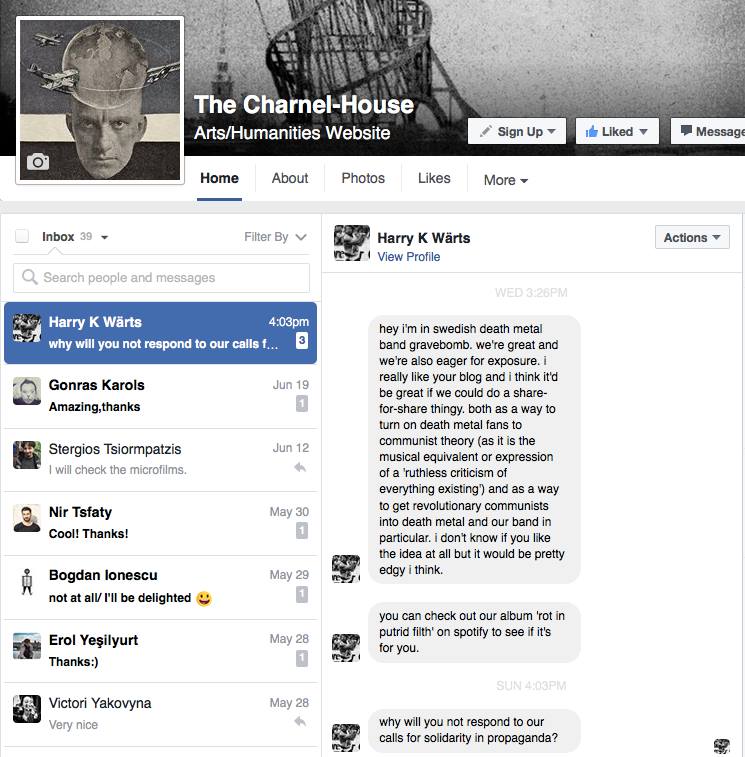
Recently, I was contacted by a fellow named Harry K. Wärts via The Charnel-House’s Facebook page. Admittedly, I don’t check the messages I receive there too often. Nevertheless, this caught me a bit off-guard:

Hey, I’m in the Swedish death metal band Gravebomb. We’re great, and also eager for exposure. I really like your blog, so I think it’d be great if we could do a share-for-share thingy. Both as a way to turn on death metal fans to communist theory (as it is the musical equivalent or expression of a “ruthless criticism of everything existing” [Marx]) and as a way to get revolutionary communists into death metal and our band in particular. Don’t know if you like the idea, but I think it would be pretty edgy.

You can check out our album Rot in Putrid Filth on Spotify to see if it’s for you.

Since I didn’t get back to Wärts in a timely fashion, he wrote me another note: “Why will you not respond to our calls for solidarity in propaganda?”

Obviously this was something I needed to do. Can’t just leave a comrade hanging.

Initially I was skeptical. Most of the metal coming out of Europe, especially the Nordic countries, is intensely reactionary — fascist, even. Plus, I’m not even much of a metal fan these days, though I was back in high school.

Acquaintances on social media urged me to do so, however, “for the love of all that’s unholy.” Fuck it, I thought to myself. Hence the present post.

Glancing at the track list, we find song titles like “Killing Apex,” “Hack the Heads off the Preachers,” “Funeralizer, and “Parasite Spawn.” Sound revolutionary to me. Regardless, I’m not going to listen through their entire catalogue and scrutinize their lyrics to make sure they convey a communist message or ruthless critique. Not like communists censor music, after all… Oh wait

To accompany this music, I’m posting a series of anti-Bolshevik artwork that can only be described as “metal as fvkk.” Early anti-Bolshevik agitprop posters — from roughly 1905 up through the end of the 1940s, but especially 1917-1939 — make up some of the best adverts for Bolshevism. Despite their explicit intention to frighten people with the specter of communism, or dissuade them from joining it, these posters fucking rule. Who wouldn’t want to be an undead skeleton commie killing fascists?

Kvltvrbolschewismvs? Underground black metal enthusiasts should at least appreciate the images of communists burning churches.

Bloody Sunday 1905 GvjdoTA Die Gefahr des Bolschewismus [The Danger of Bolshevism] com_8_MGzoom e545a3d724c179b4624cb41755e6a8d7 focus-400-grande1 - frame2Art.IWM PST 13079 plakat_antisov23 plakat_antisov24 Die Heimat ist in Gefahr 2 Schließt Euch fest zusammen gegen Spartacus (…) Continue reading

Capitalism and gay identity


..

.
John D’Emilio’s classic essay, with a brief
contextual introduction by Rosemary Hennessy.
Reblogged from Communists in Situ.
.
.

The birth and short-lived life of gay Marxism:
“Capitalism and gay identity” in context

Rosemary Hennessy
Profit and Pleasure
(July 26, 2000)
.
.

The Stonewall uprising in New York City in June 1969 was the most immediate catalyst for the formation of the gay liberation movement. Before the end of the summer of 1969, the Gay Liberation Front had formed in the United States, and within the following year gay liberation groups sprang into existence across the country (D’Emilio 1983, 232-233). Gay liberation was itself an outcome of the adjustments of late capitalism that spawned the general international insurgency circa 1968. Most immediately, it was inspired by the black power movement and the rise of feminism — both of which included fractions that aimed to articulate the historical relationship between culture and class, local and global forces. As in much of the New Left, there was general agreement within gay liberation thinking that capitalism was oppressive. Many gay liberation manifestos at least rhetorically drew connections between capitalism and repressive sexuality, racism and imperialism. But the gay liberation movement was by no means thoroughly influenced by Marxism or a united socialist front, and its internal debates sorted out in what seem in hindsight to be predictable ways. There were those who, despite references to capitalism, basically focused on and advocated for cultural change, and there were those more avowedly Marxist groups that stressed that political and cultural concerns needed to be linked to more global economic structures in some way.1

One set of texts that succinctly demonstrates these different leanings is Carl Whitman’s “Gay Manifesto” and the reply to it written by the gay socialist group Red Butterfly (Blasius and Phelan 380-390). Although Red Butterfly supports Whitman for generally linking the individual effects of gay oppression to “the social and economic facts which are at once the cause and effects of this situation,” they note the tension in his manifesto between personal freedom and the need for collective action, and they critique Whitman’s promotion of “coming out” as an inadequate strategy for social change in itself because it can so easily separate personal liberation from changing the social conditions that foster gay oppression. Comprised of a loose network of collectives, journals, newsletters, study groups, conferences, and actions whose most intensive activity lasted only until the mid-seventies, the Gay Left represented a short-lived but vital willingness to make use of Marxism as a critical framework to link sexual oppression to global capitalism. In fact, however, there were more gestures in this direction than there were developed theoretical explanations from which to forge a fundamentally anticapitalist activist politics. Nonetheless, the fact that a broad sector of the discourse of gay liberation was at least in spirit directed toward connecting sexual oppression to the history of capitalism made this one of the most exciting flash points in the historical development of a critical and materialist understanding of sexuality. Continue reading

The Marxism of Wilhelm Reich

Or, the social function
of sexual repression

Bertell Ollman
Social and Sexual
Revolution (1979)
.

I

.
“Just as Marxism was sociologically the expression of man’s becoming conscious of the laws of economics and the exploitation of a majority by a minority, so psychoanalysis is the expression of man becoming conscious of the social repression of sex.”1 How does sexual repression occur? What forms does it take? What are its effects on the individual? And, above all, what is its social function? Freud deserves credit for first raising these questions, but it is Wilhelm Reich who went furthest in supplying answers. In so doing, he not only developed Freud’s own insights but immeasurably enriched both the theory and practice of Marxism.

Reich’s writings fall into three main categories: 1) that of an analyst and co-worker of Freud’s, 2) that of a Marxist, and 3) that of a natural scientist. In this essay I am only concerned with Reich the Marxist, though excursions into these other fields will occasionally be necessary since the division between them is often uncertain both in time and conception. Reich’s Marxist period runs roughly from 1927, when he joined the Austrian Social Democratic Party, to 1936, when he finally despaired of affecting the strategy of working-class movements. From 1930 to 1933 he was a member of the German Communist Party.

Marx had said, “It is not the consciousness of men that determines their existence, but on the contrary, their social existence determines their consciousness.”2 This formula has been hotly attacked and defended, but seldom explored. Marxists have generally been content to elaborate on aspects of social existence and to assume a sooner or later, somehow or other, connection of such developments with the mental life of the people involved. Reich is one of the few who took this formula as an invitation to research. How does everyday life become transformed into ideology, into types and degrees of consciousness? What works for such transformation and what against? Where do these negative influences come from, and how do they exert their effect?

Reich believed that psychoanalysis has a role to play in answering these questions. Marxists, however, have always had a particularly strong aversion to Freud’s science. On the practical level, psychoanalysis is carried on by rich doctors on richer patients. Conceptually, it starts out from the individual’s problems and tends to play down social conditions and constraints. It seems to say that early traumatic experiences, especially of a sexual nature, are responsible for unhappiness, and that individual solutions to such problems are possible. It also appears to view the individual’s conscious state as being in some sense dependent on his or her unconscious mental life, making all rational explanation — including Marxism — so much rationalization. In short, in both its analysis and attempts at cure, psychoanalysis takes capitalist society for granted. As if this weren’t enough to condemn it in the eyes of Marxists, psychoanalysis adds what seems to be a gratuitous insult in suggesting that Marxists in their great desire for radical change are neurotic. Continue reading

Moscow constructivism

.
Images taken from the Russian language website Medusa, along with a translation of the short blurb that accompanied it. Reportedly several hundred Musvovites gathered to protest the razing of the Tagansk Telephone Exchange, mentioned below. But developers went ahead with it anyway.

.
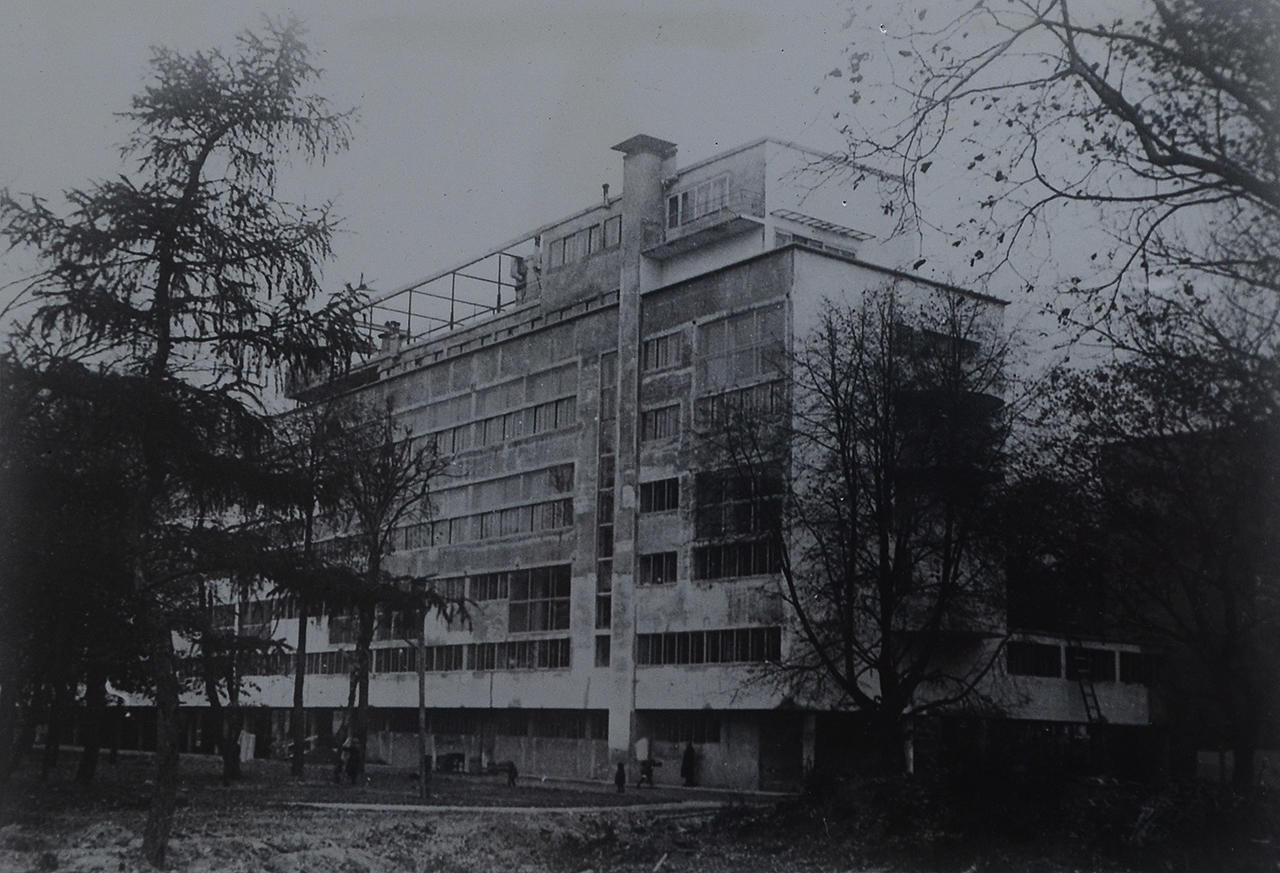
Demolition of the Tagansk Telephone Exchange — a constructivist building lacking the official status of architectural landmark — began at the end of April in Moscow. In place of the Telephone Exchange, they plan to build a hotel. Aleksandr Gorokhov, photo editor of Medusa, found in the archives of the Shchusev Architecture Museum some old photographs of other constructivist buildings, in order to show readers how they looked having just been built.

В конце апреля в Москве начался снос Таганской АТС — конструктивистского здания, не имевшего формального статуса памятника архитектуры. На месте АТС планируют построить отель. Фоторедактор «Медузы» Александра Горохова нашла в архиве музея архитектуры имени Щусева старые фотографии других конструктивистских зданий, чтобы показать читателям, как они выглядели, когда только были построены.

Вегнер А.П., Мотылев М.И., Молоков Н.М., Звездин И.А., Шервинский Е.В., Федоров А.Н., Буров И.Г., Блохин Б.Н., Савельев Л.И., Виссинг М.Г. Дворец культуры автозавода им. Сталина-Лихачева. Здание столовой. Архитекторы братья Веснины А.А., В.А., Л.А. Фото 1937 года Дворец культуры автозавода имени Сталина-Лихачева (ЗИЛа). Крыша с обсерваторией. Архитекторы братья Веснины А.А., В.А., Л.А. Фото 1937 года Дворец культуры автозавода имени Сталина-Лихачева. Клубная часть. Интерьер, лестница. Архитекторы братья Веснины Фото 1937 года Дворец культуры автозавода имени Сталина-Лихачева. Переход из театрального зала в клубную часть. Архитекторы братья Веснины Фото 1937 год. Дом «Известий». Архитектор Бархин Г.Б. Фото 1937 года Continue reading

“Gay imperialism”: Postcolonial particularity

Those who op­pose Marx­ism, En­light­en­ment, or even lib­er­al ideo­lo­gies on the ground that they are Euro­centric or co­lo­ni­al im­pos­i­tions, and pro­pose as an al­tern­at­ive sup­posedly more or­gan­ic, au­then­tic­ally in­di­gen­ous life­ways and autoch­thon­ous, com­munit­ari­an wis­dom, are them­selves simply vic­tim to an­oth­er European ideo­logy: Ro­man­ti­cism. I hope it is clear in the fol­low­ing that I do not share the views of Mas­sad or Bouteldja.
.

Homon­ation­al­ism and “pink­wash­ing”

.
Since her re­fus­al to ac­cept the Ber­lin Pride Civil Cour­age Award, Ju­dith But­ler has been a lead­ing crit­ic of “homon­ation­al­ism” and the closely re­lated phe­nomen­on of so-called “pink­wash­ing.” Homon­ation­al­ism is un­der­stood here as an ideo­logy which uses a na­tion’s lib­er­al at­ti­tudes to­ward ho­mo­sexu­al­ity as a means of en­cour­aging ra­cist at­ti­tudes to­ward oth­er na­tions, on the grounds that they are sup­posedly less en­lightened. But­ler stated in a May 2010 ad­dress on “Queer Al­li­ance and An­ti­war Polit­ics” in Ank­ara, Tur­key that “in some parts of Europe and surely in Is­rael as well, the rights of ho­mo­sexu­als are de­fen­ded in the name of na­tion­al­ism.” Or as she put it in Ber­lin, what was sup­posed to be her ac­cept­ance speech: “Les­bi­an, gay, trans, and queer people can be used [by] war­mon­gers in­volved in cul­tur­al wars against im­mig­rants through Is­lamo­pho­bia and mil­it­ary wars against Ir­aq and Afgh­anistan. In this time, through these in­stru­ments, we be­come re­cruited for na­tion­al­ism and mil­it­ar­ism.”

Ref­er­ence is only made in But­ler’s lat­ter state­ment to NATO and the US — which partly ra­tion­al­ized their in­va­sions of Afgh­anistan and Ir­aq, or at least made them more pal­at­able to left-lib­er­als, by present­ing them as an op­por­tun­ity to lib­er­ate wo­men — but Is­rael is clearly also im­plied. Tel Aviv’s vi­brant LGBT scene has been de­servedly praised for its open­ness and ac­cept­ance of dif­fer­ent sexu­al ori­ent­a­tions and gender iden­tit­ies, but this repu­ta­tion sim­ul­tan­eously serves pro­pa­gand­ist­ic ends. Jux­ta­posed against daily life in the Ga­za strip, where Hamas is in power and things are dif­fi­cult due to crip­pling eco­nom­ic block­ades, Tel Aviv is made out to be a gay oas­is sur­roun­ded by a desert of Is­lam­ist ho­mo­pho­bia. Is­rael uses this con­trast to present a tol­er­ant im­age of it­self, and to di­vert at­ten­tion away from the bit­ter real­it­ies of oc­cu­pa­tion. For­get for a mo­ment the string of stabbings last sum­mer at the Jer­u­s­alem Pride fest­iv­al by Yishai Sch­lis­sel, an ul­tra-or­tho­dox Jew.

In Novem­ber 2011, New York Times ran a brief op-ed by Sarah Schul­man on the “pink­wash­ing” prac­tice of mod­ern Is­rael. Ac­cord­ing to Schul­man, the of­fi­cial gov­ern­ment as well as un­of­fi­cial travel agen­cies in­stru­ment­al­ize the coun­try’s strong re­cord on gay rights (com­pared to the rest of the re­gion, any­way) as a “mes­saging tool” to coun­ter­bal­ance some of the bad press it’s re­ceived from on­go­ing hu­man rights ab­uses. Schul­man’s ori­gin­al art­icle was de­cent, but much of the sub­sequent de­bate dis­mal. Dis­cus­sions of Is­raeli pub­lic re­la­tions, com­monly eu­phem­ized as “ex­plan­a­tion” [has­bara], tend to de­volve rather quickly. They either veer in­to con­spir­acy the­ory, re­peat­ing the old charge that Jews (er, Zion­ists) con­trol the me­dia, or end up deny­ing such a policy even ex­ists, when fel­low­ships are reg­u­larly awar­ded to ad­voc­ates on Is­rael’s be­half. For­ward, the bi­lin­gual Yid­dish daily foun­ded in 1897 by fol­low­ers of Daniel De Le­on, had a sens­ible take: “Not all Is­raeli gay mes­saging is pink­wash­ing. Most of it is just ad­space meant to at­tract gay tour­ists to Tel Aviv. Which it does.” Jay Mi­chael­son, the au­thor of the piece, nev­er­the­less took is­sue with a highly ma­nip­u­lat­ive full-page ad placed by Rabbi Schmu­ley in Decem­ber 2014.

But­ler and Schul­man are of course right to point out that Is­rael’s pro­gress­ive views on gay rights do not ex­cuse its na­tion­al op­pres­sion of Palestini­ans or eth­nic chau­vin­ism to­ward Ar­abs, but the in­verse should also hold true: Hamas’ so-called “res­ist­ance” to Is­raeli mil­it­ar­ism does not ex­cuse its or­gan­iz­a­tion­al an­ti­semit­ism or il­liber­al stance on rights for wo­men and gays.

Se­lect­ive “shib­boleths”

.
Many left­ists stop short of this ba­sic equi­poise, however. For ex­ample, But­ler her­self is ready to ex­cuse or­gan­iz­a­tions guilty of or com­pli­cit with oth­er forms of op­pres­sion. At a 2006 an­ti­war teach-in, watch­able be­low, she af­firmed the “pro­gress­ive” cre­den­tials of brazenly an­ti­semit­ic and ho­mo­phobic groups like Hezbol­lah and Hamas:

Yes, un­der­stand­ing Hamas and Hezbol­lah as so­cial move­ments that are pro­gress­ive, on the Left, part of a glob­al Left, is ex­tremely im­port­ant. That does not stop us from be­ing crit­ic­al of cer­tain di­men­sions of both move­ments. It doesn’t stop those of us who are in­ter­ested in non-vi­ol­ent polit­ics from rais­ing the ques­tion of wheth­er there are oth­er op­tions be­sides vi­ol­ence. So again, a crit­ic­al, im­port­ant en­gage­ment. I mean, I cer­tainly think it should be entered in­to the con­ver­sa­tion on the Left. I sim­il­arly think boy­cotts and di­vest­ment pro­ced­ures are, again, an es­sen­tial com­pon­ent of any res­ist­ance move­ment.

When these re­marks were brought up again in 2012, But­ler re­vised her claims some­what: “These polit­ic­al or­gan­iz­a­tions define them­selves as anti-im­per­i­al­ist. Anti-im­per­i­al­ism is one char­ac­ter­ist­ic of the glob­al left. On that basis one could de­scribe them as part of the glob­al Left.” Even with this qual­i­fic­a­tion, de­scrib­ing Hezbol­lah and Hamas as pro­gress­ive or left­ist or­gan­iz­a­tions based solely on their res­ist­ance to Is­raeli mil­it­ar­ism is laugh­able. Still, like the Marx­ist aca­dem­ic Susan Buck-Morss, But­ler main­tains that some Is­lam­ist groups may be in­cluded un­der the broad um­brella of a “glob­al left.” Buck-Morss wrote in “Can there be a Glob­al Left?”, the fi­nal chapter of her 2003 book Think­ing Past Ter­ror: Is­lam­ism and Crit­ic­al The­ory on the Left: “Is­lam­ist polit­ics has been mul­tiple and con­ten­tious, span­ning a wide vari­ety of polit­ic­al po­s­i­tions, in­clud­ing a crit­ic­al Left… ‘Left’ here would mean rad­ic­al in the crit­ic­al sense [and] also mean cos­mo­pol­it­an: it would define so­cial justice in a way that ex­cludes no group of hu­man­ity from the be­ne­fits of, and mor­al ac­count­ab­il­ity with­in, the glob­al pub­lic sphere.” For a scath­ing re­view of this work, see Arya Za­hedi’s 2009 piece for In­sur­gent Notes.

Frantz Fan­on was far too com­mit­ted an athe­ist to en­ter­tain the pos­sib­il­ity that re­li­gious re­viv­al might play a pro­gress­ive polit­ic­al role in the struggle against im­per­i­al­ism. Though by then he had aban­doned the cos­mo­pol­it­an hu­man­ism of Black Skin, White Masks in fa­vor of all-out war with co­lo­ni­al­ism and the West, Fan­on con­veyed his skep­ti­cism to his ad­mirer Ali Shari­ati. He wrote in a let­ter to Shari­ati:

Even if I do not share your views with re­spect to Is­lam, I re­spect your view that in the Third World (and if you don’t mind, I would prefer to say in the Near and Middle East), Is­lam, more than any oth­er so­cial and ideo­lo­gic­al force, has had an anti-co­lo­ni­al­ist ca­pa­city and an anti-West­ern nature. I hope that your in­tel­lec­tu­als will be able to in­still life in the in­ert and drugged body of the Muslim East so as to raise the con­scious­ness of the people… in or­der to found a dif­fer­ent kind of man and a dif­fer­ent kind of civil­iz­a­tion. I, for one, fear that the fact of re­vital­iz­ing the spir­it of sec­tari­an­ism and re­li­gion may res­ult in a set­back for a na­tion that is en­gaged in the pro­cess of be­com­ing, of dis­tan­cing it­self from its fu­ture and im­mob­il­iz­ing it in its past.

Later, after he sup­por­ted the na­tion­al­ist up­ris­ing in Al­ger­ia, Fan­on ex­pressed his deep mis­giv­ings. “My left­ist lean­ings drove me to­ward the same goal as Muslim na­tion­al­ists. Yet I was too con­scious of the dif­fer­ent roads by which we reached the same as­pir­a­tion. In­de­pend­ence, yes, I agreed. But what in­de­pend­ence? Were we go­ing to fight to build a feud­al, theo­crat­ic Muslim state in Al­ger­ia frowned on by for­eign­ers?” At least in this re­gard, des­pite his ca­pit­u­la­tion to na­tion­al­ism, Fan­on re­mains su­per­i­or to the “de­co­lo­ni­al” dum­basses who id­ol­ize him.

Sadly, this habit of ig­nor­ing ir­re­con­cil­able points of dis­agree­ment in the name of an anti-im­per­i­al­ist co­ali­tion or pop­u­lar front is not lim­ited to aca­dem­ics. Nu­mer­ous act­iv­ists and even some left-wing pop­u­list (“grass­roots”) politi­cians have suc­cumbed to it as well.

Lind­sey Ger­man, to take one act­iv­ist, no­tori­ously an­nounced in 2004 that she was will­ing to com­prom­ise on cer­tain is­sues but not on oth­ers. At the time, Ger­man was a mem­ber of the Brit­ish SWP and Stop the War co­ali­tion. Wo­men’s rights and gay rights were for her ne­go­ti­able, while anti-Zion­ism was not: “Stu­art King says some Muslims are anti-gay, and this is per­fectly true. But it is not a ques­tion we pose to Chris­ti­ans who join the So­cial­ist Al­li­ance, is it? Now I’m per­son­ally in fa­vor of de­fend­ing gay rights, but I am not pre­pared to have it as a shib­boleth, cre­ated by people who won’t de­fend George Gal­lo­way, and who re­gard the state of Is­rael as some­how a vi­able pres­ence, jus­ti­fied in oc­cupy­ing Palestini­an ter­rit­or­ies.” Gal­lo­way him­self is un­will­ing to de­fend wo­men’s re­pro­duct­ive rights in par­lia­ment, de­cry­ing abor­tion as in­fant­i­cide and spout­ing oth­er sex­ist tripe. Of course, none of this mat­ters. His anti-Zion­ism al­lows left­ists to over­look a pleth­ora of re­ac­tion­ary po­s­i­tions, a se­lect­ive blind­ness he is happy to ex­tend to fel­low anti-Zion­ists. Yusuf al-Qaradawi — an Egyp­tian tel­ev­an­gel­ist cler­ic who de­fends wife-beat­ing and fe­male gen­it­al mu­til­a­tion, as well as cor­por­al pun­ish­ment (either by lash­ing or ston­ing) for those guilty of ho­mo­sexu­al acts — was in­vited to Lon­don by Gal­lo­way in 2005. Ken Liv­ing­stone, the former may­or of Lon­don, lauded al-Qaradawi as “a lead­ing pro­gress­ive voice in the Muslim world.”

Auf­heben, an in­de­pend­ent Marxi­an the­or­et­ic­al journ­al in Bri­tain in­spired by Itali­an auto­nom­ism and Dutch-Ger­man coun­cil­ism, chron­icled the far­cic­al ef­fort of the an­ti­war Re­spect Party to win over the “Brit­ish Muslim com­munity.” In its 2009 art­icle “Crois­sants and Roses: New La­bour, Com­mun­al­ism, and the Rise of Muslim Bri­tain,” Auf­heben re­con­struc­ted the tail­ist lo­gic of Re­spect’s SWP lead­er­ship as it des­per­ately sought to house this new mi­lieu with­in its ideo­lo­gic­al head­space. Some of the old Swap­per stances on wo­men’s and gay rights had to be jet­tisoned to make room for this new crowd, it was be­lieved (though Clif­fite Trot­sky­ism al­ways has plenty of room at its dis­pos­al, so vacu­ous is its ideo­logy). Hap­pily, this pan­der­ing was met mostly with in­dif­fer­ence on the part of Brit­ish Muslims:

Vi­tal to the suc­cess of this project, par­tic­u­larly as the anti-war move­ment began to sub­side, was the need to bring the “Brit­ish Muslim com­munity” on board. So as not to put Muslims off, the SWP in­sisted that Re­spect es­chew left-wing “shib­boleths” such as wo­men’s and gay rights. They went to the mosques and echoed the ar­gu­ments of the more rad­ic­al polit­ic­al Is­lam­ists by claim­ing that Bush’s “Glob­al War on Ter­ror” was in fact a war on Muslims — both abroad, with the at­tack on Muslims in Ir­aq and Afgh­anistan, but also at home with the suc­ces­sion of anti-ter­ror­ist le­gis­la­tion — that should be op­posed by all Muslims as “Muslims.” And like the more rad­ic­al polit­ic­al Is­lam­ists they de­nounced New La­bour as Is­lamo­phobic and ra­cist. Yet for all their ef­forts to pander to muslim sens­it­iv­it­ies, Re­spect failed to win over the “Brit­ish Muslim com­munity,” which re­mained wed­ded to New La­bour.

Is there a reas­on left­ists are so ready to con­demn queer and fem­in­ist or­gan­iz­a­tions that sanc­tion or lend ideo­lo­gic­al sup­port to im­per­i­al­ism, yet hes­it­ate to con­demn anti-im­per­i­al­ist groups which es­pouse hatred and vi­ol­ence to­ward wo­men and gays? To be ab­so­lutely clear, both ought to be con­demned. But left­ists of­ten equi­voc­ate be­fore con­demning the lat­ter. Why are they so re­luct­ant to cri­ti­cize re­ac­tion­ary forms of anti-im­per­i­al­ism, es­pe­cially out­side the West?

Post­co­lo­ni­al par­tic­u­lar­ity

.
Usu­ally at this point some sort of “ir­re­du­cible par­tic­u­lar­ity” is in­voked, which is sup­posed to pre­vent a uni­ver­sal judg­ment from be­ing formed. Rad­ic­al oth­er­ness [l’altérité rad­icale] de­mands that the ob­ject of cri­tique be treated on its own terms, rather than sub­sumed un­der fa­mil­i­ar cat­egor­ies. (Nine times out of ten, the par­tic­u­lar­ity in ques­tion is cul­tur­al. See, in this con­nec­tion, But­ler’s 1997 art­icle “Merely Cul­tur­al,” de­fend­ing par­tic­u­lar­ism against its uni­ver­sal­ist de­tract­ors). Claims to uni­ver­sal­ity, it is ob­jec­ted, in real­ity fact re­flect the ex­per­i­ence of a very par­tic­u­lar cul­ture — namely that of Europe, or “the West” — which has been sur­repti­tiously el­ev­ated to the status of a norm­at­ive ideal. Ex­pect­ing every­one to con­form to Euro­centric norms of gay rights or gender equal­ity places an un­fair bur­den on non-West­ern cul­tures, to which these con­cepts do not ap­ply. Joseph Mas­sad’s post­co­lo­ni­al read­ing of what he calls “the Gay In­ter­na­tion­al” is at times al­most akin to Mah­moud Ah­mad­ine­jad’s flip reply to stu­dents at Columbia Uni­versity, where he was vis­it­ing in 2007 (and where Mas­sad con­tin­ues to teach). Asked wheth­er ho­mo­sexu­als in his coun­try have rights, the Ir­a­ni­an pres­id­ent answered: “We don’t have ho­mo­sexu­als in Ir­an.” Mas­sad, not to be con­fused with the Is­raeli secret ser­vice Mossad, writes in De­sir­ing Ar­abs:

The ad­vent of co­lo­ni­al­ism and West­ern cap­it­al to the Ar­ab world has trans­formed most as­pects of daily liv­ing; however, it has failed to im­pose a European het­ero­sexu­al re­gime on all Ar­ab men, al­though its ef­forts were suc­cess­ful in the up­per classes and among the in­creas­ingly West­ern­ized middle classes. It is among mem­bers of these rich­er seg­ments of so­ci­ety that the Gay In­ter­na­tion­al found nat­ive in­form­ants. Al­though mem­bers of these classes who en­gage in same-sex re­la­tions have more re­cently ad­op­ted a West­ern iden­tity (as part of the pack­age of the ad­op­tion of everything West­ern by the classes to which they be­long), they re­main a minus­cule minor­ity among those men who en­gage in same-sex re­la­tions and who do not identi­fy as “gay” nor ex­press a need for gay polit­ics.

Here one is re­minded of Bouteldja’s de­nun­ci­ation of “gay im­per­i­al­ism” [im­pé­ria­lisme gay]. Ac­cord­ing to her, there are no homos in the ban­lieue: “The ho­mo­sexu­al life­style does not ex­ist in the pop­u­lar quar­ters [Le mode de vie ho­mo­sexuel n’existe pas dans les quar­tiers po­pu­laires],” Bouteldja baldly as­serts. For her co-thinkers Félix Bog­gio Éwanjé-Épée and Stella Magliani-Belkacem, gay iden­tity is already a form of co­lo­ni­al im­pos­i­tion: “Ho­mo­sexu­al­ity is a West­ern in­ven­tion forced upon Africa and Mah­greb via an ‘im­per­i­al­ism of life­styles’ [L’ho­mo­sexua­li­té, in­ven­tion oc­ci­den­tale im­po­sée à l’Afrique et au Magh­reb, via un «im­pé­ria­lisme des modes de vie»].” Something sim­il­ar was claimed by Azed­ine Berkane in 2002, after he was ar­res­ted for stabbing Ber­trand Delanoë, the first openly gay may­or of Par­is. Berkane, a known ho­mo­phobe, ex­plained to re­port­ers his be­lief that “Muslim fags don’t ex­ist [Mu­sul­mans pé­dés, ça n’existe pas].” Per­haps Bouteldja & co. would agree with him? Des­pite dif­fer­ences of con­fes­sion, might they not also agree with Pope Fran­cis’ re­cent re­ac­tion­ary hog­wash about the “ideo­lo­gic­al col­on­iz­a­tion” of less de­veloped na­tions by mar­riage equal­ity and “gender the­ory”? Or Bish­op Vic­tor Mes­salles of Santo Domin­go, who re­cently de­cried “gay im­per­i­al­ism”?

Mas­sad told Bog­gio Éwanjé-Épée and Magliani-Belkacem in a 2013 in­ter­view, tellingly titled “Em­pire of Sexu­al­ity,” that sexu­al­ity as such ori­gin­ated in the West. It was sub­sequently ex­por­ted through im­per­i­al con­quest, along with a set of ri­gid bin­ar­ies like homo/hetero, etc. (Claims that bin­ary think­ing is pe­cu­li­ar to West­ern Europe, and was only brought to the rest of the world on galle­ons and steam­ships, are nev­er elab­or­ated or sub­stan­ti­ated. The as­sump­tion that pre­co­lo­ni­al cul­tures were some sort of gender­queer para­dise seems naïve). At any rate, the no­tion that gay iden­tity is a re­l­at­ively re­cent de­vel­op­ment is plaus­ible. Draw­ing on the in­sights of John D’Emilio, who barely war­rants a men­tion in De­sir­ing Ar­abs, Mas­sad stated:

“Sexu­al­ity” it­self, as an epi­stem­o­lo­gic­al and on­to­lo­gic­al cat­egory, is a product of spe­cif­ic Euro-Amer­ic­an his­tor­ies and so­cial form­a­tions: i.e., a Euro-Amer­ic­an “cul­tur­al” cat­egory that is not uni­ver­sal or ne­ces­sar­ily uni­ver­sal­iz­able. In­deed, even when the cat­egory “sexu­al­ity” has traveled with European co­lo­ni­al­ism to non-European loc­ales, its ad­op­tion in those con­texts where it oc­curred was neither identic­al nor even ne­ces­sar­ily sym­met­ric­al with its de­ploy­ment in Europe and Euro-Amer­ica. John D’Emilio ar­gued many years ago that “gay men and les­bi­ans have not al­ways ex­is­ted. In­stead, they are a product of his­tory, and have come in­to ex­ist­ence in a spe­cif­ic his­tor­ic­al era… as­so­ci­ated with the re­la­tions of cap­it­al­ism.” We must add… that their his­tor­ic­al emer­gence and pro­duc­tion was also spe­cif­ic to those geo­graph­ic re­gions of the world and those classes with­in them where a spe­cif­ic type of cap­it­al ac­cu­mu­la­tion had oc­curred and where cer­tain types of cap­it­al­ist re­la­tions of pro­duc­tion pre­vailed. As cap­it­al­ism is the uni­ver­sal­iz­ing means of pro­duc­tion and it has pro­duced its own in­tim­ate forms and modes of fram­ing cap­it­al­ist re­la­tions, these forms and modes have not been in­sti­tu­tion­al­ized across na­tion­al laws and eco­nom­ies, and in the quo­tidi­an and in­tim­ate prac­tices of vari­ous peoples, in the same way.

D’Emilio sought to demon­strate that the ef­fect of cap­it­al­ism on the emer­gence of gay and les­bi­an iden­tit­ies in the West was both an out­come of labor re­la­tions that re­quired new res­id­en­tial and mi­grat­ory activ­it­ies, the dis­sol­u­tion or weak­en­ing of kin­ship and fam­ily ties, and the de­vel­op­ment of a con­sumer so­ci­ety and the emer­gence of so­cial net­works that pro­duce, shape, and ar­tic­u­late sexu­al de­sires that are com­men­sur­ate with these changes, which led to the de­vel­op­ment of sexu­al iden­tit­ies… That Gay In­ter­na­tion­al­ists seek to as­sim­il­ate these iden­tit­ies by for­cing them in­to the frame of the homo-hetero bin­ary is it­self a cul­tur­ally im­per­i­al­ist symp­tom of im­per­i­al cap­it­al’s pen­et­ra­tion of peri­pher­al coun­tries, and not the out­come or ef­fect of such pen­et­ra­tion, since in most cases it was un­able to re­pro­duce or im­pose norm­at­ive European sexu­al iden­tit­ies on the ma­jor­ity of the pop­u­la­tion. Here, we must bear in mind that, as Ed­ward Said re­minds us, “im­per­i­al­ism is the ex­port of iden­tity.” It op­er­ates in the re­gister of pro­du­cing non-Europe as oth­er, and some­times as al­most the same as (or po­ten­tially the same as) Europe.

Non­ethe­less, though he sets out from sol­id found­a­tions (D’Emilio’s), Mas­sad soon finds him­self on un­sure foot­ing. He spe­cifies cap­it­al­ism as “the uni­ver­sal­iz­ing means [he prob­ably means ‘mode’] of pro­duc­tion,” but al­ludes to its his­tor­ic spread across dif­fer­ent geo­graph­ic re­gions to even­tu­ally wrap the whole globe. This sup­posedly ac­counts for the “his­tor­ic­al dif­fer­ence” the­or­ized by post­co­lo­ni­al writers like Dipesh Chakra­barty, the un­sub­lated re­mainder left over by pre­his­tor­ic al­tern­at­ives to prim­it­ive ac­cu­mu­la­tion — a re­mainder which can nev­er be fully in­teg­rated in­to the re­gime of ab­stract labor. Chakra­barty des­ig­nates this the second of “two his­tor­ies of cap­it­al.” Where­as His­tory 1 is “the uni­ver­sal and ne­ces­sary his­tory we as­so­ciate with cap­it­al,” His­tory 2 en­com­passes the par­tic­u­lar and con­tin­gent form­a­tions “en­countered as ante­cedents” by His­tory 1. Marx was too stub­bornly Hegel­i­an for Chakra­barty’s taste, or rather in­suf­fi­ciently Heide­g­geri­an: “In a prop­erly Heide­g­geri­an frame­work… both the present-at-hand and the ready-to-hand re­tain their im­port­ance without gain­ing epi­stem­o­lo­gic­al primacy over the oth­er; His­tory 2 can­not sub­late it­self in­to His­tory 1.”

Gayatri Spivak and Ed­ward Said are more rel­ev­ant ref­er­ences for Mas­sad, but the schem­at­ic dis­tinc­tion between His­tory 1 and His­tory 2 from Pro­vin­cial­iz­ing Europe is in­struct­ive here. Mas­sad’s ar­gu­ment pro­ceeds along es­sen­tially these same lines. “The cat­egor­ies gay and les­bi­an are not uni­ver­sal at all and can only be uni­ver­sal­ized by the epi­stem­ic, eth­ic­al, and polit­ic­al vi­ol­ence un­leashed on the rest of the world by in­ter­na­tion­al hu­man rights ad­voc­ates whose aim is to de­fend the very people their in­ter­ven­tion is cre­at­ing,” he con­ten­ded in De­sir­ing Ar­abs, an­ti­cip­at­ing But­ler’s speech in Ber­lin a couple years later. Against this par­tic­u­lar­ist on­slaught, what hope re­mains for Marx­ist uni­ver­sal­ism?

To an­swer this, the con­nec­tion between cap­it­al­ism and civil­iz­a­tion must be cla­ri­fied.

They saved Lenin’s brain


An autopsy was performed on Lenin the same night as his embalming, lasting four hours and forty minutes. “Approximately halfway through the process Lenin’s brain was opened, and the direct cause of death was ascertained… When Lenin suffered a stroke on January 21, 1924, a large amount of blood rushed into his brain, much more blood than the sclerotic arteries had been transmitting. This pressure was too great for the brain’s damaged vessels, and the walls of those vessels broke down, flooding the brain with blood.” An official report of the autopsy was published the day of Lenin’s funeral. One reader, a non-party intellectual, criticized it for conveying the message that “Lenin is only matter, nothing more than a combination of a cranial hemisphere, intestines, an abdominal cavity, a heart, kidneys, a spleen…”

The weight of Lenin’s brain was 1,340 grams.

.
In 1968, Paragon Films adapted one of its older theater releases for television. Madmen of Mandoras (1963) only ran for seventy minutes, so about twenty minutes of footage had to be added to fill an hour-and-a-half slot. The result was They Saved Hitler’s Brain, an awful potpourri of shitty sixties sci-fi, WWII nostalgia, and spy film.

Of course, no one actually saved Hitler’s brain. As everyone knows, most of it was left splattered over the walls of a Berlin bunker. What little remained could hardly be salvaged.

However, the brain of another world-historical figure — one who was comparable in stature, if politically his polar opposite — was in fact preserved. Vladimir Lenin’s brain is still soaking in a vat somewhere inside the Moscow Institute of Brain Research, founded shortly after his death. Nikolai Semashko, Commissar of Health, summoned a pair of internationally renowned neurologists to the Russian capital to examine Lenin’s brain. Cécile and Oskar Vogt were the ultimate brain cytology power couple in Paris at the time. Semashko and his Politburo ally, Stalin, ostensibly wanted to establish the genius of the deceased Soviet premier on a materialist basis.

Upon their arrival in 1925, the Vogts were warmly greeted by party officials. Given a team of understudies and laboratory aids, as well as a building in which they could conduct their research, the husband-and-wife tandem immediately set to work. Oskar in particular was impressed by Lenin’s neuronal arrangements. His brain apparently housed a high number of abnormally large pyramidal cells clustered near the cortex, supposedly indicating a strong associative faculty. Vogt referred to Lenin in private as an “association athlete.”

lenin's brain compared with another

But there was an ulterior motive behind their invitation to Moscow. Lenin had left a testament in which he commented upon the strengths and weaknesses of the leading Bolsheviks, many of whom were now vying to succeed him. While none emerged wholly unscathed, the sharpest criticisms were reserved for Stalin. In the final months before Lenin’s death, he and Stalin had fought vociferously. Things got so heated that Lenin recommended Stalin be removed from his position as General Secretary.

Krupskaya, Trotsky, and a few others hoped Vogt would find Lenin was compos mentis up to his death. Stalin of course hoped that Vogt would vindicate Lenin’s brilliance, but judge him to be not fully competent at the time he dictated his testament. At the end of the day, not much came of the inquiry. Provisional results were published in 1929, but no follow-up articles or essays immediately succeeded it. Not until 1967 would more information be released regarding the tests performed on Lenin’s brain.

Мозг Ильича Журнал «Смена» за 1925 год, рассказывает о «лучшем образце мозга человека с крупнейшим интеллектом»

Much has been written about this bizarre episode in the history of medical science and the early Soviet state. Tilman Spengler, a German author, novelized the story in 1991. Lenin’s Brain has since been widely translated. Paul R. Gregory, a Cold War liberal, included a chapter on it in his hokey collection Lenin’s Brain, and Other Stories from the Soviet Secret Archives. Igor Klatzo’s joint biography of Cécile and Oskar Vogt features a chapter about their time in Moscow. Jochen Richter’s “Pantheon of Brains: The Moscow Brain Research Institute, 1925-1936” can be read here.

Dubious though the science must seem, at nearly a century’s remove, the cult of genius within neuroscientific circles was not limited to Lenin. Vladimir Mayakovsky’s brain was also donated to the Institute and studied at length. Following the death of Albert Einstein in 1955, the great physicist’s brain was removed, mapped, cut into cross-sections, and scrutinized at length. Like Lenin, Einstein considered himself a socialist (albeit of a different stripe). Go figure.

Communist cranial capacity crushes cretinous capitalism.

The first building of the Moscow Brain Institute "Mozga" DETAIL_PICTURE_697657_80754362untitledVogt, Oskar *06.04.1870-+Hirnforscher, D- in seinem Forschungsinstitut im Schwarzwald bei der Betrachtung einer Filfolie aus einer Serie von Gehirnschnitten- 1943

It is better to be feared than loved

.
A question arises: is it better to be loved than feared, or to be feared than loved? The answer is that a prince would like to be both. Yet, since it is difficult to reconcile these two, it is much safer to be feared than loved — if the one must cede to the other.

It may be said of men in general that they are ungrateful, fickle, dissembling, hypocritical, cowardly, and greedy. So long as you treat them well, they are all yours. When the need is far off, they will offer you their blood, their property, their lives, and their children. But when the need is at hand, they change their minds. Any prince who relies on their word alone, without any other precaution, is ruined. For friendships acquired through money rather than through greatness and nobility of character may be bought, but they are not owned: they cannot be drawn upon in times of need.

Men are less reluctant to cause trouble for someone who makes himself loved than for someone who makes himself feared. Love is supported by a bond of obligation which, since men are evil, they break on any occasion when it is useful for them to do so; but fear is supported by a dread of retribution which can always be counted on. Nevertheless a prince should make himself feared in such a way that, if he does not gain love, he does avoid hatred: being feared and not being hated are sentiments that readily go together.

Birthday > Earth Day: Happy 146th, Lenin!

.
It’s that time of year again. As always, the birthday of Lenin is a more momentous occasion than the bourgeois holiday Earth Day. This last year has seen a spirited defense by John Bellamy Foster of his tedious Maoist snoozefests, Marx’s Ecology (2000) and The Ecological Rift (2011). Foster’s latest, on Marx and the Earth (2015), continues this vain attempt to “synthesize” Marxism with contemporary ecological thought, albeit slinging some well-deserved barbs toward environmentalist critics of Marx along the way. Several months ago I criticized the Epimetheanism, or at least the anti-Prometheanism, of Foster & co. But a more thoroughgoing polemic, written from an orthodox Trotskyist perspective, had already been published by the Sparts: “John Bellamy Foster & Co: ‘Ecosocialism’ against Marxism.” More measured and collegial, but no less incisive, was Steven Vogel’s review of the book in 2003 from a more Frankfurt School-inspired perspective.

Regardless, we proceed to the texts. I’ve appended several short texts by Christopher Read, Leon Trotsky, and Ulianov himself below. Plus more Lenin images than you can shake a fist at. Have some Lenin biographies, while you’re at it, too:

  1. Alfred Rosmer, Moscow under Lenin
  2. August H. Nimtz, Lenin’s Electoral Strategy from 1907 to the October Revolution of 1917: The Ballot, the Streets, or Both? (2014)
  3. August H. Nimtz, Lenin’s Electoral Strategy from Marx and Engels to 1905: The Ballot, the Streets, or Both? (2014)
  4. Carter Elwood, The Non-Geometric Lenin: Essays on the Development of the Bolshevik Party, 1910-1914
  5. Christopher Hill, Lenin and the Russian Revolution (1947)
  6. Christopher Read, Lenin: A Revolutionary Life (2005)
  7. Georg Lukács, Lenin: A Study of the Unity of His Thought (1924)
  8. Kevin Anderson, “Lenin, Hegel, and Western Marxism”
  9. Klara Zetkin, Reminiscences of Lenin: Dealing with His Views on the Position of Women and Other Questions (1925)
  10. Lars T. Lih, Lenin
  11. Moshe Lewin, Lenin’s Last Struggle (2005)
  12. Craig Nation, War on War: Lenin, the Zimmerwald Left, and the Origins of Communist Internationalism
  13. René Fülöp-Miller, Lenin and Gandhi (1927)
  14. Tamás Krausz, Reconstructing Lenin: An Intellectual Biography

.

Lenin’s fiftieth birthday

Christopher Read
Lenin: A Revolutionary
Life (Routledge 2005)
.

Lenin was the kind of person who would not have enjoyed surprise parties in his honor. On his fiftieth birthday he received many letters and telegrams of congratulation and, at a celebration on the following day, 23 April 1920, he thanked the organizers for sparing him congratulatory speeches. He refused a proposal to open a museum in his honor and confided to a colleague, M.S. Olminsky: “You have no idea how unpleasant I find the constant promotion of my person.” [Weber 169] He also described Kamenev’s proposal to collect and reprint Lenin’s works as “completely superfluous” and only changed his mind when he was asked if he preferred the young to read Menshevik and Economist authors instead.

Lenin Ленин Lenineunder-the-banner-of-lenin-to-the-second-five-year-plan Lenin Ленин Leninetumblr_l5dicuFvtK1qaz1ado1_1280

Vladimir Lenin at fifty

Leon Trotsky
Pravda No. 86
April 23, 1920
.
.

Lenin’s internationalism needs no recommendation. It is best characterized by Lenin’s irreconcilable break, in the first days of the world war, with that counterfeit internationalism which reigned in the Second International. The official leaders of “Socialism” used the parliamentary tribune to reconcile the interests of the fatherland with the interests of mankind by way of abstract arguments in the spirit of the old cosmopolitans. In practice this led, as we know, to the support of the predatory fatherland by the proletarian forces.

Lenin’s internationalism is in no sense a formula for verbally reconciling nationalism with internationalism. It is a formula for international revolutionary action. The world’s territory in the clutches of the so-called civilized section of mankind is regarded as a unified arena where a gigantic struggle occurs, whose component elements are constituted by the individual peoples and their respective classes. No single major issue can be kept restricted within a national framework. Visible and invisible threads connect such an issue with dozens of events in all corners of the world. In the evaluation of international factors and forces Lenin is freer than anyone else from national prejudices.

Marx concluded that the philosophers had sufficiently interpreted the world and that the real task was to change it. But he, the pioneering genius, did not live to see it done. The transformation of the old world is now in full swing and Lenin is the foremost worker on this job. His internationalism is a practical appraisal plus a practical intervention into the march of historical events on a world scale and with worldwide aims. Russia and her fate is only a single element in this titanic historical struggle upon whose outcome hinges the fate of mankind.

Lenin’s internationalism needs no recommendation. But at the same time Lenin himself is profoundly national. His roots are deep in modern Russian history, he draws it up into himself, gives it its highest expression, and precisely in this way attains the highest levels of international action and world influence.

At first glance the characterization of Lenin as a “national” figure may seem surprising, but, in essence, this follows as a matter of course. To be able to lead such a revolution, without parallel in the history of peoples, as Russia is now living through, it is obviously necessary to have an indissoluble, organic bond with the main forces of the people’s life, a bond which springs from the deepest roots.

Lenin personifies the Russian proletariat, a young class, which politically is scarcely older than Lenin himself, but a class which is profoundly national, for recapitulated in it is the entire past development of Russia, in it lies Russia’s entire future, with it the Russian nation rises or falls. Freedom from routine and banality, freedom from imposture and convention, resoluteness of thought, audacity in action — an audacity which never turns into foolhardiness — this is what characterizes the Russian working class, and with it also Lenin.

The nature of the Russian proletariat, which has made it today the most important force of the world revolution, had been prepared beforehand by the entire course of Russian national history: the barbaric cruelty of the tsarist autocracy, the insignificance of the privileged classes, the feverish growth of capitalism fed by the lees of the world stock-market, the escheated character of the Russian bourgeoisie, their decadent ideology, their shoddy politics. Our “Third Estate” knew neither a Reformation nor a great revolution of their own and could never have known them. Therefore the revolutionary tasks of the Russian proletariat assumed a more all-embracing character. Our past history knows no Luther, no Thomas Münzer, no Mirabeau, no Danton, no Robespierre. Exactly for that reason the Russian proletariat has its Lenin. What was lost in way of tradition has been won in the sweep of the revolution.

Lenin mirrors the working class, not only in its proletarian present but also in its peasant past, still so recent. This most indisputable leader of the proletariat, not only outwardly resembles a peasant, but there is something inwardly in him strongly smacking of a peasant. Facing the Smolny stands the statue of the other great figure of the world proletariat: Karl Marx, on a stone pedestal in a black frock coat. Assuredly, this is a trifle, but it is impossible even to imagine Lenin putting on a black frock coat. Some portraits of Marx show him wearing a dress shirt against whose broad expanse something resembling a monocle dangles.

Continue reading

Nikolai Sokolov, proposal for a resort hotel in Matsetsa (1928-1929)

.
Spotted over at Togdazine, which translates roughly to Then Magazine. Check it out. It’s a great site.

Nikolai Sokolov (1904-1990) was a student at VKhUTEIN, the State Arts and Technical Institute, from which he graduated in 1930. A member of the Society of Modern Architects, or OSA, Sokolov served as an editor for the group’s journal Modern Architecture. Later he worked with the constructivist architect Moisei Ginzburg as part of Stroikom, the building commission within the state planning agency of the RSFSR, Gosplan.

He designed this hotel spa or resort for his final project in an architecture course taught by Aleksandr Vesnin.

BookScanStation-2013-02-24-08-12-40-PM0011 copy 2

Курсовой проект Николая Соколова «Курортной гостиницы в Мацесте», выполнен на архитектурном факультете ВХУТЕИН в мастерской А. Веснина. IV курс. 1928/29 учебный год.

Николай Соколов — (1904, Одесса — 1990, Москва) член Юго-Лефа. Окончил ВХУТЕИН в 1930 году. Член: ОСА, редколлегии журнала «Современная архитектура». Работал в Стройкоме РСФСР, Госплане РСФСР, Гипрогоре под руководством Моисея Гинзбурга.

Курсовойпроект Николая Соколова «Курортной гостиницы в Мацесте»

“Thus is conquered the whole of nature.” Cover sheet for the project.

«Так берите природу всем…». Вводный лист к проекту.

Генплан

General plan.

Генплан.

Индивидуальный домик. Фасад, планы, развертка «улицы»

Individual housing-unit [domik]. Façade, plans, elevation, “the street.”

Индивидуальный домик. Фасад, планы, развертка «улицы».

Фасад индивидуального домика

Left: Axonometric view of an individual housing-unit, and “street” perspective. Right: Façade of an individual housing-unit.

Слева: Аксонометрия индивидуального домика, перспектива «улицы». Справа: Фасад индивидуального домика.

Перспектива подземной «улицы»

Perspective of the subterranean “street.”

Перспектива подземной «улицы».

Общественный комплекс. Фабрика — кухня. Фасад, перспектива, разрез. Разрезы подземной «улицы»

Communal complex. Factory-kitchen. Façade, perspective, section. Underground “street” sections.

Общественный комплекс. Фабрика-кухня. Фасад, перспектива, разрез. Разрезы подземной «улицы».

Images courtesy the archives of the Shchusev Museum of Architecture.

Marxism and legal theory

.

For Marx, law or right [Recht] would wither away with the shift to communism. Even among avowed Marxists, this sort of reification of the law is increasingly common. Domenico Losurdo, a Stalinist political philosopher, has abandoned the Marxist doctrine of the progressive dissolution of the state. If scholars like Losurdo feel Lenin was too “leftist” for upholding this principle, others find Lenin’s commentary on the character of the state too conservative or bound to Second International conceptions. My friend Pavel Minorski wondered how “the figure who most clearly exposed Social Democratic opportunism and provided the clearest statement of the need to smash the bourgeois state could then go on to write about how the dictatorship of the proletariat would be ‘the bourgeois state without the bourgeoisie’.”

Nevertheless, I think that Lenin’s line of reasoning was correct regarding “the bourgeois state without the bourgeoisie.” Marx talked about the persistence of bourgeois law or right [Recht] up to the advent of a higher form of communist society. From this conclusion it follows that the state administering legislation would be the Rechtstaat, i.e. the modern class state that emerged gradually out of the wreckage of the ancien régime (the Standestaat, which was based on unique privileges of special estates). Here is Lenin’s gloss on the passage by Marx in the Critique of the Gotha Program, which in turn appears in State and Revolution:

In its first phase, or first stage, communism cannot as yet be fully mature economically and entirely free from traditions or vestiges of capitalism. Hence the interesting phenomenon that communism in its first phase retains “the narrow horizon of bourgeois law”. Of course, bourgeois law in regard to the distribution of consumer goods inevitably presupposes the existence of the bourgeois state, for law is nothing without an apparatus capable of enforcing the observance of the rules of law. It follows that under communism there remains for a time not only bourgeois law, but even the bourgeois state, without the bourgeoisie!

This may sound like a paradox or simply a dialectical conundrum of which Marxism is often accused by people who have not taken the slightest trouble to study its extraordinarily profound content. But in fact, remnants of the old, surviving in the new, confront us in life at every step, both in nature and in society. And Marx did not arbitrarily insert a scrap of “bourgeois” law into communism, but indicated what is economically and politically inevitable in a society emerging out of the womb of capitalism.

Strictly speaking, there is a certain redundancy in the term “bourgeois right,” though it’s helpful to reiterate at times. “Right” itself is bourgeois, something universally possessed by free and equal citizens who have reached a certain age (some positive rights are reserved for adults, like voting or drinking or whatever). Classically, right would be opposed to privilege, explicitly tied to title or rank within a noble or priestly order. This is why those who reduce Marxism to “fighting for equal rights,” or for “human rights,” are so profoundly mistaken. Marxism aims at the transcendence of right altogether.

Marxist legal theorists debated many of these same issues in the first decade following the October Revolution. You can read a few exemplary pieces illustrating this below. What is perhaps most striking about these texts is the incredibly high level of debate, both the theoretical subtlety and practical urgency that saturate them. They are taken from an old book released by Johns Hopkins on Soviet Political Thought. Download the rest of them this link: Michael Jaworskyj, Soviet Political Thought: An Anthology (1967). Not only are they of merely historical interest, either. They have a very contemporary relevance as well, insofar as many seem to believe that Marxism is preoccupied chiefly with social justice, economic inequalities, and redistribution of wealth. Goikhbarg’s piece destroys these misconceptions.

Also see Evgenii Bronislavovich Pashukanis, The General Theory of Law and Marxism and Franz Neumann and Otto Kirchheimer, The Rule of Law under Siege: Selected Essays for more on Marxist theories of law.

the constitution

“Law and right are inherited like an eternal disease”

Pëtr Ivanovich Stuchka
October Upheaval and Proletarian
Dictatorship
(Moscow, 1919)
.
.

If, in considering the law, we have in mind only its bourgeois meaning, then we cannot speak of a proletarian law, for the goal of the socialist revolution is to abolish law and to replace it with a new socialist order. To a bourgeois legal theorist, the term “law” is indissolubly tied in with the idea of the state as an organ of protection and as an instrument of coercion in the hands of the ruling class. With the fall or rather the dying away of the state, law in the bourgeois meaning of the term also dies away. When we speak of a proletarian law, we have in mind law of the transition period, law in the period of the dictatorship of the proletariat, or law of a socialist society, law in a completely new meaning of the term. For, with the abolition of the state as an organ of oppression in the hands of one class or another, the relationships between men, the social order, will be regulated not by means of coercion but by means of the conscious good will of the workers, that is, the will of the entire new society.

In this respect the tasks of bourgeois revolutions were considerably easier than the task of a socialist revolution. Voltaire’s revolutionary statement is well known: “If you intend to have good laws, then burn the old and create new ones.” We know that this requirement was not fulfilled by any bourgeois upheaval, not even by the great French Revolution. The latter mercilessly burned feudal castles and the titles to these castles, liquidated privileges and the holders of these privileges, and replaced the feudal system with a bourgeois one. Notwithstanding, the oppression of man by man survived, and some old laws remained unburned and binding. The legal monument of the French Revolution — Napoleon’s Civil Code — came into being only ten years after the Revolution (1804), and only after the victory of the counterrevolution.

In one of his earlier writings (1843), Marx vividly outlined the basic difference between bourgeois and socialist revolutions: “A bourgeois revolution dissolves old feudal forms of organization through the political emancipation of independent persons, without tying and subordinating them to a new economic form… It divides the person into man and citizen, whereby all the socioeconomic relationships of citizens belong to the sphere of their private affairs which are of no interest to the state… Man appears to be leading a double life, a heavenly and an earthly life, in the political community, where he is a citizen, and in a bourgeois society, where he acts as a private person and either looks upon other men as means, or lowers himself to a means or a toy in the hands of others.” Private interests are indifferent, for, regardless of whether a man in bourgeois society is satisfied or hungry, whether he is physically fit or incapacitated, whether he has time to satisfy his spiritual needs, this is his private affair, the egoistic interest of each separate person, with which the state does not interfere. “The state can be turned into a free state without turning man into a free man.”

What the bourgeois revolutions did was merely to put into power a new class in place of the old one, or along with the old, and to change the form of the organization of state power. The mode of oppression was freely changed without changing the text of old laws. The continuity of law seems to be the essence of the stability of human society, which is based on the principle of exploitation of man by man. Thus, the laws of slaveholding Rome survived not only the feudal system but even all phases in the development of capitalism, imperialism included:

Es erben sich, Gesetz und Recht
Wie eine ewige Krankheit fort
.1

Bourgeois revolution did not always adhere to Voltaire’s words; it did not burn old laws as resolutely as it should, and when it burned them it failed to eradicate them from the minds of the people. As pointed out by Renner, “The human mind is a reliable storehouse in which Moses’ stone tables with his commandments are as real as any recent decree issued by the government; in it the ancient historical elements are interwoven with contemporary elements into a single reality.” This is the source of all theories of the divine origin of such institutions as sacred property, the “inborn” character of class privileges, the “natural right” of the master to the services of the worker, etc.

Continue reading