The tasks of criticism

Manfredo Tafuri on
architecture criticism

Untitled.
Image: Still from Marcel L’Herbier’s
silent film classic L’Inhumaine (1924)
untitled2

Introduction

.
This post follows up on the recent series that gave advice to critics and sketched out criticism after utopian politics. Since these were more or less confined to art criticism, and did not cover the peculiar situation of architecture critics and historians, I’m posting Manfredo Tafuri’s excellent 1967 essay “The Tasks of Criticism.”
.
.

The tasks of criticism

Manfredo Tafuri

.
In trying to clarify the function of some instruments of critical and historiographical analysis, we have intentionally avoided the problem of outlining a theory of architectural syntax and grammar. In defining the architectural codes as a bundle of relationships linking a complex series of “systems,” we were attempting to stress something that seems to us typical of architecture as compared with other means of visual communication: the fact, that is, that the typologies, the techniques, the production relations, the relations with nature and with the city, can in the architectural context, assume symbolic dimensions, charge themselves with meaning and force the limits within which every one of these components plays its own role in the historical context.

Clearly, then, architectural language is polysemic: and not only as an analogy with painting, but in the specific sense. When EI Lissitzky on the one hand and Van Doesburg on the other theorized the experimental function of the new linguistic systems within the field of art, and established the constructive use in industrial production as the specific task of visual art, they had very much in mind the close link between artistic communications, the new methods of production, and the new systems of reception of the communications themselves.

The only way to describe the structures of architectural language seems to be through historical synthesis. All the naïve attempts to single out a component from the complex heap of architecture and elect it as a parameter of architectural language, are bound to fail before the impossibility of outlining a complete history of architecture in this way. Neither the functions nor the space of the tectonic elements can beat the base of a semiological analysis of planning. In the very moment in which we stress the term project in order to designate architecture, it becomes clear that, each time, we should evaluate which new materials have become part of the universe of discourse of architecture itself, what are the new relations between the traditional materials, and which of these materials has a prominent role.

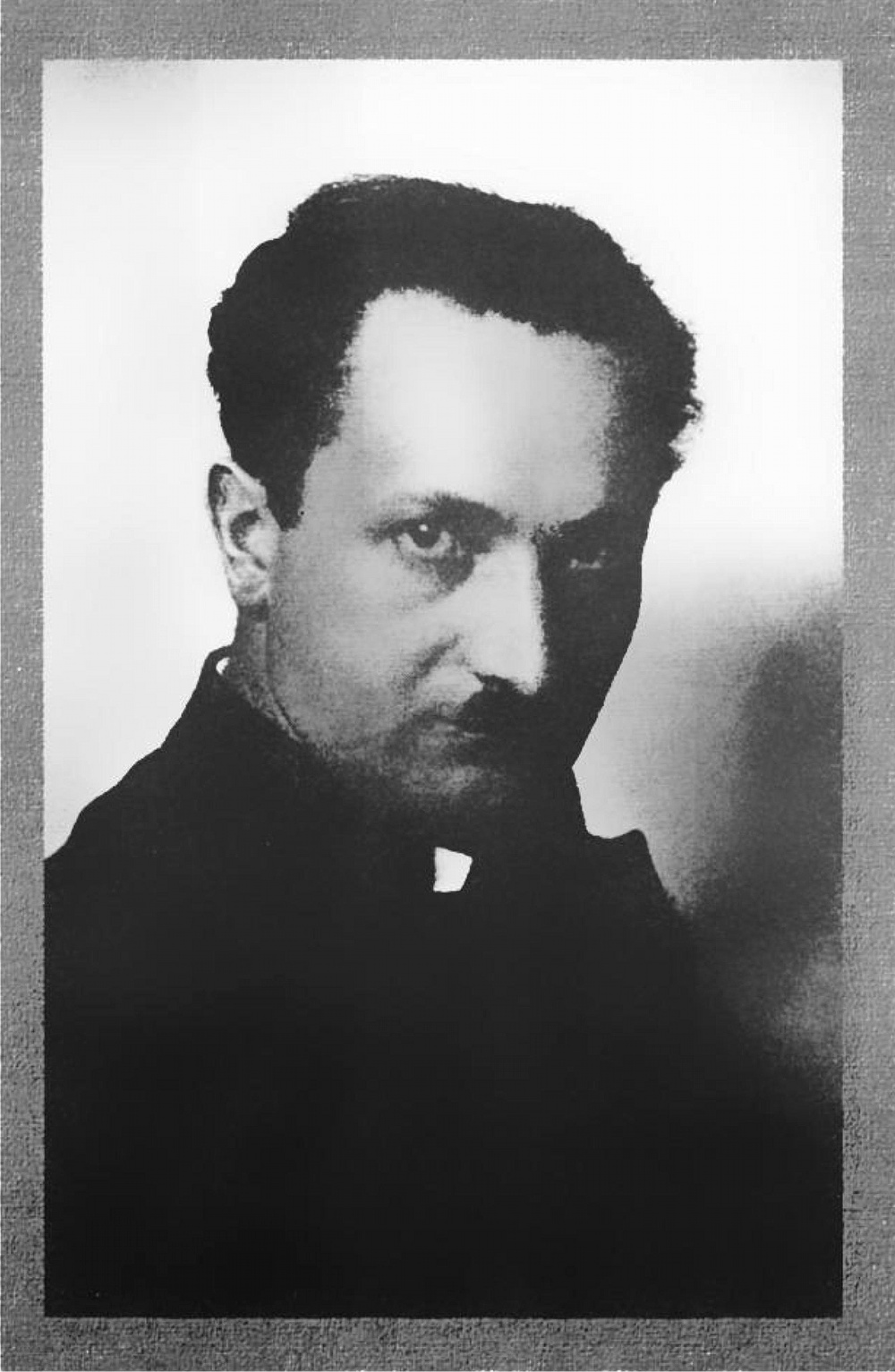
A younger Manfredo Tafuri, before the beard

A younger Manfredo Tafuri, early 1960s, before the beard

One cannot evaluate Laon Cathedral, the Pazzi Chapel, and Berlin’s Siemensstadt within the same linguistic parameters: if one chose purely formal criteria, the symbolic dimension of the first two works would escape completely, while one would miss the intimate contradiction of the third; if one chose the traditional iconological method, one would have to remain mute before Berlin’s Siedlungen; and if one were to trust the analysis of space, one would find no terms of comparison between the spatial narrative of the first, the anti-narrative rigor of the second and the leaving behind of the concept of “space” itself on the part of the third.

The language of architecture is formed, defined and left behind in history, together with the very idea of architecture. In this sense the establishment of a “general grammar” of architecture is a utopia. Continue reading

Signs of rot

Kailash Sreeneevasin posted a great quote from Lars Lih today:

When I look back at this period — when you could say that there was a mass movement, a Marxist mass movement that was genuinely alive — what was it that was alive? It was a sense of a world-historical mission, that the proletariat was “the Chosen People” — this metaphor was made many a time, that this group of people was going to bring the world to a final goal. So that’s what I’m wondering: Is this sense of a world-historic mission alive today, even among the Left? This is what I’m asking you: Is there a genuine sense of this group having a mission and a real sense that it is going to happen? That was the baby that the Left has thrown out, keeping the bathwater, which is very useful — Marx’s analysis of this, class analysis of all this stuff. The bathwater is great! But the baby seems dead or gone. Does this sense of world-historical mission exist and must it exist in order for the Left to be anything like what it was? And is there a way of making it happen if it doesn’t exist? You can’t artificially insist that people believe in a mission like this — or even make yourself do it, if the belief isn’t really there.

Lih is asking the right questions. Just fifty years ago, the quasi-Trot historian Isaac Deutscher was able to confidently assert that

Marxism is not an intellectual, aesthetic, or philosophical fashion, no matter what the fashion-mongers imagine. Continue reading

Lenin on the bourgeois revolutions

Contra the “Leninists”

.
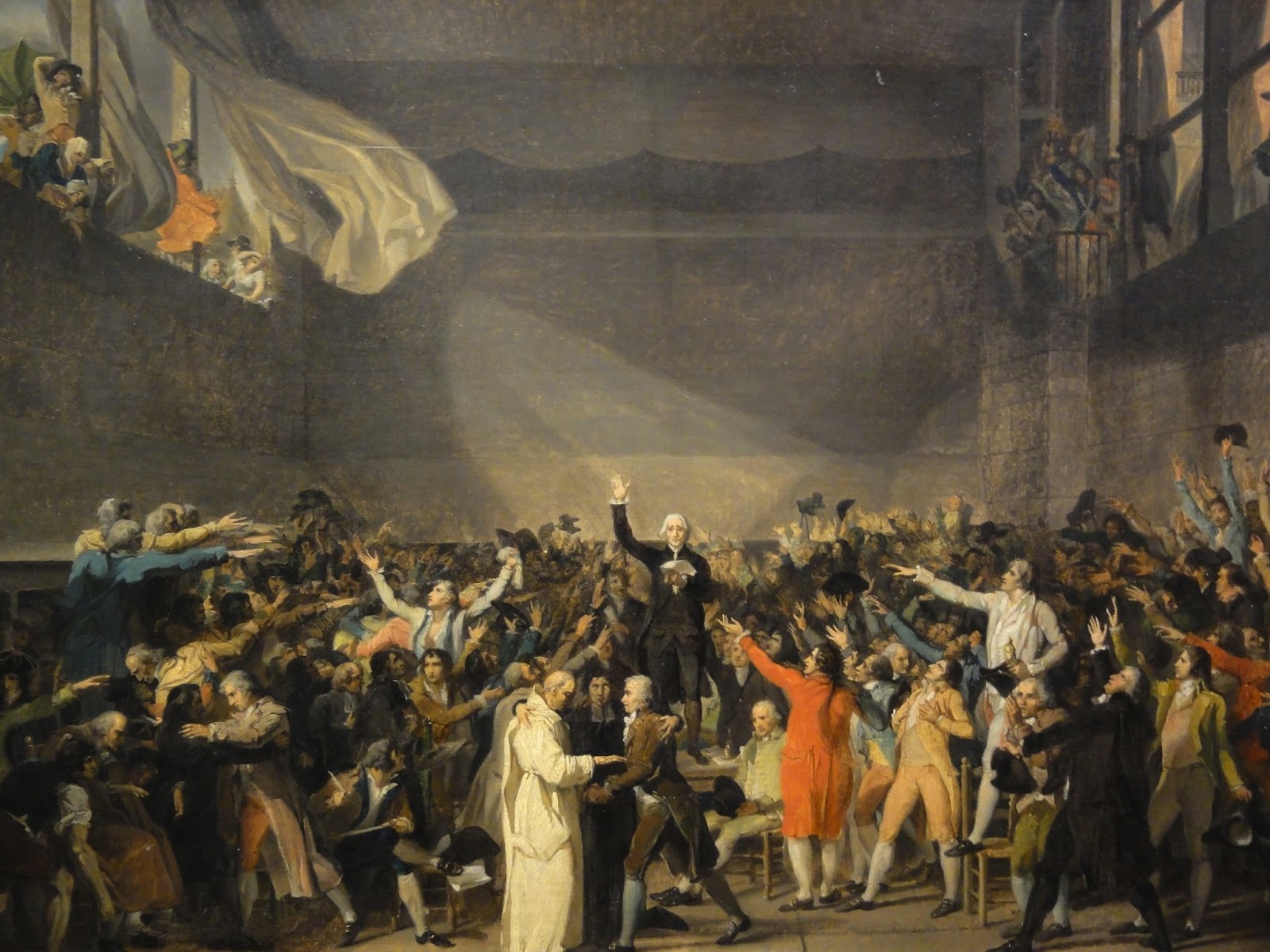
Image: Jacques Louis-David,
The Tennis Court Oath (1793)

Introduction: Against leftist senility

.
I am posting this here because of the widespread incredulity witnessed recently on the part of self-declared “Marxists” toward the historical legacy of the bourgeois revolutions. This is, I contend, the flipside to the tendency of leftists to claim all manner of backwater populists like
Chavez or Allende — their tendency to disclaim truly revolutionary figures who come out of the bourgeois tradition, Jacobins like Jefferson or Danton and radical Republicans like Lincoln. Since they’ve had so few notable political leaders and organizers in recent decades, leftists have lionized sheepish socialists and reformists of all sorts while denigrating the accomplishments of bourgeois revolutionaries. Engels, addressing a crowd gathered in 1845 to mark the “festival of nations,” commemorated the protagonists of the great bourgeois revolutions, adding that “[i]f that mighty epoch, these iron characters, did not still tower over our mercenary world, then humanity must indeed despair.”

Needless to say, this goes double in a time such as ours. Despite the admirable efforts of historians like Neil Davidson, whose recent book How Revolutionary Were the Bourgeois Revolutions? takes explicit aim at such blatant revisionism, neo-Stalinist academics like Domenico Losurdo insist that the category of “bourgeois revolution”

is at once too narrow and too broad. As regards the first aspect, it is difficult to subsume under the category of bourgeois revolution the Glorious Revolution and the parliamentary revolt that preceded the upheavals that began in France in 1789, not to mention the struggles against monarchical absolutism, explicitly led by the liberal nobility, which developed in Switzerland and other countries. On the other hand, the category of bourgeois revolution is too broad: it subsumes both the American Revolution that sealed the advent of a racial state and the French Revolution and the San Domingo Revolution, which involved complete emancipation of black slaves. (Liberalism: A Counter-History, pg. 321)

In an interview I conducted with him over a year ago, the Italian theorist expanded on this point with reference to bourgeois revolutions, faulting Marx himself. “I criticize Marx because he treats the bourgeois revolutions one-dimensionally, as an expression of political emancipation,” he told me. “I don’t accept this one-sided definition of political emancipation, because it implied the continuation and worsening of slavery…We have numerous U.S. historians who consider the American Revolution to be, in fact, a counter-revolution. The opinion of Marx in this case is one-sided.” (Losurdo conveniently forgets it was Engels — the “late” Engels of Anti-Dühring, no less, not a piece juvenilia penned by a supposedly “young” Marx — who maintained: “What the American Revolution had begun the French Revolution completed”). Continue reading

Criticism after utopian politics

Zoltan “Pac” Pobric
The Brooklyn Rail
May 3rd, 2013
.
.

.
Following up on yesterday’s “advice to critics,” I thought it would be appropriate to include a reflection on the state of criticism today. This short article was written by my friend Zoltan “Pac” Pobric, an editor of the Platypus Review. A few other pieces on the subject have been written lately that I’d recommend, such as Ben Davis’ “Crisis and criticism” and Laurie Rojas’ “Confronting the ‘death’ of art criticism.” Pac’s piece is posted here for its exceptional clarity and concision, qualities lacking in much of what passes for “criticism” in the present.

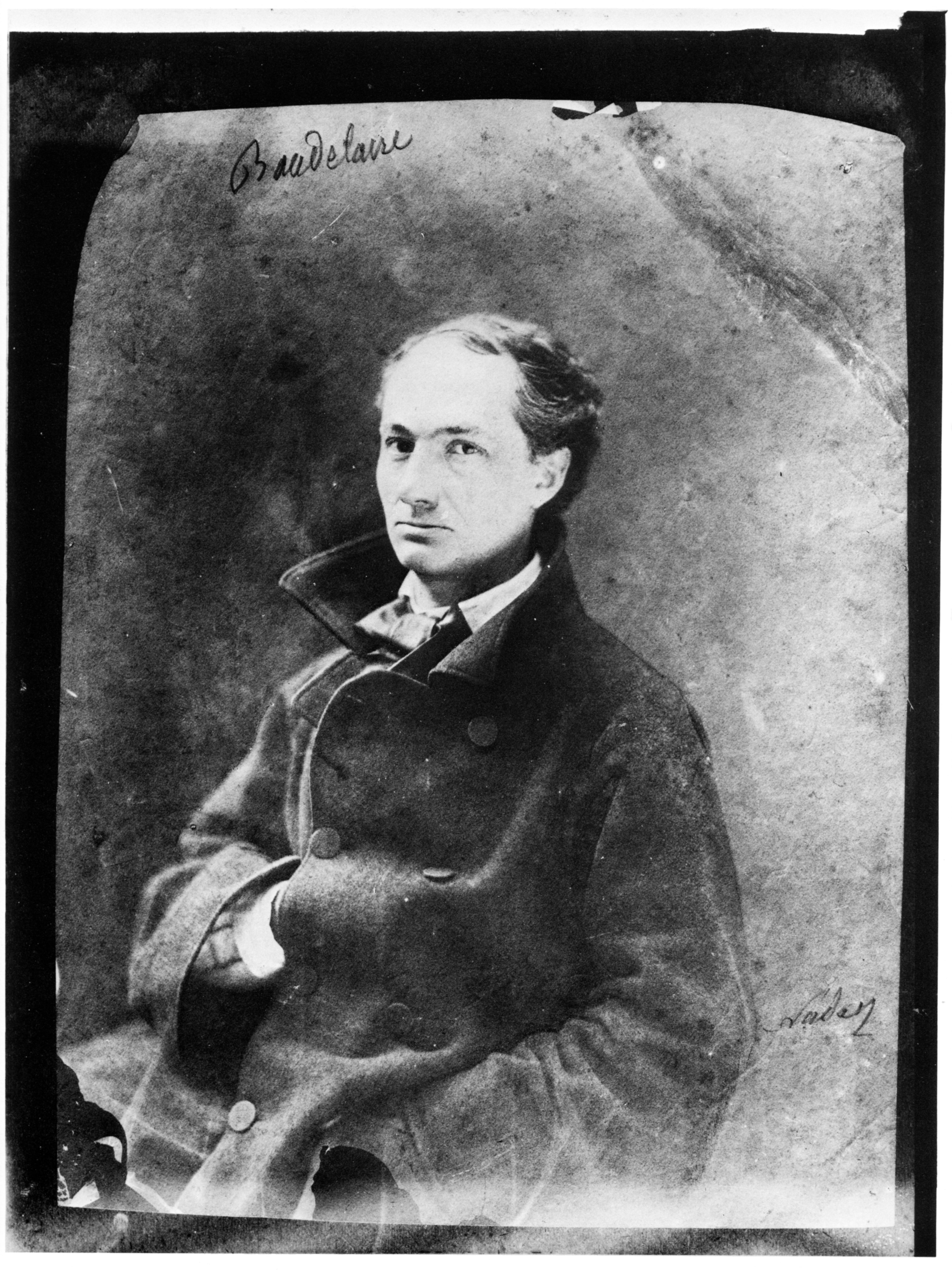
Originally published on The Brooklyn Rail‘s website. The image is Charles Baudelaire photographed in 1855.

.
.
There has been no lack of talk, for the past ten or so years, of some kind of “crisis” in art criticism. James Elkins, Arthur Danto, Katy Siegel, Hal Foster, et al.; everyone seems to have some stake in the failure or ineptitude or impossibility of critical thought. Elkins says that judgment should return; Danto says it’s unnecessary. Siegel says critics have little, if any, real power, and Foster, when pressed, seems to conclude that contemporary criticism is too confused to pin down, which of course is true. Yet all the hand wringing has little to do with criticism per se. The deeper problem, no doubt, is political, and all the anxiety about whether or not we understand contemporary art and culture is misplaced from a deeper distress: do we even understand the world we live in? What’s unclear is not only how we got to our present historical condition, but also, by default, what progress beyond it would look like.

Jacques-Louis David, Death of Marat, 1793. Oil on canvas, 63 3/4 × 50 3/8". Royaux des Beaux-Arts/Koninklijke Musea voor Schone Kunsten, Brussels.

Jacques-Louis David, Death of Marat, 1793. Oil on canvas,
63 3/4 × 50 3/8″. Royaux des Beaux-Arts, Brussels.

Nor does culture seem to offer any directive past the impasse, although the problem isn’t the lack of excellent contemporary art. There is good art today, as there always has been. The deeper problem is that no one seems to be able to recognize it. Art, of course, relies on a receptive audience, and the fundamental question is whether or not one exists today. If even art, like politics, does not seem to be on the verge of a major breakthrough, that may simply be because we cannot imagine what that breakthrough might be.

Our historical moment is a peculiar one. We exist in a quite different universe from the political environments that produced Diderot, writing about the Salon on the eve of the French Revolution; or Baudelaire on Courbet in the wake of the Revolutions of 1848; or even Greenberg, writing about Abstract Expressionism at a time when Trotskyism was still a serious, if increasingly untenable, political position. Our climate is more pessimistic, and progress is more elusive. Revolutionary change is nowhere on the horizon today, as it was for the best critics of the past. Continue reading

Advice for critics

Walter Benjamin, Virginia
Woolf, & Roland Barthes

.
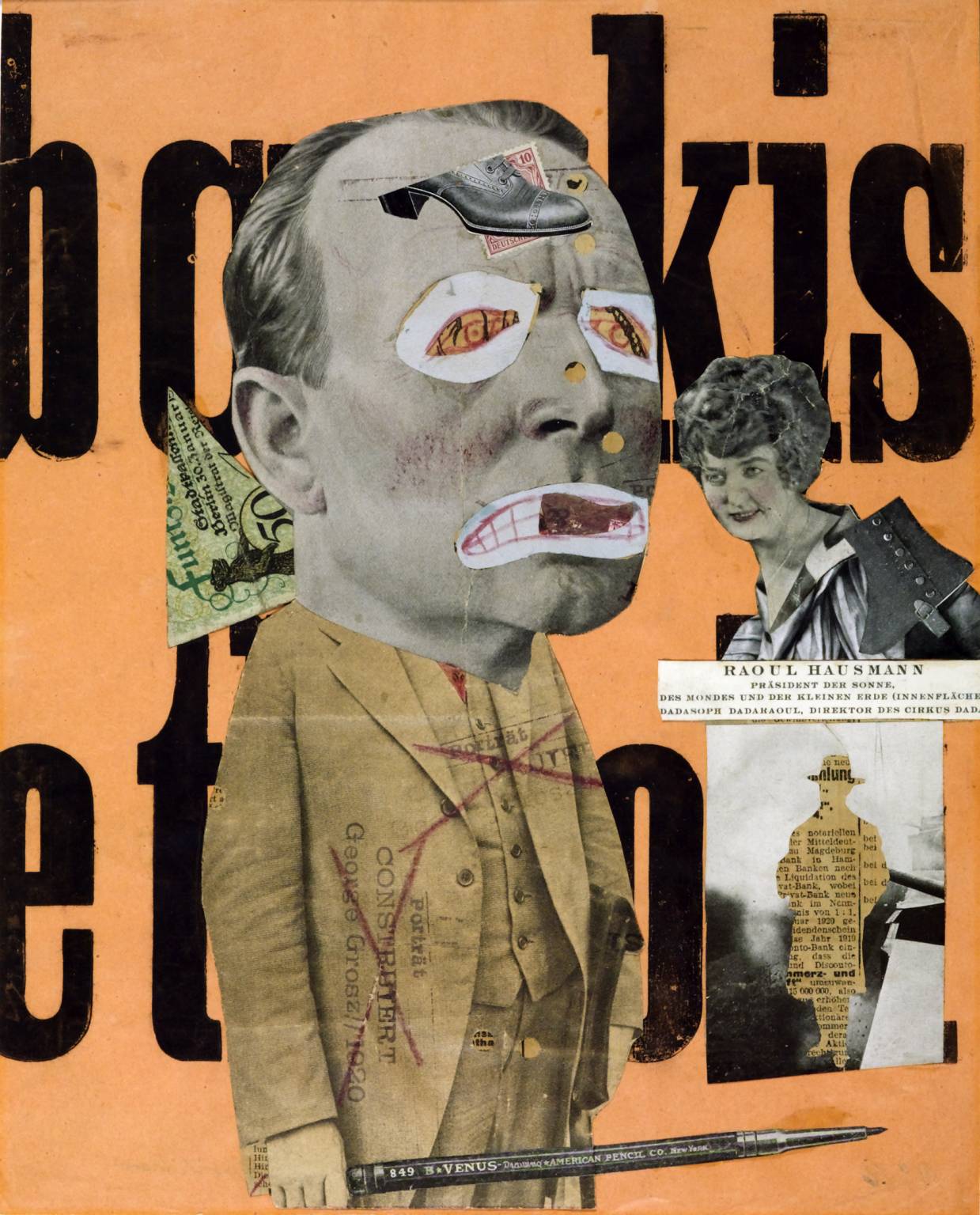
Image: Raoul Hausmann,
The Art Critic (1919-1920),

Walter Benjamin

“The critic’s technique in thirteen theses” (1928)

.

I. The critic is the strategist in the literary battle.
II. He who cannot take sides should keep silent.
III. The critic has nothing in common with the interpreter of past cultural epochs.
IV. Criticism must talk the language of artists. For the terms of the cenacle are slogans. And only in slogans is the battle-cry heard.
V. “Objectivity” must always be sacrificed to partisanship, if the cause fought for merits this.
VI. Criticism is a moral question. If Goethe misjudged Hölder­lin and Kleist, Beethoven, and Jean Paul, his morality and not his artistic discernment was at fault. [One can hear echoes of Kant’s Critique of Judgment in this passage].
VII. For the critic his colleagues are the higher authority. Not the public. Still less posterity.
VIII. Posterity forgets or acclaims. Only the critic judges in face of the author.
IX. Polemics mean to destroy a book in a few of its sentences. The less it has been studied the better. Only he who can destroy can criticize.
X. Genuine polemics approach a book as lovingly as a cannibal spices a baby.
XI. Artistic enthusiasm is alien to the critic. In his hand the artwork is the shining sword in the battle of minds.
XII. The art of the critic in a nutshell: to coin slogans without betraying ideas. The slogans of an inadequate criticism peddle ideas to fashion.
XIII. The public must always be proved wrong, yet always feel represented by the critic.

Man Ray, photo portrait of Virginia Woolf (1935)

Man Ray, Photo portrait of Virginia Woolf (1935)

Virginia Woolf

“The decay of essay-writing” (1905)

.
The spread of education and the necessity which haunts us to impart what we have acquired have led, and will lead still further, to some startling results. We read of the over-burdened British Museum — how even its appetite for printed matter flags, and the monster pleads that it can swallow no more. This public crisis has long been familiar in private houses. One member of the household is almost officially deputed to stand at the hall door with flaming sword and do battle with the invading armies. Tracts, pamphlets, advertisements, gratuitous copies of magazines, and the literary productions of friends come by post, by van, by messenger — come at all hours of the day and fall in the night, so that the morning breakfast table is fairly snowed up with them. Continue reading

Heidegger’s Nazism

A review of Victor Farías’
Heidegger and Nazism (1987)

.

.
This one’s from the archives. I stumbled across it today while trying to dig up another file. Upon rereading it, I was surprised to see that I still agree with most of the sentiments it conveys. Of course, there are some bits that annoy me that I’d like to change, but I’m going to post it as is. Don’t be too hard on me; it’s from 2006.

.
Very little can be written concerning Victor Farías’ polemical Heidegger and Nazism which has not already been extensively discussed. Since its release in French translation in 1987, the book has been the subject of furious criticism, defended by an army of staunch advocates while simultaneously decried by a host of equally resolute detractors. For both extremes this work merely provided a pretext for debate. The battle lines had for the most part already been drawn: the response on either side to its publication was generally automatic. More judicious commentators have since been able to appreciate the truly groundbreaking revelations of Farías’ study, at the same time recognizing its severe limitations. The question of an author’s reasons for conducting this sort of investigation must inevitably arise, after all, given the controversial nature of the issues at stake. This was no small undertaking on his part. The painstaking archival process by which Farías gathered his data was carried out systematically over the course of several years. This no doubt casts some suspicion on his motives. Moreover, the striking lack of ambiguity in his results (which invariably implicate Heidegger as a loyal Nazi all along), combined with a number of questionable arguments and characterizations he makes, only serves to damage the integrity of his otherwise impressive research. So what might then be salvaged from Farías’ contentious analysis? The reader might proceed with cautious reservation, acknowledging the disturbing discoveries it relates while sifting out its more dubious insinuations.

Brief memorandum circulated by Heidegger addressing the students at Freiburg, 1934

Brief memorandum circulated by Heidegger
addressing the students at Freiburg, 1933

We shall begin by examining the general methodology of the text. The technique Farías employs throughout in assessing Heidegger’s thought is primarily external. That is to say, the book does not look to excogitate the subtle nuances and abstractions of Heidegger’s philosophy from within. Instead, Farías devotes most of his attention to relatively minor documents (memos, speech transcripts, personal correspondences, etc.). Continue reading

Architecture and politics

“Architecture as politics is by now such an exhausted myth that it is pointless to waste anymore words on it,” sighed Manfredo Tafuri at the outset of his magnum opus, The Sphere and the Labyrinth (1980). Despite Tafuri’s dismissive gesture, many today still insist that architecture possesses considerable political agency. Personally, I’m more inclined to agree with Tafuri. While it would be mistaken to regard architecture and politics as totally unrelated, the precise nature of their interconnection is not at all what most advocates of architecture’s political role seem to think.

And so, without reopening this discussion wholesale, I think there are some basic clarifications that must be made before issuing any judgment about their relationship to architecture. Continue reading

The “death” of modern architecture?

Giedion reflects, 1963

Untitled.
Image: Architectural historian Sigfried Giedion
untitled2

Responding to my post yesterday on Claude Schnaidt, Nick Axel of the blog Awaking Lucid asked whether I could “recommend a book or some resource that could explain…in greater detail…the ‘sociohistoric mission’ [of architecture]…in relation to style, that you, and Schnaidt, find problematically lacking today?” Furthermore, he wondered: “What does it mean to have a ‘sociohistoric mission’?”

These are the right questions to ask. You see, Nick and I recently entered into dialogue (at my initiation) so as to find some common ground between our concepts and thereby clarify whatever points similarities or dissimilarities might exist in our respective appraisals of the present state of architecture. Currently I’m preparing a response to a brief piece published by Leopold Lambert on his Funambulist platform along with Sammy Medina, and with the invaluable assistance of our colleague and comrade Reid Kane.

Axel’s approach, to be sure, varies from mine greatly. Despite some authors we both invoke, we speak in almost entirely different philosophical-theoretical idioms. Even if we were to understand each other completely, I suspect there would be a great deal that divides us in terms of our assessment of the relationship between architecture and politics. Nevertheless, I am convinced that we can at least attain to this level of mutually intelligible disagreement.

Put simply, the “sociohistoric mission” of modern architecture I sometimes mention is the same to which every modern discipline aspires: the world-historical transformation of society. Generally, this transformation is implicitly linked to, or participates in, a broader project of emancipation. Its task is the self-overcoming of bourgeois society, and as a consequence (eo ipso) the realization of freedom in time. A couple years back I outlined some of the ways this manifested itself in the architecture of the twentieth century. This might be a helpful place to start.

Regarding “style,” this is rather old hat in the propaganda of the classical avant-garde. Yet it is rooted in reality. All the great modernists rejected the idea that they were simply founding a new “style.” “Architecture has nothing to do whatsoever with the styles,” Corbu wrote in Toward an Architecture. Similarly, one can detect in the following passage from Giedion’s 1963 edition of Space, Time, and Architecture the contempt he feels toward theorists like Philip Johnson, who had branded the modern movement with the utterly false and misleading title of being “an international style.” The nineteenth century was, of course, characterized by Muthesius as dominated by Stilarchitektur, and involved a “battle of the styles.”

Here’s Giedion’s reintroduction to his classic work:

Confusion and boredom

In the sixties a certain confusion exists in contemporary architecture, as in painting; a kind of pause, even a kind of exhaustion. Everyone is aware of it. Fatigue is normally accompanied by uncertainty, what to do and where to go. Fatigue is the mother of indecision, opening the door to escapism, to superficialities of all kinds.

A symposium at the Metropolitan Museum of New York in the spring of 1961 discussed the question, “Modern Architecture, Death or Metamorphosis?” As this topic indicates, contemporary architecture is regarded by some as a fashion and — as an American architect expressed it — many designers who had adopted the fashionable aspects of the “International Style,” now found the fashion had worn thin and were engaged in a romantic orgy. This fashion, with its historical fragments picked at random, unfortunately infected many gifted architects. By the sixties its results could be seen everywhere: in small-breasted, gothic-styled colleges, in a lacework of glittering details inside and outside, in the toothpick stilts and assembly of isolated buildings of the largest cultural center. Continue reading

The Soviet pavilion at the 1925 Paris International Exposition

For those ardent enthusiasts of Soviet avant-garde architecture from the 1920s, whom I suspect account for a great deal of this blog’s readership, my retrospective evaluation of Konstantin Mel’nikov’s famous house in Moscow from a few weeks back may have rubbed some the wrong way. While generally appreciative of the architect’s built and unbuilt legacy, it was decidedly less impressed with the private domestic arrangement he designed for himself. This might not seem all that controversial to those of you who remain unschooled in Soviet architectural esoterica, but when it comes to a structure as iconic as Dom Mel’nikova — a building currently threatened by years of neglect and decay — such an opinion could well be considered anathema. In case this opinion offended any Mel’nikov partisans among you, however, this post is intended to make up for it. Today we’ll review one of his projects that I consider an overwhelming and unambiguous success: the Soviet Pavilion for the 1925 Paris Exposition.

Mel’nikov’s undoubtable talents as an architect revealed themselves nowhere more clearly than in his submissions to international design competitions. A number of historians have noted this fact.”Mel’nikov rose to prominence through competitions,” writes Jean-Louis Cohen in his recent historical overview, The Future of Architecture since 1889. “Mel’nikov created a sensation with his Makhorka Tobacco Pavilion at the Agricultural Exhibition held in Moscow in 1923 and, two years later, with the pavilion he designed to represent the USSR at the Exposition Internationale des Arts Décoratifs et Industriels Modernes” (pgs. 165-166). Though they drew a dubious inference regarding Mel’nikov’s overall “qualifications” from the work, Manfredo Tafuri and Francesco Dal Co reached a similar conclusion in their history of Modern Architecture: “Mel’nikov acquired immediate international fame with his Russian pavilion for the Paris Exposition of 1925” (pg. 180).

Initial sketches, models, and designs

.
As the above would seem to suggest, Mel’nikov’s pavilion was, at least visually, extremely striking. Not only that, however. Its perambulatory effect, experienced chiefly through the mechanism of the open staircase, was similarly unprecedented. The glasswork, laid out in flat sheets stood vertically adjacent to the stairs, allowed the entire contents of the building’s interior (its stands, internal layout, and displays). Concerning the formal significance of the structure’s composition, and its reception by crowds of Parisians and foreign visitors, Cohen summarizes: “Composed of two glazed triangular volumes bisected diagonally by a staircase, it was the most conspicuous structure at the Paris exhibition. It revealed to the West the existence of a new Russian architecture, which was further confirmed by the presentation elsewhere at the fair of over one hundred projects conceived in the USSR since 1920” (The Future of Architecture, pg. 166).

El Lissitzky, writing several years after the 1925 Paris Expo, reasoned along similar lines. For him, the Mel’nikov’s piece was significant as an early and profound expression of the formalist wing of Soviet architecture, represented in the theory and methods of the ASNOVA group, of which Mel’nikov was a member at the time. Lissitzky wrote:

The first small building that gave clear evidence of the reconstruction of our architecture was the Soviet Pavilion at the Paris World’s Fair of 1925, designed by Mel’nikov. The close proximity of the Soviet Pavilion to other creations of international architecture revealed in the most glaring way the fundamentally different attitudes and concepts embodied in Soviet architecture. This work represents the “formalistic” [Rationalist] wing of the radical front of our architecture, a group whose primary aim was to work out a fitting architectural concept for each utilitarian task.

In this case, the basic concept represents an attempt to loosen up the overall volume by exposing the staircase. In the plan, the axis of symmetry is established on the diagonal, and all other elements are rotated by 180 ̊. Hence, the whole has been transposed from ordinary symmetry at rest into symmetry in motion. The tower element has been transformed into an open system of pylons. The structure is built honestly of wood, but instead of relying on traditional Russian log construction [it] employs modern wood construction methods. The whole is transparent. Unbroken colors. Therefore no false monumentality. A new spirit. (The Reconstruction of Architecture in the USSR [1929], pgs. 35-36.

The building thus reflected the relatively advanced state of Russia’s architectural thinking rather than any inherent political message. Tafuri and Dal Co. wisely warned against seeing the structure as some kind of metaphor for socialism. Paying close attention to the architect’s initial sketches (shown above), they derived an interpretation of the pavilion as a daring formal experiment rather than a propaganda piece. “[Mel’nikov’s pavilion] was a dynamic building based on the intersection of deformed geometrical masses that obliged the visitor to move along specific diagonals. There is no point in reading those ‘intersections’ as metaphors of the socialist dynamic: the preparatory drawings for the pavilion show circular buildings which are broken up, inclined, and interconnected in informal manner, indicating beyond a doubt that what interested the architect was only experimentation with a language made up of alienated objects, of volumes designed to deform their own geometry and in fact clashing with each other” (pg. 180).

Photos of Mel’nikov’s 1925 pavilion

.
This was, incidentally, roughly in accordance with Mel’nikov’s own self-understanding at the time of the Paris Expo. Upon arriving in Paris, and completing the startling structure, the Soviet architect found himself a minor celebrity on the scene. A buzz already surrounded Mel’nikov given the sketches that’d been previewed in the Parisian press. In the summer of 1925, then, a major newspaper sat down to interview the emerging designer. Continue reading

Research and editorial consultation

Untitled

.
Image: Erik Desmazieres, original illustration to
Jorge Luis Borges’ The Library of Babel (1941)

untitled2

In the hopes of supplementing my income — which is rather modest as things currently stand — I’m hereby offering my services to the public as a freelance research and editorial consultant, available for a negotiable fee. Since a number of readers have already contacted me with questions regarding the content on this site (hoping to track down a specific quote or source an image), or seeking my advice about their own studies and intellectual pursuits, I figured I’d formalize the process.

Normally, of course, in the past this has all been done pro bono. But as the volume of inquiries I receive has begun to significantly increase in recent months, to the point where it’s become unmanageable, this is no longer a viable option for me. This, I hope, will help me prioritize those tasks which I can actually take on and commit myself to fully. Longer-term projects under different arrangements would be welcome as well. So if any groups, individuals, or institutions would be interested in hiring someone with my qualifications on a more permanent basis, don’t hesitate to ask.

Jorge Luis Borges

Erik Desmazieres, original illustration to Jorge Luis Borges’ The Library of Babel (1941)

While nothing has been cast in stone as yet, the cost of a given assignment will depend upon the amount of work it requires, measured in terms of both the size and difficulty of the project. At first the price will probably be relatively lower, until I’ve gotten a few under my belt and have a better sense of how much time and energy demand. Still, it’s not as if I haven’t done this sort of thing before, albeit in a slightly different setting and under different arrangements. Whether in an academic or professional capacity, the quality and consistency of my work is self-evident throughout.

On this page, I’m thus including a copy of my CV in PDF format, with clickable hyperlinks to examples of my writing and a copy of my employment history. My areas of greatest specialty include politics, philosophy, architecture, Russo-Soviet and European history, and archival research in multiple languages (especially Russian). However, I’d be happy to work in an editorial capacity on written pieces as well, helping to iron out any problems with grammar, style, formatting, or flow that that might exist. Given my extensive experience with visual media, also, I’d be willing to edit and curate any photos or videos you might need.

Please feel free to contact me with questions or requests. I can be reached at rosslaurencewolfe@gmail.com.

Curriculum Vitae

.