Football in the first decades of the Soviet Union

Young people, particularly, need the joy and force of life. Healthy sport, swimming, racing, walking, bodily exercises of every kind, and many-sided intellectual interests. Learning, studying, inquiry, as far as possible in common. That will give young people more than eternal theories and discussions about sexual problems and the so-called ‘living to the full’. Healthy bodies, healthy minds! Neither monk nor Don Juan, nor the intermediate attitude of the German philistines. You know, young comrade…?

— Vladimir Lenin, 1919 Continue reading

Victory over the sun (1913)

  • Two Futurist Strongmen
  • Nero and Caligula
  • A Time Traveller
  • A Malevolent
  • A Willbeite Machine Gun
  • A Fightpicker
  • Belligerent Soldiers
  • Sportsmen
  • Chorus
  • Pallbearers
  • A Telephone Talker
  • Eight Sun Carriers
  • The Motley Eye
  • The New
  • The Cowardly
  • A Reader
  • A Fat Man
  • An Old-timer
  • An Attentive Worker
  • A Young Man
  • An Aviator

Aleksei Kruchenykh (1886-1968) was a noted poet of the Russian Silver Age of literature. A radical even within the Russian Futurist movement, his best known works are the poem “Dyr bul shstyl” and the opera Victory over the Sun, with sets by Kazimir Malevich and music by Mikhail Matiushin. He was co-signatory, with Vladimir Mayakovsky, David Burliuk, and Velimir Khlebnikov, of “A Slap in the Face of Public Taste.” He is considered the father of zaum, or transrational writing.

.

FIRST ACTION

*

Scene one

.
White with black: walls white, floor black.

(TWO FUTURIST STRONGMEN rip the curtain.)

*
THE FIRST

All’s well that begins well!
And ends?

THE SECOND

There will be no end!
We astound the universe

THE FIRST

We arm the world [1] against ourselves
Organize the slaughter of scarecrows
How much blood
How many sabers
And bodies for cannons!
We inundate the mountains!

(They sing.)

Fat beauties
We’ve locked up in a house
Let the drunkards there
A variety walk start naked
We have no songs
Recompense of sighs
That beguile the slime
Of rotten naiads!

(FIRST STRONGMAN slowly exits.)

SECOND STRONGMAN

Sun you bore the passions
And scorched them with flaming beam
We’ll yank a dusty coverlet over you
Lock you up in a concrete house!

(NERO and CALIGULA appear in one person: he has only one left arm, raised and bent at right angles.)

N. AND C. (menacingly)

K’youllen sewern der*
Travelled light
Past Thursday
Fry rip what I left half-baked.

Continue reading

Response to Peter Frase on identity politics

.
Jacobin
has published a short reflection by Peter Frase on identity politics, with the humorous title
“Stay Classy.” Unfortunately, the title is probably the best thing about it. The rest of it is a bit slapdash, haphazardly whipped together. Especially the bit on “racecraft,” which seems both tacked on and untrue to  Barbara and Karen Fields’ argument in their book of the same name. Generally I think Frase is the brains of the bunch over at Jacobin, and still recommend his “Four Futures” essay to anyone interested in the journal. But this piece — as well as his earlier article on the 2011 protests in Wisconsin, “An Imagined Community,” in which he claimed “all politics are identity politics” — I find far weaker.

Anyway, I read this article when it appeared on  Frase’s blog. Here’s what I wrote there, with a few slight alterations:

.
The emphasis on “identity” is misleading.

Marx stressed the significance of the proletariat as the “universal class” of bourgeois society because of its decisive position within the capitalist mode of production. Not because workers are the most downtrodden or marginalized members of society, but because they are uniquely placed to overturn the present social order. Immiseration notwithstanding, lumpenproletarians (the so-called “lazy lazzaroni” of  the “classes dangereuses“), the unemployable reserve army of labor, and those still involved in peasant labor have it far worse than those who manage to find waged or salaried jobs under capitalism. So if oppression doesn’t index political potential, what does? What makes the working class so special?

a1bd69a243f8

Once again, it’s not that the working class is inherently radical or progressive. History has shown again and again that workers are susceptible to the influence of reactionary ideologies, and quite often act in ways that seem to go against their best interest. Proletarian parties and political movements have repeatedly erred in assuming that the laboring masses would eventually come around to socialism, only to see their expectations dashed at the final moment. All the same, the proletariat remains the sole hope that capitalism might someday be overcome. If workers aren’t natural-born revolutionaries, though — if they don’t automatically organize around socialist principles — what could possibly justify this continued belief?

Though it risks sounding redundant, we would do well to remind ourselves that the fundamental structuring principle of the capitalist social formation is capital. Capital is a social relationship in which a given magnitude of value, itself comprised of finished products embodying dead labor, must augment itself through the process of production, by coming into contact with living labor that valorizes it further. It is thus necessarily mediated at every level by wage-labor, on which its fructification relies. For this reason, it is dependent on a class of laborers — a social group determined by its relation to the means of production. Continue reading

Pour Hegel: Marx’s lifelong debt to Hegelian dialectics

.

By now it should be obvious to anyone who has looked at Karl Marx’s entire corpus, both published and unpublished works, that the philosophy of Georg Wilhelm Friedrich Hegel was an abiding influence on his thought. Marx certainly had no patience for those “the ill-humored, arrogant, and mediocre epigones” who treated Hegel a “dead dog,” much in the same way that the Leibnizian philosopher Moses Mendelssohn treated Spinoza like a “dead dog.” This is amply evident both in the 1873 postface to his masterpiece, Capital, as well as in private letters written to friends and colleagues between 1866 and 1870.

In this post, I will adduce clearly that Marx still held Hegel in high regard up to and beyond the publication of his “mature” works (if one still insists, following Althusser and Colletti, upon drawing a rigid distinction between the Young Marx and Old Marx). Even further, I will show that Marx understood his own dialectical method as a critical application or “inversion” of Hegel’s. As Marx saw it, the principal difference between his own theoretical framework and that of Hegel consisted in their respective points of departure. Hegel was an idealist, after all, and started with the Idea. Marx, on the other hand, started with the real world. “With [Hegel],” Marx wrote, “[the dialectic] is standing on its head. It must be inverted, in order to discover the rational kernel within the mystical shell.”

First, however, a couple of caveats:

  1. None of this should be taken to mean that Marx was still wasting his time with philosophy as he sat down to write Capital. He and Engels had settled that score back in the 1840s, with a number of searing polemics against the Young Hegelians. Philosophy was, for all intents and purposes, finished by then. Hegel had completed it, and all that was left to do was to realize what philosophy had merely declared, ideologically, at the level of the Idea. Any attempt to travel back down that road was bound to lead to a dead end. Engels himself reaffirmed in 1886 that “with Hegel philosophy comes to an end.”
    .
    Joseph Dietzgen probably came closest to providing a philosophical account of Marx’s theory; Marx and Engels affectionately called him “the philosopher of socialism.” Generally speaking, however, the notion of founding a Marxist “philosophy” is absurd — something Althusser failed to recognize. Which isn’t to say that it’s not useful to retrace the steps by which Marx and Engels took their leave of philosophy. Karl Korsch’s outstanding essay “Marxism and Philosophy” (1923), makes the strongest case for this exercise.
    .
  2. My aim here is hardly to “re-mystify” Marx’s thought, or to turn him into some harmless figure whose books can be found in the philosophy section of Barnes and Noble. There’s doubtless cruel irony in the fact that Marx was overwhelmingly voted the “greatest philosopher” of all time in a 2005 BBC poll. He would doubtless have been appalled by the verdict, since he understood his vocation to be non-philosophical. Instead, my intention is to elucidate Marx’s rationalization and demystification of Hegel’s dialectic, placing it on terra firma rather than high up in the clouds.

Plenty of clues exist which verify Marx’s favorable opinion of Hegel, not just in the 1873 postface itself (though here also) but in letters Marx sent to colleagues around the same time, corroborating his annoyance with “ill-humored” anti-Hegelian boors. A proper timeline will help clear things up a great deal.

So before we take a look at his letters, let’s glance at the relevant passage from the postface again:

My dialectical method is, in its foundations, not only different from the Hegelian, but exactly opposite to it. For Hegel, the process of thinking, which he even transforms into an independent subject, under the name of “the Idea,” is the creator of the real world, and the real world is only the external appearance of the idea. With me the reverse is true: the ideal is nothing but the material world reflected in the mind of man, and translated into forms of thought.

I criticized the mystificatory side of the Hegelian dialectic nearly thirty years ago, at a time when it was still the fashion. But just when I was working at the first volume of Capital, the ill-humored, arrogant, and mediocre epigones who now talk large in educated German circles began to take pleasure in treating Hegel in the same way as the good Moses Mendelssohn treated Spinoza in Lessing’s time, namely as a “dead dog.” I therefore openly avowed myself the pupil of that mighty thinker, and even, here and there in the chapter on the theory of value, coquetted with the mode of expression peculiar to him. The mystification which the dialectic suffers in Hegel’s hands by no means prevents him from being the first to present its general forms of motion in a comprehensive and conscious manner. With him it is standing on its head. It must be inverted, in order to discover the rational kernel within the mystical shell. (Capital, pgs. 102-103)

Clearly Marx credits Hegel as being “the first to present [the dialectic’s] general forms of motion in a comprehensive and conscious manner,” despite the mystifications it suffers at his hands. This does not render Marx’s own theoretical efforts superfluous: his task is precisely to demystify it and place it back on its feet. Its “general forms of motion” are the same, as readers from Lenin to Postone have pointed out, but its trajectory is precisely the reverse (“exactly opposite”). He places Hegel’s dialectic on solid foundations. After all, Marx says outright that “[his] dialectical method” is exactly opposite to Hegel’s “in its foundations.”

But wait, you might ask: Who were these “ill-humored, arrogant, and mediocre epigones who now talk large in educated German circles,” anyway? And when was it that Marx was provoked by their unlettered anti-Hegelianism to openly avow himself the pupil of that “great thinker” (Hegel)? Marx doesn’t provide any examples of who he’s talking about in the 1873 postface, nor does he indicate when he took such umbrage at their treatment of Hegel like a dead dog. Continue reading

Assorted Soviet propaganda posters, 1918-1939

.
Here’s an assortment of early Soviet propaganda posters from the revolutionary period up to the eve of the Second World War. I found a cache of exceptionally high quality, high resolution scans. Obviously my posting of them does not constitute an endorsement of the political views they express, especially in its more monumental Stalinist overtones (being more sympathetic to Trotsky and the Left Opposition myself).


Red Wedge beats the White Circle, 1919 El Lissitzky Aleksandr Rodchenko, poster for books with Lilia Brik, 1924 Aleksandr Rodchenko, Dobrolet poster 1923 Battleship Potemkin movie poster 1925 Soviet tramcar service advertisement, 1920s.


ksssrpost_0031 ksssrpost_0009 ksssrpost_0032 ksssrpost_0056 ksssrpost_0055.


On the first socialist tragedy

Andrei Platonov

.
It is essential not to thrust oneself forward and not to get drunk on life; our time is both better and more serious than blissful delight. Everyone who gets drunk is sure to be caught, sure to perish like a little mouse that messes with a mousetrap in order to “get drunk” on the fat on the bait. All around us lies fat, but every piece of this fat is bait. It is necessary to stand in the ranks of the ordinary people doing patient socialist work — that is all we can do.

The arrangement of nature corresponds to this mood and consciousness. Nature is not great and is not abundant. Or her design is so rigid that she has never yet yielded her greatness and her abundance to anyone. This is a good thing; otherwise — in historical time — we would long ago have looted and squandered all nature; we would have eaten our way right through her and got drunk on her right to her very bones. There would always have been appetite enough. Had the physical world been without what is, admittedly, its most fundamental law — the law of the dialectic — it would have taken people only a few centuries to destroy the world completely. More than that, in the absence of this law, nature would have annihilated itself to smithereens even without any people. The dialectic is probably an expression of miserliness, of the almost insuperable rigidity of nature’s construction — and it is only thanks to all this that humanity’s historical development has been possible. Otherwise everything would long ago have come to an end on this earth — like a game played by a child with sweets that melt in his hands before he has even had time to eat them.

What is the truth to be seen in the historical picture of our own time?

It goes without saying that this picture is tragic — if only because true historical work is being carried out not on the whole of the earth but only on a small, and greatly overburdened, part of the earth.

Truth — in my opinion — lies in the fact that “technology decides everything.” It is indeed technology that constitutes the theme of our contemporary historical tragedy — if technology is understood to mean not only the entire complex of man-made production tools but also the social organization that is based on the technology of production, and if ideology too is included in this understanding. Ideology, incidentally, is located not in the superstructure, not on some “height,” but somewhere within, in the heart of society’s sense of itself. To be more precise, unless in our concept of technology we also include the technician himself — the human being — our understanding of the question will remain obtuse and leaden.

The relationship between technology and nature is tragic. Technology’s aim is “Give me a fulcrum and I shall overturn the world.” But nature’s construction is such that she does not like being outmaneuvered. With the right moment of force it is possible to overturn the world, but so much will be lost in the journey and in the travel time of the lever that in practical terms the victory will be useless. This is an elementary example of the dialectic. Let us look now at a fact from our own time: the splitting of the atomic nucleus. It is the same thing. The hour will come when we expend n quantity of energy on the destruction of an atom and in return receive n + 1 — and we will be ever so pleased with this meager increase, because this absolute gain will have been obtained by virtue of something like an artificially induced change to nature’s most fundamental principle: the dialectic itself. Nature stays aloof, she keeps us at bay; a quid pro quo — or even a trade with a mark-up in her own favor — is the only way she can work. Technology, however, strains to achieve the opposite. It is through the dialectic that the external world is defended against us. And so, however paradoxical this may seem: nature’s dialectic is both humanity’s enemy and its instructor. The dialectic of nature constitutes the very greatest resistance to technology; the aim and function of technology is to deny, or at least mitigate, the dialectic. Up until now its success in this has been modest, which is why the world cannot yet be kind and good for us.

And at the same time, the dialectic is our only instructor and our only means of defense against the premature and senseless destruction involved in childish delight. Just as the dialectic is itself the power that has created all our technology.

In sociology, in love, in the depth of a human being, the law of the dialectic functions no less immutably. A man with a ten-year-old son left the boy with the boy’s mother — and married a young beauty. The boy began to long for his father and patiently, clumsily hanged himself. A gram of delight on one end of the lever is balanced by a ton of graveyard earth on the other. The father took the rope from the boy’s neck and soon followed him into the grave. What he wanted was to get drunk on the innocent beauty; he wanted to bear love not as a duty, not as an obligation with a single wife, but as pleasure. Don’t get drunk — or it will be the end of you.

Some naïve people may retort that the contemporary crisis of production overturns this point of view. It does not overturn anything. Imagine the extremely complex technical equipment of the society of contemporary imperialism and fascism, the grinding exhaustion and destruction of the people of these societies — and it will become only too clear at what price this increase in the forces of production has been achieved. Self-destruction in fascism, war between states — these are the losses entailed by increased production, these are nature’s revenge for it. The tragic knot is cut — but without being resolved. What results cannot — in the classical sense of the word — even be called tragedy. Without the USSR, the world would be certain to destroy itself in the course of no more than a century.

The tragedy of man, armed with machine and heart, and with the dialectic of nature, must in our country be resolved by way of socialism. But it must be understood that this task is an extremely serious one. Ancient life on the “surface” of nature was able to obtain what was essential to it from the waste products and excretions of elemental forces and substances. But we mess about deep inside the world, and in return the world crushes us with an equivalent strength.

Translated by Robert Chandler, Elizabeth
Chandler, Joan Brooks, and Olga Meerson

Continue reading

The politics of preservation: Shukhov radio tower in Moscow, 1920-1922

Originally published by Metropolis
magazine back in March 2014.

.
Moscow’s Shukhov radio tower, an iconic work of early Soviet constructivism, has lately become a subject of intense debate within Russia, involving several government ministries and independent civil society organizations. Erected between 1920 and 1922, the structure today faces either disassembly or potential collapse, resulting from lack of proper upkeep and decades of neglect. Once a symbol of revolutionary optimism and progress, Vladimir Shukhov’s masterpiece of light engineering now takes on an aspect of fragility. Its steel frame stands as a material reminder of the extraordinary experiment once underway in that part of the world, another delicate relic of a bygone age.

According to Russia’s Federal Ministry of Communications and Mass Media, the aging tower has fallen into such irrevocable disrepair that the only hope for salvaging it is to dismantle it immediately so that the original pieces can be put back together at a future date. “The only possible solution to the problem is a two-stage reconstruction and renovation of the station, which stipulates…its dismemberment for the conservation and preservation of elements for later restoration,” an unnamed spokesperson told The Moscow Times last month. Failing this, ministry officials warn, the radio tower will sooner or later succumb to decay, the latticework no longer able to resist the force of gravity pulling it down to earth. In their view, it must be removed at least for the time being. Some have even raised the possibility of permanent relocation to another, yet-to-be-determined site, a still more controversial prospect.

rodchenko-shukhov-transmission-tower-1919Башня радио-станции %22Большой Коминтерн%22 1927

Not everyone agrees with this dire forecast, however. Opponents of this proposal — which include the Russian Ministry of Culture as well as the architect’s great-grandson, also named Vladimir Shukhov — acknowledge the seriousness of the situation, but suggest a method of restoration that would leave the building intact for the duration. With careful precision, they contend, it would be possible to reinforce points of structural weakness without tearing the tower down. Moreover, there is some question as to the legality of such a motion, were it to take place, especially given the Shukhov tower’s protected status as a cultural monument. The Calvert Journal reports the sense of dismay felt by many enthusiasts of the Soviet avant-garde upon learning of the government’s flagrant disregard for its own prior legislation. Shukhov’s living descendent remarked disparagingly that “[t]he government’s actions just show the law isn’t important in Russia.” Continue reading

Art, a modern phenomenon: An interview with Larry Shiner

Chris Mansour
Platypus Review 67
June 1, 2014
.
.

On March 18, 2014, Chris Mansour, a member of the Platypus Affiliated Society in New York, interviewed Larry Shiner, Emeritus Professor of Philosophy, History, and Visual Arts at The University of Illinois, Springfield and author of The Invention of Art: A Cultural History (2001), in which he argues that the category of art is a modern invention. What follows is an edited transcript of their conversation.

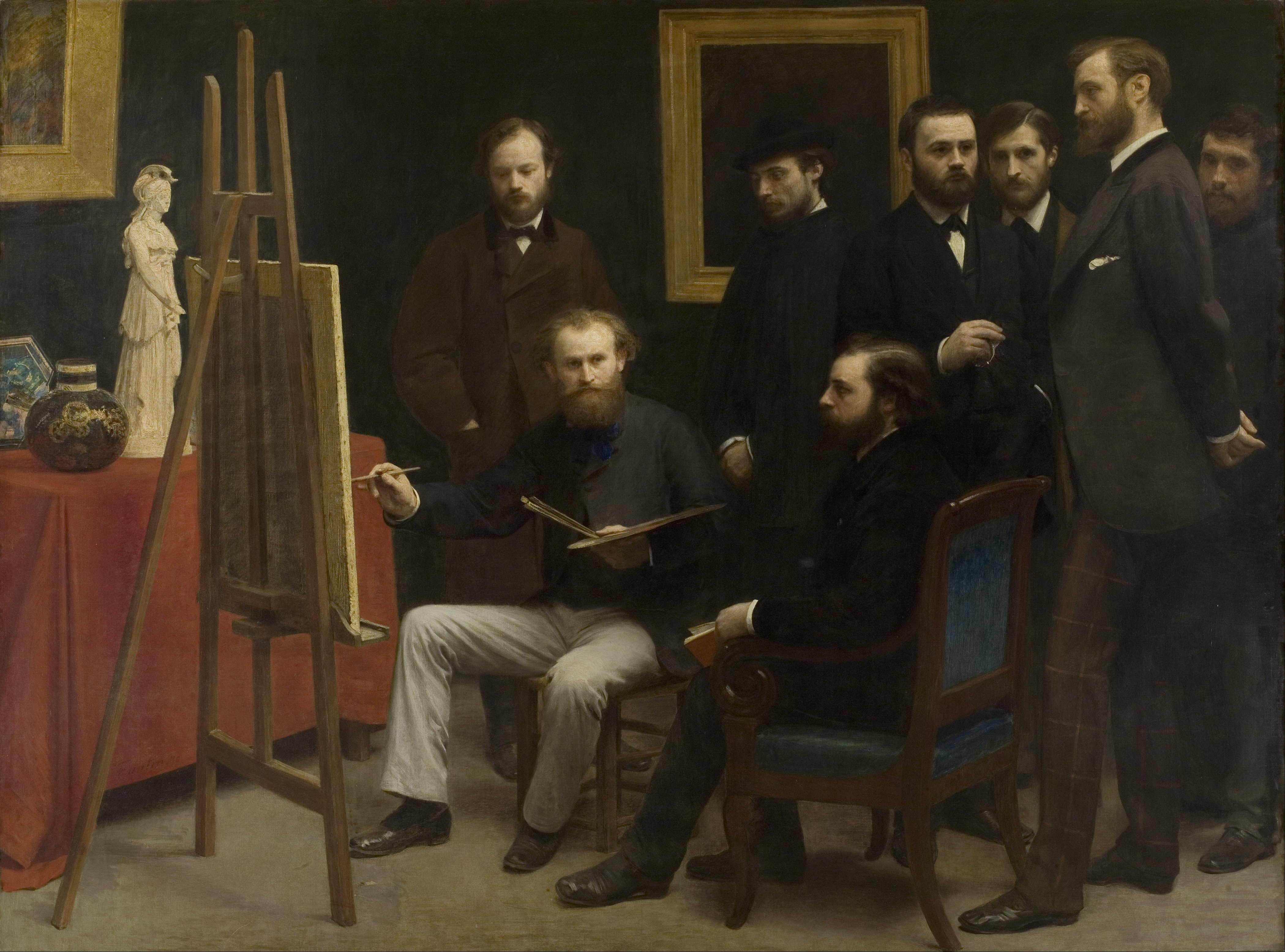
To be clear, I’m not in Platypus anymore. Nevertheless, this is a good interview. It covers a number of topics relevant to this blog. Also, for anyone who’s interested, the above painting is Henri Fantin-Latour’s Studio at Les Batignolles.

.
Chris Mansour:
 You first wrote The Invention of Art in 2001, nearly 15 years ago. Why did you feel the need to write a book about the historical development of the category of “art” at this time?

Larry Shiner: In the field of philosophical aesthetics, or the philosophy of art, the focus of attention in the mid-1970s to the mid-1990s was on the issue of how to define art. A famous essay by Morris Weitz argued that art cannot be defined, and that the most we can do to understand art is to resort to what Wittgenstein called “family resemblances.” This position was challenged in another influential essay by Maurice Mandelbaum, who said that we might not be able to define art in terms of any visual or perceptual properties, but we might be able to define it in terms of its relational properties, in terms of art’s social context. This set up a new pursuit for the definition of art, and it was considered a very important question during this time.

Among these attempts to generate a definition of the essence of art, one of the most influential writers was Arthur Danto, who said that the historical development of the concept of art needs to be taken into consideration if we are to define it at all. He believed that art’s essence has been revealed progressively, culminating in the twentieth century. I was skeptical of finding the essence of (fine) art as such. From my perspective, art does not have an ahistorical essence but is a multivalent term referring to a set of ideas and practices that function differently in society throughout time. Thus, The Invention of Art was an attempt to construct a sort of genealogy of art and to flesh out what it means when we consider art as an historically developing concept.

The historical transformations during the long eighteenth century, from roughly 1680 to 1830, culminated in the emergence of the cultural complex that we now call “art” today, that is, a semi-autonomous sphere of practices within society. This was a shared but unevenly developed trajectory of several art forms. Yet, despite the differences in the pace of the transformations of the various disciplines and mediums, these transformations were part of a total social process. Philosophy students as well as art history students need to know this history of the concept of art and recognize that (fine) art, as we now understand it, is the product of modern society and is barely 200 years old. Many art history books never bother to define what they mean by art, although there is a definition implied in what they exclude and what they cover. I consider my book to be somewhat of a companion volume for students and artists, helping them to situate art historically and to understand this historical process philosophically.

CM: You say art is barely 200 years old and is specifically a modern phenomenon. The early 1800s was a rapidly maturing period for global bourgeois society and culminated in the Industrial Revolution. What makes the practice of art in bourgeois society different from prior, art-like practices? Also, why is this historical distinction so significant in understanding art qua art?

LS: There is great importance, for me, in the dialectic of continuity and discontinuity in history. Confusion arises from the fact that, since the late nineteenth century, the historically specific phrase “fine art” — as distinct from art practices before this time — has dropped the “fine” out of the phrase and we now simply term it “art.” However, the meaning of the term “art” is incredibly ambiguous.

One meaning descends from what I call the “older, broader” meaning of art, from ars in Latin and techne (τέχνη) in Greek. This use suggests any human craft or performance that is done with some skill or grace; in one sense, everything humans do is an art. Here, there is a complete continuity from the caves of Lascaux to the present. It is not only the bison depicted on the cave walls that are art, but also the stone tools used to create them. Art as techne or ars lacks the precision of what we define as art today, which is roughly a semi-autonomous set of social practices, often geared toward aesthetic contemplation.

5341_lascaux_animals_cave_painting

The big change in art’s definition came when all those human arts got split up into various kinds: the first split was the opposition between the liberal arts and what the ancients called the “servile arts” (which was later replaced by the “mechanical arts”). That polarity was very different from the modern one contrasting the “fine arts” to the “applied arts,” “commercial arts,” or “craft arts.” The old schema of the liberal arts included what we call sciences and mathematics as well as the humanities. Part of what distinguishes the “fine arts” as a category of classification is that things like painting, poetry, architecture, music, and theater were pulled out of the old liberal arts and made into a separate category. In fact, things like painting and sculpture, because they involved physical labor, were not even considered part of the liberal arts until Renaissance painters, sculptors, and critics argued that these disciplines should be included among them. Up until the eighteenth century, for example, the producers of paintings and sculptures and the composers of symphonies were what I call “artisan-artists,” since these two terms, “artisan” and “artist,” were used interchangeably in English and many other languages. The old notion of the artisan combined genius and rule, inspiration and skill, creation and imitation, freedom and service. What began to happen in the eighteenth century is that these two notions were pulled apart and, by the end of the century, each term was defined as the opposite of the other term. It took decades for the new ideas of “Fine Art” and for the new ideals of the “Artist,” in contrast to the mere “artisan,” to become generally accepted.

By the time they did become generally accepted, the famous seventeenth-century “rise of science” had already split apart the liberal arts. At this time, the humanities, sciences, and fine arts began to emerge as distinct fields. A key point of my book is to show how the emergence of the category of fine arts, and its accompanying ideals of the artist and the aesthetic, occurred in conjunction with a new set of practices, institutions, and behaviors.

Paul Oskar Kristeller’s essays on the development of the classification systems of art were very influential for my book; I share his vision that the category of (fine) arts fully emerged only in the eighteenth century. Kristeller ended his essays with Kant and Schiller’s writings on the nature of the aesthetic. It seemed to me that the way we use the term art in the singular, as a kind of semi-autonomous subdivision of culture in the modern world, is still deeply influenced by the Romantics and the German Idealist philosophers. When I reread the literature, it struck me that the real culmination of the long process of constructing the social system of the fine arts occurred around 1830. This is why I speak of the long eighteenth century: You can see the beginnings of the fine art category and its institutions as early as the 1680s. My long eighteenth century encompasses the epoch spanning from the 1680s to the 1830s. By the 1830s, the fine arts system as we know it today was almost fully developed.

CM: How did the broader socio-political, institutional, and practical changes that happened in bourgeois society in the eighteenth century transform the liberal arts and fine arts system? What is the specialized fine arts system’s relationship to large societal transformations, and how was this relationship expressed?

LS: In very broad strokes, the historical transformation entailed the shift from an aristocratically organized society toward a society dominated by the bourgeoisie. The development of the market economy played an important role in the emergence of the categories of fine art and the artist. On the production side, the old order was dominated by the patronage-commission system. As an artist, you were typically either employed full-time by a lord or bishop, as were many of the great figures of the Renaissance and the seventeenth century, or you received commissions as an owner or member of an independent workshop with apprentices. Continue reading

László Moholy-Nagy, painting and photography

The following two texts focus on the Hungarian avant-garde painter and photographer László Moholy-Nagy. “Moholy-Nagy,” written by his countryman Ernő Kállai, principally concerns Moholy-Nagy’s early work in painting. As such, it describes their geometricism and abstraction, as well as their amenability to architecture. He’d been converted to constructivism, of course, by El Lissitzky during his travels to the West. Lissitzky managed to convince a number of members of the De Stijl group in Holland to adopt these principles as well, and stopped by later at the Bauhaus to reconnect with some of his former students and collaborators.

“Production-Reproduction,” the second article reproduced here, was written by Moholy-Nagy himself. It proved to be of immense importance for subsequent theories of photography as a form of art, and by extension art in general. Walter Benjamin read it and was influenced by it, as was his colleague (and sometimes plagiarist) Siegfried Kracauer. Also, if anyone’s interested, you can download the 1968 translation of Moholy-Nagy’s book Painting, Photography, Film (1925), part of the Bauhausbücher series.

23cda0e21cc3cec4f5d6c6f2c62f90df

Moholy-Nagy

Péter Mátyás [Ernő
Kállai] Ma vol. 9
September 15, 1921

.
In the extremes of its adventures, [László] Moholy-Nagy’s art reaches out on the borders of Cubism and Dadaism, and by organically uniting these opposite poles, he heralds the world of contemporary man who has managed to subjugate the machines.

Speaking purely in terms of form, he constructs either concentric or eccentric systems of forms or tries to interlink these opposing entities.

In the case of those works, in the monumentality of the few masses which are distanced so as to suggest inevitability, a strong will and elementary laws manifest themselves. In his use of the landscape motifs of the railway tracks, for example by the projection of the tremendous diagonal of a factory chimney leaning left, the leaning, resting forces, forces pressing tensed into vertical, are gathered into a compact architecture of form. Details of bridges and architectural structures, having lost all their utilitarian references and practical functions, freely elevate themselves into a self-willed order, an existence meaningful in itself. In another picture, based on a white horizontal stripe, with an almost organic vitality, the form swings and leaps into a slender vertical. This is all discipline of form, self-awareness, and pride, a totally new and individual manifestation of the modern constructive style, which is devoid of the sometimes dangerously short-changing form and color-splitting and space-complicating of the more differentiated Western Cubism. Colors develop themselves into form through their strong contrasts, through their brutal clashing with each other; the articulations of the form are of the most simple kind possible, and that space, which was left empty for a tabula rasa, constitutes a single, wide abstract wall behind the form, on which the artist’s credo concerning the future-shaping power of man’s civilizing activity is written up with lapidary laconicism.

However, Moholy-Nagy is not only a monumental lord and master-builder of contemporary life and of form, but with a naive admiration of the eternal-primitive child-barbarian, and with his raving joy too, he is also an ecstatic admirer of this life. In other people’s hands Dadaism serves as a murderous weapon of moral and social criticism. The exultation over a million possibilities of forms and motion which only the metropolis and modern technology can create, the sudden discovery of a new world and the dancing laughing youth of a vision totally open to the universe: all these are there in Moholy-Nagy’s art.

Semaphores of joys, forms and colors are standing on all points of space.

Freshly felt surprises and perspectives of gravitational pulls of manifold directions, of the many and of the many kinds, spring up from everywhere. Total geometrical abstractions as well as pieces, numbers, letters and realistically represented objects or fragments of objects picked from the primary reality proliferate in Moholy-Nagy’s eccentrical pictures.

This is a cosmic harmony, nonetheless it has not been kindled by a Futurist Romanticism and, still yet, these works, despite of all their divergences, form, after all, a perfectly intelligible system of absolutely interdependent units.

Anarchy is getting perceptibly arranged into a system of unified law. Although still not with the centralism of the self-containing architectonic structures, the pieces are coalescing into cohesive units, replacing the exploded conglomerate forms. Structures, still open, but set into motion from sharper defined and closer interrelated centers, emerge. Here, the mechanism of the modern machine and its kinetic system has been converted into art through the process of a fruitful coalescence of centrical and eccentrical pictorial factors with the creative principles connecting with Dadaism and Cubism.

Q 1 Suprematistic László Moholy-Nagy. (American, born Hungary. 1895-1946). Q 1 Suprematistic. 1923. Oil on canvas, 37 1:2 x 37 1:2%22 Space Modulator L3 László Moholy-Nagy. (American, born Hungary. 1895-1946). Space Modulator L3. 1936. Oil on perforated zinc and composition board, with glass-headed pins, 17 1:4 x 19 1:8%22

This fusion without inner contradictions of the style forming and negating trends of modern art gives Moholy-Nagy a chance to elevate his paintings on the terms of their own forms the level of vision. His art, after all, maintains a close link with its own well-defined objective territory. But in his relatedness to reality he is not satisfied with pointing out that meaning which is already present, although more or less hidden, in our senseless, chaotic age.

Just as the anarchistic manifestations of Moholy-Nagy’s art mean neither the rejection nor the approval of the all-destroying selfish instinct of the bourgeois free enterprise. Over problematical features of the present, Moholy-Nagy proclaims law and liberty which throw light on the perspectives of the infinite future.

Continue reading

Lukács’ abyss

Jeremy Co­han
Platy­pus Re­view
Au­gust 1, 2011
.

.
At the Marx­ist Lit­er­ary Group’s In­sti­tute on Cul­ture and So­ci­ety 2011, held on June 20–24, 2011 at the In­sti­tute for the Hu­man­it­ies, Uni­versity of Illinois at Chica­go, Platy­pus mem­bers Spen­cer Le­onard, Pamela No­gales, and Jeremy Co­han or­gan­ized a pan­el on “Marx­ism and the Bour­geois Re­volu­tion.” The ori­gin­al de­scrip­tion of the event reads: “The ‘bour­geois re­volu­tions’ from the 16th through the 19th cen­tur­ies — ex­tend­ing in­to the 20th — con­formed hu­man­ity to mod­ern city life, end­ing tra­di­tion­al, pas­tor­al, re­li­gious cus­tom in fa­vor of so­cial re­la­tions of the ex­change of labor. Abbé Sieyès wrote in 1789 that, in con­tra­dis­tinc­tion to the cler­ic­al First Es­tate who ‘prayed’ and the ar­is­to­crat­ic Second Es­tate who ‘fought,’ the com­mon­er Third Es­tate ‘worked:’ ‘What has the Third Es­tate been? Noth­ing.’ ‘What is it? Everything.’ Kant warned that uni­ver­sal bour­geois so­ci­ety would be the mere mid­point in hu­man­ity’s achieve­ment of free­dom. After the last bour­geois re­volu­tions in Europe of 1848 failed, Marx wrote of the ‘con­sti­tu­tion of cap­it­al,’ the am­bi­val­ent, in­deed self-con­tra­dict­ory char­ac­ter of ‘free wage labor.’ In the late 20th cen­tury, the ma­jor­ity of hu­man­ity aban­doned ag­ri­cul­ture in fa­vor of urb­an life — however in ‘slum cit­ies.’ How does the bour­geois re­volu­tion ap­pear from a Marxi­an point of view? How did what Marx called the ‘pro­let­ari­an­iz­a­tion’ of so­ci­ety circa 1848 sig­nal not only the crisis and su­per­ses­sion, but the need to ful­fill and ‘com­plete’ the bour­geois re­volu­tion, whose task now fell to the polit­ics of ‘pro­let­ari­an’ so­cial­ism, ex­pressed by the work­ers’ call for ‘so­cial demo­cracy’? How did this ex­press the at­tempt, as Len­in put it, to over­come bour­geois so­ci­ety ‘on the basis of cap­it­al­ism’ it­self? How did sub­sequent Marx­ism lose sight of Marx on this, and how might Marx’s per­spect­ive on the crisis of the bour­geois re­volu­tion in the 19th cen­tury still res­on­ate today?” An au­dio re­cord­ing of the event is avail­able at the above link. What fol­lows is an ed­ited ver­sion of Jeremy’s Co­han’s open­ing re­marks.

.

In­tro­duc­tion

.
In his “Idea for a Uni­ver­sal His­tory from a Cos­mo­pol­it­an Point of View,” Im­manuel Kant sets forth to tell the story of hu­man­ity as if it were one of pro­gress. This is not easy, says Kant,

Since men in their en­deavors be­have, on the whole, not just in­stinct­ively, like the brutes, nor yet like ra­tion­al cit­izens of the world ac­cord­ing to some agreed-on plan, no his­tory of man con­ceived ac­cord­ing to a plan seems to be pos­sible…One can­not sup­press a cer­tain in­dig­na­tion when one sees men’s ac­tions on the great world-stage and finds, be­side the wis­dom that ap­pears here and there among in­di­vidu­als, everything in the large woven to­geth­er from folly, child­ish van­ity, even from child­ish malice and de­struct­ive­ness.1

For Kant, ra­tion­al­ity in hu­man his­tory de­pends on the fu­ture. By com­plet­ing the seeds of free­dom and de­vel­op­ment im­pli­cit in the present, we might il­lu­min­ate and make mean­ing­ful the sound, fury, and idiocy thus far char­ac­ter­ist­ic of world-his­tory. The stakes are high:

Un­til this last step… is taken, which is the halfway mark in the de­vel­op­ment of man­kind, hu­man nature must suf­fer the cruelest hard­ships un­der the guise of ex­tern­al well-be­ing; and Rousseau was not far wrong in pre­fer­ring the state of sav­ages, so long, that is, as the last stage to which the hu­man race must climb is not at­tained.2

Georg Lukács sought to re­vive a Marx that, like Kant, strove to bring the crisis-char­ac­ter of the present to self-con­scious­ness, but un­der changed con­di­tions. This Marx un­der­stood the prob­lem of his — and our — epoch as the un­fin­ished bour­geois re­volu­tion, whose gains would be mean­ing­ful only from the stand­point of re­demp­tion — what Lukács called the stand­point of the pro­let­ari­at. The “or­tho­dox” Marx Lukács found in the polit­ics of the rad­ic­als of the Second In­ter­na­tion­al, Rosa Lux­em­burg and Vladi­mir Len­in, stood at the edge of an his­tor­ic­al abyss.

As Ni­et­z­sche’s Za­rathus­tra puts it: “Man is a rope tied between beast and over­man — a rope over an abyss. A dan­ger­ous across, a dan­ger­ous on-the-way, a dan­ger­ous look­ing back, a dan­ger­ous shud­der­ing and stop­ping.”3 On the oth­er side of the rope, the com­ple­tion of the hu­man free­dom whose pos­sib­il­ity the “bour­geois epoch” had be­gun. Be­neath, the whor­ing sub­ser­vi­ence of bour­geois thought and so­cial­ism both, to a status quo with ever dwind­ling pos­sib­il­it­ies for hu­man free­dom.

This is a very dif­fer­ent Lukács than the one who has gained some aca­dem­ic re­spect­ab­il­ity of late. A sec­tor of the aca­dem­ic left thinks we ought to take up many of the ana­lyt­ic­al tools Lukács has giv­en us to be­come more “re­flex­ive” crit­ics of cap­it­al­ism, pay­ing at­ten­tion to our “stand­point” of cri­tique to get past ob­ject­ive and sub­ject­ive di­cho­tom­ies that plague de­bate in the so­cial sci­ences, and to talk about ideo­logy as “so­cially ne­ces­sary il­lu­sion” rather than mere will o’ the wisp. Sure, we have to ditch the polit­ics — the crypto-mes­si­an­ic or proto-Sta­lin­ist (whichever you prefer) “pro­let­ari­at as the identic­al sub­ject-ob­ject of his­tory.” But Lukács can help us be­come keen­er, more crit­ic­al aca­dem­ics.

I want to res­ist this as­sim­il­a­tion of Lukács in­to the bar­bar­ism of aca­dem­ic reas­on.

As Lukács put it in his “What is Or­tho­dox Marx­ism?”: “Ma­ter­i­al­ist dia­lectic is a re­volu­tion­ary dia­lectic.”4 Lukács is not the mere “ana­lyst” of re­ific­a­tion, on the mod­el of his cul­tur­al stud­ies epi­gones. He sought to demon­strate that Marx­ism was, from be­gin­ning to end, only pos­sible as a prac­tic­al self-cla­ri­fic­a­tion of the on­go­ing crisis of so­ci­ety triggered by the un­fin­ished bour­geois re­volu­tion. Re­cent at­tempts to res­cue the “aca­dem­ic” Lukács are an ex­er­cise in con­tra­dic­tion. It is pre­cisely when he stoppedbe­ing an aca­dem­ic that he could move for­ward with his philo­soph­ic­al prob­lems, be­cause they were be­ing ad­dressed polit­ic­ally by the re­volu­tion­ary Marx­ism of his day.

But the at­tempt to re­cov­er the polit­ic­al Lukács may be just as fu­tile. For Lukács’s mo­ment is not ours; the crisis and pos­sib­il­ity of the early 20th cen­tury is far from what we face. So any “re­cov­ery” of Lukács must op­er­ate on two levels: one, by ask­ing ser­i­ously wheth­er we have over­come the crisis that Lukács at­temp­ted to for­mu­late the­or­et­ic­ally, and two, by re­cog­niz­ing that, if we have not, we can­not simply take up where he left off.

I

.
The prob­lem of epi­stem­o­logy, mor­als, aes­thet­ics in the “Re­ific­a­tion” es­say is reas­on at odds with it­self; reas­on that ends in myth­o­logy, suf­fer­ing, and un­free­dom.

We re­turn to Kant, this time of­fer­ing the battle cry of the En­light­en­ment: “Ours is the genu­ine age of cri­ti­cism, to which everything must sub­mit.”5 Not just ideas, but so­cial in­sti­tu­tions and forms of life too, must jus­ti­fy them­selves by ap­peal­ing to reas­on, rather than through claims of tra­di­tion or dogma. The philo­soph­ic­al En­light­en­ment and the polit­ic­al re­volu­tions that fought un­der its ban­ner — the Amer­ic­an, the French, the Haitian, and those of 1848 — looked for­ward to the real­iz­a­tion of reas­on, free­dom, and hu­man self-de­vel­op­ment in the world, in our so­cial in­sti­tu­tions and in ourselves. This would be eman­cip­a­tion — hu­man­ity’s “ma­tur­ity” as Kant puts it.

But bour­geois so­ci­ety has been un­able to ful­fill its prom­ise. We all-too reas­on­able mod­erns seem con­signed to con­tem­plate a ready-made world. Lukács shows this reas­on — a more power­ful and myth­ic­al dom­in­at­ing force than nature ever was — at odds with it­self, and in play in all forms in so­ci­ety: from the fact­ory ma­chine to the bur­eau­crat­ic state, from jur­is­pru­dence to journ­al­ism. He peoples his es­say with char­ac­ters from the great so­cial sci­ent­ists of his day, Max Weber and Georg Sim­mel — the bur­eau­crats, the ab­stract cal­cu­lat­ive in­di­vidu­als — to de­scribe a so­ci­ety whose “reas­on” is a soul­less re­strict­ive ra­tion­al­iz­a­tion shap­ing hu­man­ity in its nar­row im­age. He might, like Weber, have also turned to Ni­et­z­sche’s “last man” — the shrunken, all-too reas­on­able, mod­ern toady. Happy; un­able to give birth to a star.

Nor does aca­demia help us out of this crisis of mod­ern reas­on. Dis­cip­lin­ary frag­ment­a­tion is the rule, wherein the more we seem to know, the more reas­on­able each sci­ence be­comes, the less it has to say about the nature of our so­ci­ety as a whole. Weber puts it like so in his “Sci­ence as a Vo­ca­tion,” “Nat­ur­al sci­ence gives us an an­swer to the ques­tion of what we wish to do to mas­ter life tech­nic­ally. It leaves quite aside…wheth­er we should and do wish to mas­ter life tech­nic­ally and wheth­er it ul­ti­mately makes sense to do so.”6 We once thought we could go to reas­on with our deep ques­tions; we now know bet­ter, says Weber.

And, im­port­antly, Marx­ism has been on the whole no bet­ter — it has been only a more ad­vanced form of this dom­in­a­tion-re­con­sti­t­ut­ing reas­on. The tar­get of most of His­tory and Class Con­scious­ness is, after all, Marx­ism it­self, a “vul­gar” Marx­ism that loses the ca­pa­city to af­fect the course of events. This Marx­ism had signed on to na­tion­al war ef­forts in WWI; this Marx­ism was re­spons­ible for the tight­en­ing and spread of state con­trol over every­day life. We will re­turn to this point: Marx­ism, for Lukács, faced a crisis in which it would either have to trans­form it­self or would be­come one more apo­lo­gia for the status quo.

This be­tray­al of eman­cip­a­tion by reas­on — this form­al­iz­a­tion, frag­ment­a­tion, and tyr­an­nous in­dif­fer­ence to the par­tic­u­lar — is what Lukács calls re­ific­a­tion. None of this, let me em­phas­ize, can be solved by in­ter­dis­cip­lin­ary pro­grams. This is a prob­lem, Lukács as­serts, that arises in our text­books, be­cause it is real, it has a basis in our form of life. Cap­it­al­ist to­tal­ity really does pro­ceed frag­ment­ar­ily, un­con­sciously, re­leg­at­ing hu­mans in­to mere things. Re­ific­a­tion is a Ge­gen­stand­lich­keits­form, a “form of ob­jectiv­ity.” It can­not be over­come ex­cept through con­scious­ness, but it can­not be over­come through con­scious­ness alone.

II

.
We might read the en­tirety of the second part of the “Re­ific­a­tion” es­say, “The An­ti­nom­ies of Bour­geois Thought,” as demon­strat­ing, again and again, that re­ific­a­tion can­not be over­come in thought alone. But Lukács is not set­ting up philo­sophy for a fall. In­stead, Lukács gives an ac­count of “Ideal­ist” philo­sophy strug­gling to ex­press the prob­lems and po­ten­tials of free­dom in its mo­ment — that philo­sophy’s am­bi­tion, and the lim­its it reached, are char­ac­ter­ist­ic of the “high” mo­ment of bour­geois polit­ics. Bour­geois philo­sophy, says Lukács, is the self-con­scious­ness of a con­tra­dict­ory age, whose fur­ther trans­form­a­tions and de­vel­op­ments ne­ces­sit­ated its (self-)over­com­ing. This at­tempt to real­ize a free­dom not “im­posed upon” but im­man­ent in so­cial real­ity is passed on to Marx­ism. Marx­ism, in turn, is un­der­go­ing its own deep split, its own crisis, tak­ing up in trans­muted form the earli­er crisis of thought and ac­tion.

Marx­ism, for Lukács, is the dir­ect in­her­it­or of a bour­geois prac­tic­al philo­sophy of free­dom. This defin­it­ively sep­ar­ates Marx­ism from many oth­er vari­et­ies of anti-mod­ern dis­con­tent (of which post­mod­ern­ism is the most re­cent vari­ety). Philo­sophy seeks to ex­press, and through ex­pres­sion to be­come mid­wife to, the birth of the free­dom im­pli­cit in our so­cial re­la­tions. And while this task is more opaque in Lukács’s mo­ment, Lukács re­fuses to sadly shrug his shoulders at the com­ing bar­bar­ism; he calls us to risk achiev­ing the En­light­en­ment’s prom­ise. Kant, Fichte, Schelling, Schiller, and Hegel would not cede the at­tempt to com­bine reas­on, free­dom, and hu­man de­vel­op­ment, even as they con­scien­tiously re­cog­nized that these could not be re­con­ciled in a bour­geois world. They ex­press that bour­geois so­ci­ety has not yet giv­en up on it­self.

Bour­geois philo­sophy stuck with its am­bi­tion: “…the idea that the ob­ject…can be known by us for the reas­on that, and to the de­gree in which, it has been cre­ated by ourselves.”7 But through epi­stem­o­logy, mor­als, aes­thet­ics (the sub­jects of Kant’s three cri­tiques) and even Hegel’s in­voc­a­tion of his­tory, this philo­sophy kept find­ing it­self left with, on the one side, an in­com­plete form­al reas­on, on the oth­er side an in­ert and ir­ra­tion­al ob­ject; on the one side a free, self-de­term­in­ing sub­ject, on the oth­er the brute facts and “laws” of the world. Reas­on simply re­pro­duces a sub­ject de­nuded of its ca­pa­city to shape the world and it­self, re­con­ciled at the ex­pense of un­free­dom.

Clas­sic­al philo­sophy’s hon­est fo­cus on its lim­its was one of the things Lukács ad­mired most about it. But even more im­port­antly, that philo­soph­ic­al lin­eage at­temp­ted to probe and over­come its dif­fi­culties through de­vel­op­ing a cer­tain form of know­ledge: the “identic­al sub­ject-ob­ject,” “its own age com­pre­hen­ded in thought,” or prac­tic­al self-con­scious­ness. Clas­sic­al ideal­ist philo­sophy shows that free­dom is pos­sible only through a trans­form­at­ive self-con­scious­ness, where “know­ing” and “prac­tic­al trans­form­a­tion” are mu­tu­ally con­stitutive — where know­ledge is im­man­ent, rather than ab­stract.

Reas­on is not an ab­stract form to be im­posed on a hos­tile real­ity — it is real­iz­ing something im­pli­cit in an ob­ject, an ob­ject which is ac­tu­ally us. A neur­ot­ic symp­tom ap­pears to be a hor­rible hos­tile en­tity to be conquered, but it is rather a de­vel­op­ment of self to be un­der­stood and prac­tic­ally over­come. By know­ing my­self, I change my­self. I am, but am not, the same self I was. Self-know­ledge al­lows me, as Ni­et­z­sche puts it, to “be­come my­self.”

Marx­ism is the at­tempt to real­ize the form of prac­tic­al self-know­ledge which of­fers the only hope of achiev­ing free­dom, reas­on, and de­vel­op­ment. But Marx­ism has in­her­ited not only the tasks, but also the prob­lems and crises, of the prac­tic­al philo­sophy of free­dom. Neo-Kan­tian, sci­ent­ist­ic Marx­ism, con­nec­ted with vari­et­ies of re­form­ism, be­comes the far­cic­al re­pe­ti­tion of Kant’s achieve­ment: it fails to rad­ic­al­ize the Kant–Hegel–Marx lin­eage. Much like what Freud would call re­gres­sion — the use of out­dated psych­ic tools to cope with new prob­lems and changed con­di­tions — Marx­ism threatened to be­come “stuck,” thus fail­ing to jus­ti­fy the leap the bour­geois re­volu­tions had ini­ti­ated. Marx­ism needed to learn to grow up. Or, more spe­cific­ally, it needed to learn to stop think­ing that it had already grown up.

III

.
Lukács in­sists that re­volu­tion­ary Marx­ism is able to con­cretely pose the prob­lem of eman­cip­a­tion, be­cause its polit­ics seeks to prac­tic­ally achieve the self-con­scious­ness of cap­it­al­ist so­ci­ety in its crisis. And cap­it­al­ist so­ci­ety’s crisis, in its most acute form, is the his­tor­ic­al de­vel­op­ment and con­scious­ness of the pro­let­ari­at. As Lukács puts it, “the pro­let­ari­at is noth­ing but the con­tra­dic­tions of his­tory be­come con­scious” (71). But why?

Firstly, be­cause the rise of the pro­let­ari­at meant, his­tor­ic­ally, the de­cline of bour­geois rad­ic­al­ism. The pro­let­ari­at’s in­cip­i­ent de­mand that they be­come the sub­jects prom­ised by bour­geois so­ci­ety — free, cre­at­ive, and equal — led the bour­geois­ie to be­come “vul­gar,” to give up on the rad­ic­al im­plic­a­tions of the En­light­en­ment and to call for “law and or­der.” Cap­it­al’s tragedy is that it is al­ways also the pro­let­ari­at. The bour­geois­ie’s tragedy is that it must, by ne­ces­sity, be al­ways one step be­hind cap­it­al.

Second, be­cause the pro­let­ari­at is a com­mod­ity, and thus the ul­ti­mate ob­ject, she sells her­self on the mar­ket, is en­slaved by the ma­chine, and is thrown about by eco­nom­ic crises over which she has not a whit of con­trol. But bour­geois so­ci­ety also prom­ises that each hu­man be­ing might be­come a self-de­term­in­ing sub­ject. For Lukács, “the work­er can only be­come con­scious of his ex­ist­ence in so­ci­ety when he be­comes aware of him­self as a com­mod­ity.” Or “[the pro­let­ari­at’s] con­scious­ness is the self-con­scious­ness of the com­mod­ity” (168). The com­mod­ity, this ir­ra­tion­al reas­on, canit­self make de­mands for its eman­cip­a­tion be­cause the typ­ic­al com­mod­ity is the pro­let­ari­at. The in­verse is also true: the pro­let­ari­at is the quint­es­sen­tial “ab­stract” bour­geois sub­ject, whose struggles to ap­pro­pri­ate so­ci­ety for its pur­poses de­mand that the ob­ject — the product of the his­tory of so­cial la­bour — be in­fused with sub­ject­ive pur­pose.

We are used to think­ing of the nat­ur­al con­stitu­ency of the Left as those who are “mar­gin­al” to so­ci­ety. Lukács de­vel­ops the dar­ing claim of re­volu­tion­ary Marx­ism that cap­it­al­ism must over­come it­self, not through the in­ter­ven­tion of those out­side, but by the ac­tion of those at its very cen­ter. “[The pro­let­ari­at’s] fate is typ­ic­al of the so­ci­ety as a whole,” says Lukács (92). The only ad­vant­age the work­er might have is that her re­ific­a­tion is of­ten ex­per­i­enced as a form of power­less­ness and there­fore might be me­di­ated polit­ic­ally in­to a trans­form­at­ive prac­tice. Marx­ism is not the res­ist­ance to cap­it­al­ism or re­ific­a­tion or bour­geois sub­jectiv­ity — it is their self-con­scious real­iz­a­tion and self-over­com­ing.

As pro­let­ari­ans seek to really be­come “bour­geois sub­jects,” their de­mands for sub­jectiv­ity be­gin to strain against the lim­its of what is pos­sible in bour­geois so­ci­ety. But the pro­let­ari­at’s so­cial po­s­i­tion does not at all guar­an­tee that it will rad­ic­ally push for­ward the de­mands of eman­cip­a­tion, only that it might. Polit­ics is the at­tempt to real­ize this po­ten­tial.

Lukács saw in the crisis of Marx­ism pre­cip­it­ated by World War I, but already pres­aged in the “re­vi­sion­ist de­bate,” a re-en­act­ment at a new level of the crisis of bour­geois philo­sophy. Here self-con­scious­ness could ad­vance the new tasks posed, or think­ing would be­come little more than an apo­lo­gia for dom­in­a­tion. In the rad­ic­als of Second In­ter­na­tion­al Marx­ism, es­pe­cially Lux­em­burg and Len­in, Lukács saw the at­tempt to meet the tasks of the present, to for­mu­late the polit­ics that could real­ize bour­geois so­ci­ety’s — and Marx­ism’s — po­ten­tial self-over­com­ing.

The es­sence of Len­in and Lux­em­burg’s Marx­ist polit­ics was that so­cial­ism, in or­der to achieve eman­cip­a­tion, would have to be a con­scious hu­man act, im­man­ent in present real­it­ies; it could not be de­duced from so­cial be­ing nor a fer­vent wish from bey­ond. If one could “stumble in­to so­cial­ism,” as if so­cial­ism were fated from time im­me­mori­al by in­ex­or­able laws, then it would be one more form of un­free­dom, of fake sub­jectiv­ity. Hu­man con­scious­ness would be an in­teg­ral part of “ob­ject­ive” de­vel­op­ment, or noth­ing at all.

This was ex­em­pli­fied in their fo­cus on the “non-auto­mat­ic” char­ac­ter of the trans­ition to so­cial­ism. They cri­ti­cized both in­ev­it­ab­il­ism and the re­duc­tion of the pro­let­ari­at as just an­oth­er sec­tion­al in­terest, seek­ing its “cut of the pie.” This was not Marx­ism, the polit­ics of free­dom, at all. Pas­sages like the fol­low­ing from Rosa Lux­em­burg’s Re­form or Re­volu­tion, were key for Lukács:

So that if we do not con­sider mo­ment­ar­ily the im­me­di­ate ameli­or­a­tion of the work­ers’ con­di­tion – an ob­ject­ive com­mon to our party pro­gram as well as to re­vi­sion­ism – the dif­fer­ence between the two out­looks is…[a]ccord­ing to the present con­cep­tion of the party [Lux­em­burg’s po­s­i­tion], trade-uni­on and par­lia­ment­ary activ­ity are im­port­ant for the so­cial­ist move­ment be­cause such activ­ity pre­pares the pro­let­ari­at, that is to say, cre­ates the sub­ject­ive factor of the so­cial­ist trans­form­a­tion, for the task of real­ising so­cial­ism…we say that as a res­ult of its trade uni­on and par­lia­ment­ary struggles, the pro­let­ari­at be­comes con­vinced, of the im­possib­il­ity of ac­com­plish­ing a fun­da­ment­al so­cial change through such activ­ity and ar­rives at the un­der­stand­ing that the con­quest of power is un­avoid­able.8

Lux­em­burg sought, then, to struggle with the pro­let­ari­at in its halt­ing at­tempts to achieve bour­geois sub­jectiv­ity in or­der to con­stantly push against the lim­its of how much sub­jectiv­ity cap­it­al­ism could grant the work­ers — all so that the pro­let­ari­at might someday de­mand the end of their be­ing an ob­ject tout court. Fur­ther­more polit­ic­al edu­ca­tion and ac­tion around these lim­its would be de­signed to call work­ers to learn­ing about how they came to be what they are — i.e. to un­der­stand his­tor­ic­ally their be­ing as an ex­pres­sion of the crisis of cap­it­al — and thus be faced with the grav­ity of the task ahead for achiev­ing free­dom.

The re­volu­tion­ary Marx­ism of Lux­em­burg and Len­in, then, was for Lukács the at­tempt to real­ize the prom­ises and pos­sib­il­it­ies of bour­geois so­ci­ety by con­sist­ently press­ing for­ward the de­mand for sub­jectiv­ity con­tained in the com­mod­ity it­self: the pro­let­ari­at. This polit­ics, in ex­tremely tele­scoped form, in­sists on:

  • the lead­ing role of the pro­let­ari­at as the most typ­ic­al ele­ment and crisis-point of cap­it­al­ism
  • an em­phas­is on the sub­ject­ive de­vel­op­ment of the pro­let­ari­at in any struggles it un­der­goes
  • a fight against the re­duc­tion of Marx­ism in­to sec­tion­al in­terest, seek­ing its “cut of the pie”
  • the im­port­ance of em­phas­iz­ing not vic­tor­ies, but lim­its in any giv­en in­terest-pur­sued ac­tion by the pro­let­ari­at
  • the con­com­it­ant value of self-cri­ti­cism and self-trans­form­a­tion
  • the cent­ral­ity of self-trans­form­at­ive polit­ic­al prac­tice
  • an or­gan­iz­a­tion — or party — ded­ic­ated (as Lukács quotes Marx in the Com­mun­ist Mani­festo) to cla­ri­fy­ing the in­ter­na­tion­al and his­tor­ic­al sig­ni­fic­ance of any giv­en ac­tion.

This self-con­scious cap­it­al­ist polit­ics elu­cid­ated, for Lukács, what the prac­tic­al philo­sophy of free­dom would have to look like in or­der to over­come the present and to real­ize the en­dangered, fra­gile past, soon to be­come only the miser­able pre­curs­or to an even more miser­able se­quel.

This struggle with the pro­let­ari­at to achieve its own pos­sib­il­ity was for Lukács the oth­er side of the struggle of bour­geois so­ci­ety to achieve its po­ten­tial, an his­tor­ic­al open ques­tion that would be de­cided only by self-con­scious self-ac­tion. The crisis of mod­ern so­ci­ety is the crisis of the bour­geois re­volu­tion — which at a new, more deadly level, is the crisis of Marx­ism.

If this polit­ics is un­suc­cess­ful, there will cer­tainly be plenty of move­ments and res­ist­ance. But un­less cap­it­al, the dy­namo of mod­ern­ity, is over­come from with­in, rather than by a deus ex mach­ina from without, you won’t get the self-over­com­ing of cap­it­al­ist so­ci­ety at its highest point and the real­iz­a­tion of the po­ten­tial free­dom im­pli­cit in mod­ern­ity. In­stead res­ist­ance be­comes the cry ac­com­pa­ny­ing a resigned ac­cept­ance to the un­free­dom of the whole.

IV

.
Lukács’s His­tory and Class Con­scious­ness might be summed up in Freud’s de­scrip­tion of the goal of psy­cho­ana­lys­is: Wo Es war, soll Ich wer­den; where it was, I shall be. Self-con­scious­ness changes us, but we are still some­how “us”; we have real­ized something about ourselves. Nor is self-con­scious­ness merely in the brain. To be really self-con­scious we need to change our whole way of be­ing. Lukács’s Marx­ism is try­ing to re­cog­nize that Marx­ism poses the ques­tion to bour­geois so­ci­ety and to mod­ern­ity as a whole wheth­er or not it can achieve this kind of trans­form­at­ive self-con­scious­ness. The pro­spects do not look bright.

But why re­turn to Lukács? Es­pe­cially if I in­sist that he was at­tempt­ing to make sense of his prac­tic­al mo­ment, to raise the mo­ment of world-his­tor­ic­al danger and pos­sib­il­ity of roughly 1917-1923 to self-con­scious­ness, what rel­ev­ance does he have in a mo­ment whose prac­tic­al pos­sib­il­it­ies are so dif­fer­ent, and so di­min­ished? Psy­cho­ana­lys­is again, per­haps, provides a use­ful meta­phor. We do not re­vis­it our child­hoods to re­live them — only to re­cog­nize how we have yet to in­teg­rate them by over­com­ing them. Lukács helps us see that we haven’t grown up.

This means that per­haps Lukács’s “identic­al sub­ject-ob­ject” seems so “mes­si­an­ic” to us not be­cause we have sur­passed Lukács and his silly meta­phys­ic­al spec­u­la­tions, but be­cause we find ourselves no longer able to ima­gine this kind of free­dom. We no longer be­lieve that we can over­come cap­it­al­ism for the bet­ter, real­iz­ing the reas­on, free­dom, and hu­man de­vel­op­ment it prom­ises. Cap­it­al­ism is a brute, in­ert, for­eign en­tity, dom­in­at­ing us and our ca­pa­cit­ies. All we can do is look to the mar­gin­al, the suf­fer­ing, and the pained, and of­fer sym­pathy and solid­ar­ity with their struggles: struggles that are part of the nat­ur­al laws of his­tory. There will be power, there will be res­ist­ance. Our polit­ics take something like the form of Niez­sche’s etern­al re­turn. As “crit­ic­al” as we are, we can only ima­gine free­dom swoop­ing in from bey­ond and bring­ing its lib­er­a­tion in­to our miser­able lives. And we are right — for we are surely in the age of second child­hood, sans teeth, sans eyes, sans taste, sans everything.

Was Lukács a fool for wager­ing on the pos­sib­il­ity of free­dom by be­com­ing, polit­ic­ally, a Marx­ist? Lukács would in­sist on Lux­em­burg’s call — so­cial­ism or bar­bar­ism. Either the im­man­ent over­com­ing of cap­it­al­ism and its ir­ra­tion­al ra­tion­al­ity, or resig­na­tion to ever-new, ever-hor­ri­fy­ing, forms of “reas­on­able” bar­bar­ism.

To end, I of­fer two quotes. The first from Lukács:

When the mo­ment of trans­ition to the ‘realm of free­dom’ ar­rives this will be­come ap­par­ent just be­cause the blind forces really will hurtle blindly to­wards the abyss, and only the con­scious will of the pro­let­ari­at will be able to save man­kind from the im­pend­ing cata­strophe. In oth­er words, when the fi­nal eco­nom­ic crisis of cap­it­al­ism de­vel­ops, the fate of the re­volu­tion (and with it the fate of man­kind) will de­pend on the ideo­lo­gic­al ma­tur­ity of the pro­let­ari­at, i.e. on its class con­scious­ness (69).

The second from Rilke in the first of his Du­ino Ele­gies:

Yes — the spring­times needed you. Of­ten a star
was wait­ing for you to no­tice it. A wave rolled to­ward you
out of the dis­tant past, or as you walked
un­der an open win­dow, a vi­ol­in
yiel­ded it­self to your hear­ing. All this was mis­sion.
But could you ac­com­plish it?9

Without Lukács’s Pas­cali­an wager on free­dom, it is not clear to me that Lukács is worth much of any­thing at all. The de­mon that drove him from philo­sophy to the polit­ics of re­volu­tion­ary Marx­ism is what should call out to us today, not the ana­lyt­ic­al tools we can dig up from the grave of his prac­tic­al philo­sophy of free­dom. Or maybe he is just a dead dog. |P

Notes


1 Im­manuel Kant, “Idea for a Uni­ver­sal His­tory from a Cos­mo­pol­it­an Point of View,” in Kant on His­tory, trans. Lewis White Beck (In­di­ana­pol­is: Bobbs-Mer­rill, 1963[1784]), 12.
2 Ibid., 21.
3 Friedrich Ni­et­z­sche, Thus Spoke Za­rathus­tra, trans. Wal­ter Kaufmann (New York: Pen­guin Books, 1978 [1891]), 126.
4 Georg Lukács, “What is Or­tho­dox Marx­ism,” in His­tory and Class Con­scious­ness: Stud­ies in Marx­ist Dia­lectics, trans. Rod­ney Liv­ing­stone (Cam­bridge, MA: The MIT Press, 1971 [1923]), 2.
5 Im­manuel Kant, Cri­tique of Pure Reas­on, trans. Paul Guy­er and Al­len W. Wood (Cam­bridge: Cam­bridge Uni­versity Press, 1998 [1787]), 100-101.
6 Max Weber. “Sci­ence as a Vo­ca­tion” in From Max Weber: Es­says in So­ci­ology, eds. Hans Gerth and C. Wright Mills (New York: Ox­ford Uni­versity Press, 1958 [1918]), 144.
7 Georg Lukács, “Re­ific­a­tion and the Con­scious­ness of the Pro­let­ari­at,” in His­tory and Class Con­scious­ness: Stud­ies in Marx­ist Dia­lectics, trans. Rod­ney Liv­ing­stone (Cam­bridge, MA: The MIT Press, 1971 [1923]), 112. Here­after re­ferred to par­en­thet­ic­ally with the ap­pro­pri­ate page num­ber(s).
8 Rosa Lux­em­burg, So­cial Re­form or Re­volu­tion, in Rosa Lux­em­burg Speaks, ed. Mary-Alice Wa­ters (New York: Pathfind­er Press, 1979[1900]), 84-5.
9 Rain­er Maria Rilke. Du­ino Ele­gies in The Se­lec­ted Po­etry of Rain­er Maria Rilke, ed. and trans. Steph­en Mitchell (NY: Ran­dom House, 1982[1922]), 151.

Continue reading