Tea, anyone? Nikolai Suetin’s ceramic Suprematism, 1922-1928

Untitled.
IMAGE: Nikolai Suetin,
Suprematist teasets
(Moscow, 1925-1926)
.Untitled

Along with Il’ia Chashnik, Nikolai Suetin was Kazimir Malevich‘s most devoted disciple.  He first came under the great master’s tutelage during his studies at the Vitebsk School of Art in 1918, where he also trained with the renowned artist Jean Pougny.  Though a skilled painter, designer, and ceramicist in his own right, Suetin spent much of his time promoting Malevich’s body of work and keeping a photographic record of his life.  Unlike his mentor, Suetin never theorized his work in so self-conscious a fashion.  In 1924, however, he recorded a brief artistic creed in staccato verse, disavowing every attempt to systematize his work:

neither non-objectivity
nor object
what?
“X,” I reply
it signifies the sum of my painterly thought
in the world, and hence
the answer to the question
of modernity…
No system binds me, as I am unsystematic.
A reasonably logical premise can demonstrate any system, but I am alogical and therefore overcome the systems of cubism, futurism, and suprematism.”

ни беспредметность
ни предмет.
что?
я отвечаю X (икс)
это значит сумма моей живописной мысли
на мир и значит
ответ на вопрос осязания
современности «…»
Никакая система не связывает меня, ибо я бессистемен «…»
Разумно логической предпосылкой можно доказать всякую систему, но я алогичен и потому преодолеваю системы кубизма, футуризма и супрематизма «…»

While Suetin authored numerous remarkable works, perhaps his most striking pieces came in the form of Suprematist plateware commemorating the Bolshevik revolution in October 1917.  These were made over the course of the 1920s, especially from 1922-1928.  Included in this post are several very high-resolution photographs of these works.  Enjoy!

Nikolai Suetin’s Suprematist plateware

Against gravity

Benches, chairs, rocketships

Untitled.
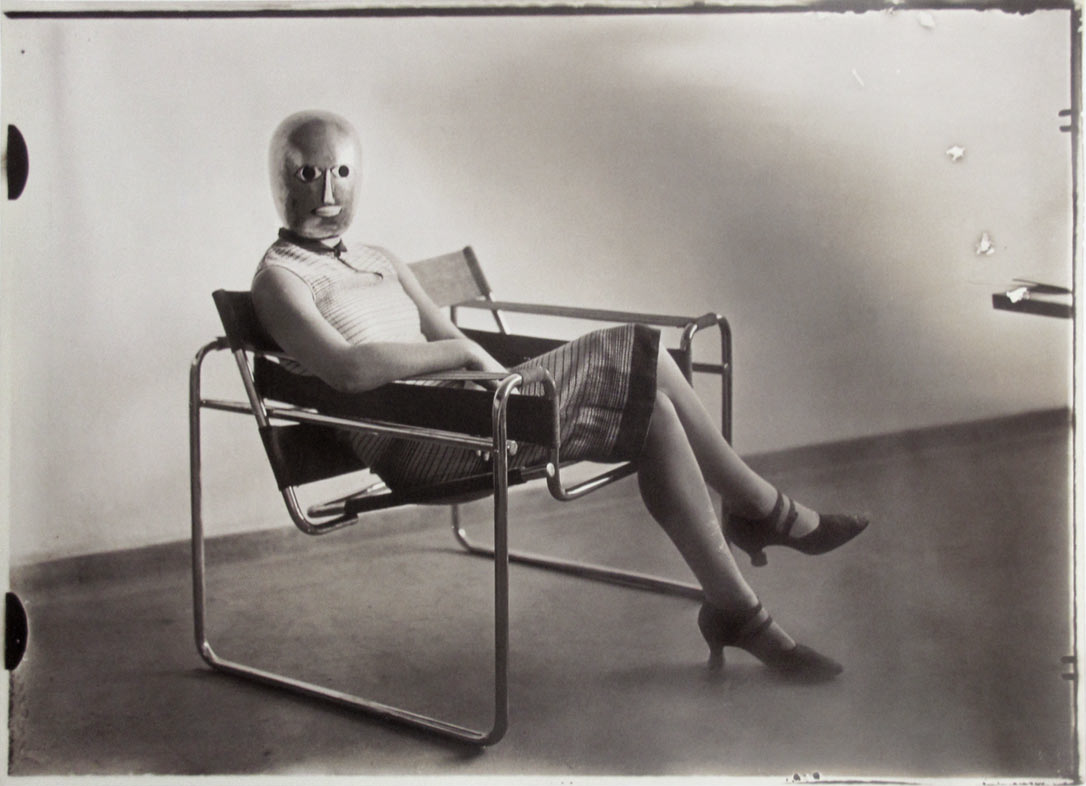
Image: Ilse Gropius sits in the “Kandinsky,”
a chair designed by Marcel Breuer (1927)
Untitled.

James Kopf recently alerted my attention to an article by Emily Badger addressing “The Humble Public Bench,” on the redesign of a number of public benches in Boston. “Benches: the new chair?” he asked.  

The WA Chair by designer Katsuya Arai, Boston (2013)

“WA Chair,” by Katsuya Arai, Boston (2013)

What follows are a few thoughts in response to this question.

Above, one can see the benches mentioned in the article. The sleek, aerodynamic appearance of the benches Badger describes is something I’m oddly familiar with, having worked in an office building down at 1 State Street in Manhattan. Outside the entrance to South Ferry, the nearest Metro station, there are a number of benches working along the same modular lines, albeit in a slightly more distended, elongated form. Every time I’d exit the subway walking toward the grim black tower where our office was located, I’d pass them:

The benches at South Ferry in Manhattan

The benches at South Ferry

In either case, the author of the article briefly glosses the social and ideological role played by benches in the urban built environment. It’s a serviceable enough treatment, even if it slips into rather shallow moralizing toward the end:

The public bench has long been a mediator between cities and their citizens. A pleasant, functional park seat communicates to pedestrians that they’re welcome to linger, to treat public spaces like communal living rooms. Just as often, though, cities have been accused of deploying intentionally uncomfortable street furniture, angular benches with unnecessary guardrails dividing them to dissuade homeless loiterers and overnight guests. This second class of benches communicates something quite the opposite to residents: Move along, you’re not welcome here. Continue reading

Boris Korolev's highly abstract project for a monument to Karl Marx, 1919

Marxism’s relation to “communism”: Bruno Bosteels, Jodi Dean, and Boris Groys

Untitled.
IMAGE: Boris Korolev’s highly abstract
Project for a monument to Karl Marx (1919)
[Проект памятника К. Марксу в Москве]

The quasi-religious character of the question

Raising the question of Marx’s relation to communism immediately raises the question of Marxism‘s relation to communism. Even those who reject all everything that came afterwards in favor of a “return to Marx” implicitly set themselves up in opposition to the various Marxists who claimed to continue his legacy. They regard all developments subsequent to Marx’s death — by Mao, Stalin, Trotsky, Lenin, even Engels — as betraying his fundamental insights into the nature of class society. Those who do not restrict their consideration of Marxism’s relation to communism to the historical person of Marx himself find themselves compelled to choose between various legacies, heresies, orthodoxies, schisms, dogmatisms, and Reformation.

An overview of the major proponents of Marxism after Marx’s death in 1883 reveals that such figures explicitly sought to understand themselves in terms of their “faithfulness” to the tradition first established by Marx. Early on, a position of “orthodoxy” was claimed by those who understood their own work as building upon Marx’s theory by further applying his methodology. They thus adopted a kind of fidelity to Marx’s method of social analysis and revolutionary dialectic. Beyond the centrality of Marx, however, if he was indeed deemed central to any subsequent communist tradition, certain other figures were esteemed to have advanced his insights along the lines of Marx’s theory. These figures thereby attained a similar status in the regard of those Marxists who followed them. Continue reading

The case for smashing borders

Untitled.
IMAGE: Triumphus pacis Osnabruggensis et
Noribergensis
; Tubingen, Brunnius (1649)

J.A. Myerson has an article up over at Jacobin making “The Case for Open Borders.”  As an historical overview, it’s not terrible, even if the way it retains the language of “consecration” for the modern period is a bit tendentious.  Borders and rights are not “consecrated” as divine rights but “legitimated” as civil rights.  There’s some acknowledgement of this fact, at least initially, but the author goes on to undermine this distinction in advocating “universal human rights, consecrated in struggle, enforced by solidarity.”

On a related note — why does “solidarity” always seem to enter in as this kind of quasi-mystical force by which we can simply express our sympathy with various remote causes and thereby consider our political obligations fulfilled? This, far more than any kind of legal procedure defining and establishing borders, strikes me as almost religious.  It’s akin to the sentiment expressed by those of various religious persuasions who’ll reassure you that they’re praying for you, etc. Continue reading

Early Soviet antireligious propaganda

Goodbye, Cardinal Ratzinger, we hardly knew ye.

To celebrate the papal vacancy, here are a ton of images from Soviet antireligious propaganda. And some thoughts about the question of religion’s compatibility or incompatibility with Marxism, etc.

Cover to Bezbozhnik, Godless (1923)

Cover to Bezbozhnik, Godless (1923)

Some reflections on the recent exchanges regarding Marxism, atheism, and 18th-century materialism. Not that the positions outlined here should necessarily be adopted today. Perhaps we’re no longer in any sort of position to be as radical as Engels, Lenin, and Trotsky were. Nevertheless, while they were perhaps written in response to the prevailing idiocy of the New Atheist neoconservatives, I found many of the arguments that represented these revolutionary Marxists as somehow conciliatory toward religious ideologies, even those of minority religions, to be deliberate distortions of historical reality. There is all too often an attempt to “update” various Marxist positions so as to accommodate fashionable tendencies in the present, even under regressed political conditions. This has been undertaken by leftists as diverse as Deepa Kumar, Alessandro Tinonga, Enaemaehkiw Túpac Keshena, Ben Fowkes and Bülent Gökay, etc. There’s the temptation to reason that “the enemy of my enemy is my friend.” To argue that the leading Bolsheviks’ attitude toward religion was not that of crushing it mercilessly is deluded.

What’s strange is that this conciliatory move on the part of many leftists comes alongside the ongoing disenchantment of the world, including the progressive secularization of society and the disintegration of traditional religious forms. Brief religious revivals, which tend to produce the most virulently reactionary forms of religious politics (born-again Evangelical Christianity, Islamism, Jewish and Hindu terrorist groups), have usually resulted in nothing more than a brief blip in the overall pattern of decline in religiosity. The paradox is that the world is far less religious today on the whole than it was in, say, 1848 or 1917. Nevertheless, leftists during this earlier time continued to push an uncompromisingly atheistic line in their struggle to overturn the existing bourgeois social order, of which religion is a central component.

The commonplace notion that the Bolsheviks or Marxism in general has been unsuccessful because they offend the religious sensibilities of their “target demographic,” the proletariat, is simply untrue and has no basis in historical reality. Quite the contrary: the masses largely followed the Marxists’ lead in smashing and seizing religious property, looking to eradicate religion both directly (by direct expropriation) and indirectly (by removing the antagonistic social conditions that give rise to religion in the first place). They aimed to render it completely obsolete by obliterating the conditions that create it.

Also, I’ve been bothered by this weird neologism “theophobia.” It doesn’t even make sense etymologically. Most monotheistic faiths are actually all in favor of “theophobia.” “Theo” = God. “Phobia” = fear. “Fear of the LORD is the beginning of wisdom,” says some ancient Jewish text written in praise of their desert god. For a Marxist, however, the fear of nonexistant entities would be the very height of infantile irrationality. Continue reading

B. Mikhailov, Bear in Space: How he flew [Б. Михаилов, Медведь в космос: Как летал], (1970)

Image: The book’s cover

Moscow, 1970.

The Soviet Union, having all but dominated space exploration for over a decade — launching the first earth satellite in October 1957, putting the first man (Iurii Gagarin, April 1961) and woman (Valentina Tereshkova, June 1963) in space — now seems to have been eclipsed by the United States in the race to the moon.  Though not an insignificant logistical and engineering feat, this can’t help but feel somewhat lackluster when compared against the more coveted “firsts” the USSR already accomplished.  Moscow all but shrugs its shoulders.

So what is the Soviet response to the USA’s belated boast of rocketry?

1970BearInSpace03

B. Mikhailov, Bear in Space: How to fly [Б. Михаилов, Медведь в космос: Как летал], 1970

Simple: Медведь в космос.

For those who don’t read Russian, it’s Bear in Space, a picture book by Boris Mikhailov for children.  Clearly, Moscow is unimpressed.

Bear with bird, hedgehog, and helpful mice prepare for liftoff

Bear with bird, hedgehog, and helpful mice prepare for liftoff

Besides being bizarre and incredibly cute, this book is semi-instructional.

Thanks to the excellent Dreams of Space blog for posting these images.  Add/follow this blog, immediately.

Self-explanatory

Self-explanatory

Also, a headless mouse.  Enjoy!

Images

.

Soviet avant-garde architectural negatives (mid-1920s to early-1930s)

Blueprint abstractions (all blueprints, really, are anticipatory abstractions) of modernist building projects by Soviet architects Ivan Leonidov, Leonid Vesnin, Aleksandr Vesnin, and Nikolai Krasil’nikov.

From Sovremennaia arkhitektura [Modern Architecture], 1930 (no. 5, pgs. 2-3):

In publishing projects for the Palace of Culture to be built on the Simonov Monastery site as discussion material, the editors of SA observe that not one of them provided a generally and entirely satisfactory solution to the problem. The arguments which have developed around these projects in the press, higher education establishments, and in public debates have mainly emphasized the design submitted by I. Leonidov, and as a result have come to assume the character of an undisguised persecution and baiting of the latter.

The editors of SA are perfectly well aware of the shortcomings of certain of I. Leonidov’s projects: ignoring the economic situation today at the same time as indulging in certain elements of aestheticism. All these features are undoubtedly a minus in Leonidov’s work.

Architectural blackprints.

.

But the critics of Leonidov’s work totally fail to see what from our standpoint is a great plus in it, which for all these shortcomings makes it in certain respects better and more valuable than the work of his competitors.

…The editors of SA, whilst recognizing that some of the accusations made against him are correct (abstractness, schematicism, etc.) consider that despite this the works of Leonidov are highly valuable as material of an investigative and experimental character, and they most forcefully protest against the groundless persecution of him.

Signed,
The editors of Modern Architecture.

Period photographs of Soviet avant-garde built exteriors, 1926-1934

Hi-resolution images

Untitled.
Image: Nikolai Trotskii,
Stachek region (1933)

untitled2.

Alesei Shchusev, hotel in Sochi, USSR (1928)

Alesei Shchusev’s hotel in Sochi, USSR (1928)

Just a couple remarks in prefacing these breathtaking photos, nearly all of which have never appeared online.  Even those that have aren’t available on anywhere near the scale or resolution as they are here.  In the past I’ve often posted pictures — sketches, blueprints, proposals, models, etc. — of Soviet modernist structures that were never built, whether they simply could not have been built at the time (given the material, technological, and industrial limitations of the Soviet Union in the 1920s or 1930s) or were abandoned or rejected.  But the focus of this post is on those buildings that were actually built; more specifically, their exterior aspect.  These period photographs should attest to the built legacy of the early architectural avant-garde in the Soviet Union, even if the window during which such pieces of architecture could have been realized was extremely brief. Continue reading

Anti-Duhring and Anti-Christ: Marx, Engels, Nietzsche

Anti-Dühring and Anti-Christ, I

Marx, Engels, and Nietzsche
on equality and morality

Untitled.
Image: Anti-Dühring
and Anti-Christ

untitled2

.
Return to the introduction to “Twilight of the idoloclast? On the Left’s recent anti-Nietzschean turn”
Return to “Malcolm Christ, or the Anti-Nietzsche”

In his defense, Bull is hardly the first to have made this mistake. Many of Nietzsche’s latter-day critics, self-styled “progressives,” actually share his vulgar misconception of socialism. The major difference is that where Nietzsche vituperated against the leveling discourse of equality, believing it to be socialist, his opponents just as gullibly affirm it — again as socialism. Noting that Nietzsche’s antipathy toward the major currents of socialism he encountered in his day was an extension of his scorn for Christianity and its “slave morality,” which he saw apotheosized in the modern demand for equality, some critics go so far as to uphold not only the equation of socialism with equality, but also to defend its putative precursors in traditional religious practices and moral codes. This is of a piece with broader attempts by some Marxists to accommodate reactionary anti-capitalist movements that draw inspiration from religion, whether this takes the form of apologia for “fanaticism” (as in Alberto Toscano’s Fanaticism),[48] “fundamentalism” (as in Domenico Losurdo’s “What is Fundamentalism?”),[49] or “theology” (as in Roland Boer’s trilogy On Marxism and Theology).[50] These efforts to twist Marxism into a worldview that is somehow compatible with religious politics ought to be read as a symptom of the death of historical Marxism and the apparent absence of any alternative.

According to the testimony of Peter D. Thomas, “[Losurdo] argues that Nietzsche’s…critiques of Christianity…were a response to the role [it] played in the formation of the early socialist movement. The famous call for an amoralism, ‘beyond good and evil,’ is analyzed as emerging in opposition to socialist appeals to notions of justice and moral conduct.”[51] Corey Robin touches on a similar point in his otherwise uninspired psychology of “the” reactionary mind, a transhistorical mentalité across the centuries (from Burke to Sarah Palin, as the book’s subtitle would have it): “The modern residue of that slave revolt, Nietzsche makes clear, is found not in Christianity, or even in religion, but in the nineteenth-century movements for democracy and socialism.”[52] Finally, Ishay Landa differentiates between Marxist and Nietzschean strains of atheism in his 2005 piece “Aroma and Shadow: Marx vs. Nietzsche on Religion,” in which he all but confirms the latter’s suspicion that socialism is nothing more than a sense of moral outrage against empirical conditions of inequality.[53]

To make better sense of this confusion, it is useful to glance at the various texts and authors that Nietzsche took to be representative of socialism. Once this has been accomplished, the validity of his claim that nineteenth-century socialism was simply the latest ideological incarnation of crypto-Christian morality, repackaged in secular form, can be ascertained. Notwithstanding the incredulity of Losurdo,[54] even the German Social-Democrat and later biographer of Marx, Franz Mehring, who had little patience for Nietzsche (despite his indisputable poetic abilities), confessed: “Absent from Nietzsche’s thinking was an explicit philosophical confrontation with socialism.”[55] (Mehring added, incidentally, much to Lukács’ chagrin, that “[t]he Nietzsche cult is…useful to socialism…No doubt, Nietzsche’s writings have their pitfalls for young people…growing up within the bourgeois classes…, laboring under bourgeois class-prejudices. But for such people, Nietzsche is only a transitional stage on the way to socialism.”[56] Other than the writings of such early socialists as Weitling and Lamennais, however, Nietzsche’s primary contact with socialism came by way of Wagner, who had been a follower of Proudhon in 1848 with a streak of Bakuninism thrown in here and there. Besides these sources, there is some evidence that he was acquainted with August Bebel’s seminal work on Woman and Socialism. More than any other, however, the writer who Nietzsche most associated with socialist thought was Eugen Dühring, a prominent anti-Marxist and anti-Semite. Dühring was undoubtedly the subject of Nietzche’s most scathing criticisms of the maudlin morality and reactive sentiment in mainstream socialist literature. Continue reading

Nietzsche, by Edvard Munch 1906)

Twilight of the idoloclast?

On the Left’s recent anti-Nietzschean turn

.

.

[W]hat makes Nietzsche’s influence so un/canny is that there has never been adequate resistance from a real Left.

— Geoff Waite, Nietzsche’s Corps/e (1996)

Few thinkers have enjoyed such widespread appeal over the last forty years as Nietzsche.

— Peter Thomas, “Overman and
the Commune”
(2005)

Opposed to everyone, Nietzsche has met with remarkably little opposition.

— Malcolm Bull, “Where is the
Anti-Nietzsche?”
(2001)

If Nietzsche’s arguments could be said to have gone unchallenged during the second half of the twentieth century, as the above-cited authors suggest, the same cannot be said today. Beginning in the early 1990s, but then with increasing rapidity over the course of the last decade, a distinctly anti-Nietzschean consensus has formed — particularly on the Left. Recent years have witnessed a fresh spate of texts condemning both Nietzsche and his thought as irredeemably reactionary, and hence incompatible with any sort of emancipatory politics. Numerous authors have contributed to this shift in scholarly opinion. To wit: William Altman, Fredrick Appel, Malcolm Bull, Daniel Conway, Bruce Detwiler, Don Dombowsky, Ishay Landa, Domenico Losurdo, Corey Robin, and Geoff Waite. The list goes on. Continue reading