“Gay errancy”: Hypermoderns (postmoderns)

by Manfredo Tafuri

Untitled.
Image: Manfredo Tafuri
untitled2.

Download the PDF of Manfredo Tafuri’s “‘Gay errancy’: Hypermoderns (postmoderns).”

It is well known that in Italy, Portoghesi launched a style that has been called “postmodern” with his Strada Novissima and a dense series of publications, and thus joined an international circuit that includes analogous “opinion-makers” such as Charles Jencks and Robert Stern. Portoghesi was different, though, in that he had a long theoretical and practical interest in the manipulation of historical signs: as we have seen, his first neobaroque experiments began in the late fifties. His more recent “manifestos” are linear. They contain an appeal for a “liberation from ideas” supposedly imposed upon architects and their beneficiaries by the “modern movement,” for a joyous rediscovery of the entire repertory of the I past, for expressive contaminations of the complexity of historical eras, and for a formal expressiveness linked to the recovery of the concepts of place and continuity. Portoghesi also engaged in a critique of the utopia of the “modern” and of its nihilistic character, which was spiritually grounded in the ideology of progress. “Liberation” is presented as overcoming avant-garde attempts to “reconstruct the universe,” and also as canceling incongruous duties, in order to recover the happiness of “rich languages” that have been lost. Echoes of the philosophical writings of [Martin] Heidegger, [Arnold] Gehlen, [Gilles] Deleuze, and [Emmanuel] Lévinas — listening, simulacrum, post-histoire, angel of history — possibly mediated by Mario Perniola and Gianni Vattimo, punctuate Portoghesi’s writings, as he travels the seas of contemporary thought, a voyage that, as we shall see, has its own particular significance.

A hedonistic urge and a taste for citation, as well as free association and pastiche, counterbalance each other in the proposals of Portoghesi, whose theoretical production has been accompanied by skillful professional and promotional activities. This man and the review Eupalino soon became the focal points of a composite school intent on using design and writing to breathe new life into a stringent critique of the “modern,” thereby hailing the advent of a new era.

Sketch by Paolo Portoghesi

Sketch by Paolo Portoghesi

Portoghesi gathers almost all the motifs that have been floating about in the international architectural and philosophical debate of recent decades. His theoretical system accommodates a broad spectrum of issues: a critique of the linear concept of history, a reflection upon memory, the need for a new nonmetaphysical statute for truth, the emergence of new demands for identity and what can be imagined, the demand for peripheral identities, the cult of roots, and the explosion of ephemeral hedonisms. In fact, his cultural project is to make debate a priority once again, focused upon passwords such as the “end of prohibitionism,” rediscovered architecture, historical roots, and listening to the site and to history. In this way, the factors characterizing Italian architecture at the present — the multiplication of ideas and the slow formation of parameters of comparison — are flattened in a synthetic attempt, launched with the explicit goal of cultural “management.” And that is not all. The reduction of pluralism to a formula includes a study of the true nature of kitsch: there is an answer for everything, and the need for solutions predominates. Continue reading

Stalinism’s ghost: Domenico Losurdo on civil society and the State

Symptomatic residues

.
.
.

Image: Cover to the French edition of
Domenico Losurdo’s Stalin: History
and Critics of a Black Legend

.
.
One of the points on which I take issue most with Domenico Losurdo’s interpretation of historical liberalism regards the old issue of civil society’s relationship to the state. This is, of course, a topic that should be quite familiar to anyone who’s read Hegel (or Marx’s critique of Hegel, for that matter). For Losurdo, a noted Hegel scholar, the entire debate is by now surely second nature. How this figures into the broader history of liberalism might be less clear to readers, however. This might be briefly spelled out.

In his sweeping overview of liberal thought down through the ages, Liberalism: A Counter-History, Losurdo highlights “the self-government of civil society” as one of its core organizing principles.[1] By “civil society” he is here clearly referring to the Third Estate, understood as the undifferentiated mass of commoners exempt from feudal privileges, in contradistinction to the First and Second Estates, comprised of the clergy and the nobility (respectively). The self-governance of civil society thus required the bourgeoisie’s emancipation from the rule of the ancien régime. “First with the Glorious Revolution and then later, more completely, with the American Revolution,” writes Losurdo, “the assertion of self-government by civil society hegemonized by slaveholders involved the definitive liquidation of traditional forms of ‘interference’ by political and religious authority.” Further on, with specific reference to the American context, he writes: “The conquest of self-government by civil society hegemonized by large-scale property involved an even more drastic deterioration in the condition of the indigenous population. The end of the control exercised by the London government swept away the last obstacles to the expansionistic march of the white colonists.”[2] Continue reading

Klutsis, Composition 1921

Hysterical materialism

An historical diagnosis

Untitled.
Image: Gustav Klutsis,
Composition (1921)

untitled2

“Historical materialism,” Franz Mehring once wrote, popularizing the phrase, “approaches every section of history without any preconceptions.”

Hysterical materialism — it might be said, phrasing things quite oppositely — approaches any supposed “sectarian” with every preconception.

In explicating the former, historical materialism, Mehring was simply making public something that his friend and comrade Friedrich Engels had already communicated to him in private. The term, abbreviated “histomat” (after «истмат», a good Soviet portmanteau), referred to a general outlook and a methodology for interpreting social reality. Quite fittingly, Mehring sought to explain historical materialism’s emergence in the second half of the nineteenth century by applying the historical materialist method reflexively to itself. Continue reading

Against gravity

Benches, chairs, rocketships

Untitled.
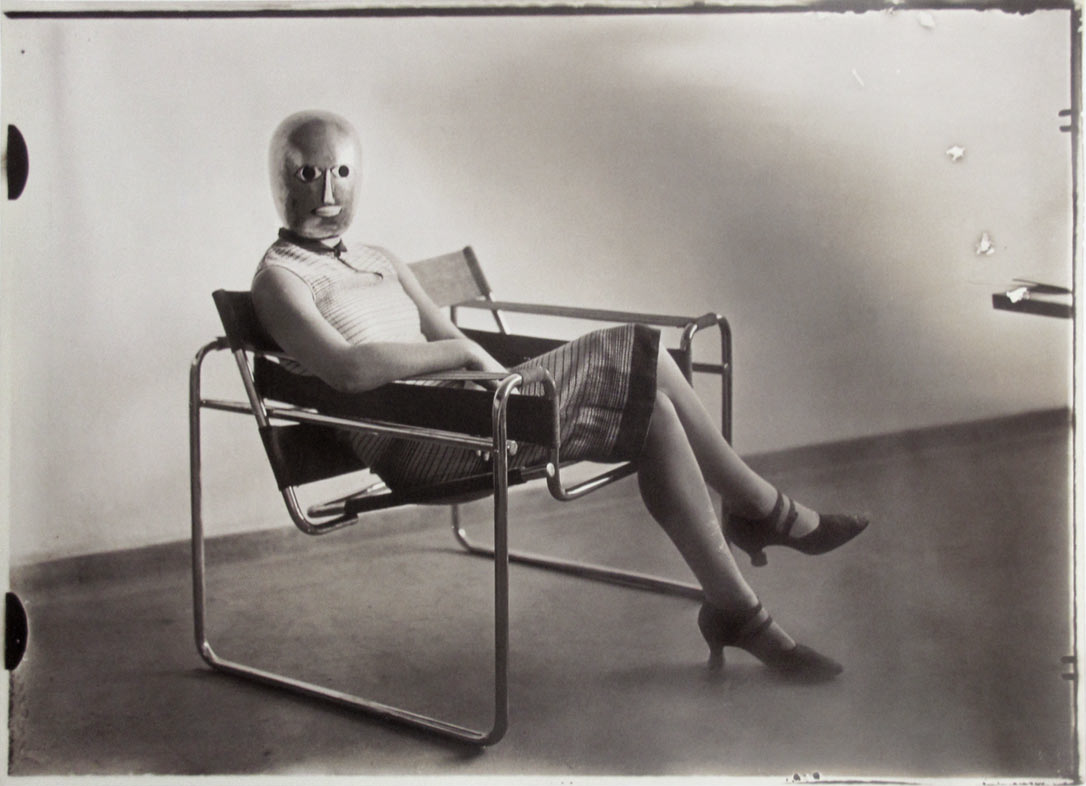
Image: Ilse Gropius sits in the “Kandinsky,”
a chair designed by Marcel Breuer (1927)
Untitled.

James Kopf recently alerted my attention to an article by Emily Badger addressing “The Humble Public Bench,” on the redesign of a number of public benches in Boston. “Benches: the new chair?” he asked.  

The WA Chair by designer Katsuya Arai, Boston (2013)

“WA Chair,” by Katsuya Arai, Boston (2013)

What follows are a few thoughts in response to this question.

Above, one can see the benches mentioned in the article. The sleek, aerodynamic appearance of the benches Badger describes is something I’m oddly familiar with, having worked in an office building down at 1 State Street in Manhattan. Outside the entrance to South Ferry, the nearest Metro station, there are a number of benches working along the same modular lines, albeit in a slightly more distended, elongated form. Every time I’d exit the subway walking toward the grim black tower where our office was located, I’d pass them:

The benches at South Ferry in Manhattan

The benches at South Ferry

In either case, the author of the article briefly glosses the social and ideological role played by benches in the urban built environment. It’s a serviceable enough treatment, even if it slips into rather shallow moralizing toward the end:

The public bench has long been a mediator between cities and their citizens. A pleasant, functional park seat communicates to pedestrians that they’re welcome to linger, to treat public spaces like communal living rooms. Just as often, though, cities have been accused of deploying intentionally uncomfortable street furniture, angular benches with unnecessary guardrails dividing them to dissuade homeless loiterers and overnight guests. This second class of benches communicates something quite the opposite to residents: Move along, you’re not welcome here. Continue reading

Anti-Duhring and Anti-Christ: Marx, Engels, Nietzsche

Anti-Dühring and Anti-Christ, I

Marx, Engels, and Nietzsche
on equality and morality

Untitled.
Image: Anti-Dühring
and Anti-Christ

untitled2

.
Return to the introduction to “Twilight of the idoloclast? On the Left’s recent anti-Nietzschean turn”
Return to “Malcolm Christ, or the Anti-Nietzsche”

In his defense, Bull is hardly the first to have made this mistake. Many of Nietzsche’s latter-day critics, self-styled “progressives,” actually share his vulgar misconception of socialism. The major difference is that where Nietzsche vituperated against the leveling discourse of equality, believing it to be socialist, his opponents just as gullibly affirm it — again as socialism. Noting that Nietzsche’s antipathy toward the major currents of socialism he encountered in his day was an extension of his scorn for Christianity and its “slave morality,” which he saw apotheosized in the modern demand for equality, some critics go so far as to uphold not only the equation of socialism with equality, but also to defend its putative precursors in traditional religious practices and moral codes. This is of a piece with broader attempts by some Marxists to accommodate reactionary anti-capitalist movements that draw inspiration from religion, whether this takes the form of apologia for “fanaticism” (as in Alberto Toscano’s Fanaticism),[48] “fundamentalism” (as in Domenico Losurdo’s “What is Fundamentalism?”),[49] or “theology” (as in Roland Boer’s trilogy On Marxism and Theology).[50] These efforts to twist Marxism into a worldview that is somehow compatible with religious politics ought to be read as a symptom of the death of historical Marxism and the apparent absence of any alternative.

According to the testimony of Peter D. Thomas, “[Losurdo] argues that Nietzsche’s…critiques of Christianity…were a response to the role [it] played in the formation of the early socialist movement. The famous call for an amoralism, ‘beyond good and evil,’ is analyzed as emerging in opposition to socialist appeals to notions of justice and moral conduct.”[51] Corey Robin touches on a similar point in his otherwise uninspired psychology of “the” reactionary mind, a transhistorical mentalité across the centuries (from Burke to Sarah Palin, as the book’s subtitle would have it): “The modern residue of that slave revolt, Nietzsche makes clear, is found not in Christianity, or even in religion, but in the nineteenth-century movements for democracy and socialism.”[52] Finally, Ishay Landa differentiates between Marxist and Nietzschean strains of atheism in his 2005 piece “Aroma and Shadow: Marx vs. Nietzsche on Religion,” in which he all but confirms the latter’s suspicion that socialism is nothing more than a sense of moral outrage against empirical conditions of inequality.[53]

To make better sense of this confusion, it is useful to glance at the various texts and authors that Nietzsche took to be representative of socialism. Once this has been accomplished, the validity of his claim that nineteenth-century socialism was simply the latest ideological incarnation of crypto-Christian morality, repackaged in secular form, can be ascertained. Notwithstanding the incredulity of Losurdo,[54] even the German Social-Democrat and later biographer of Marx, Franz Mehring, who had little patience for Nietzsche (despite his indisputable poetic abilities), confessed: “Absent from Nietzsche’s thinking was an explicit philosophical confrontation with socialism.”[55] (Mehring added, incidentally, much to Lukács’ chagrin, that “[t]he Nietzsche cult is…useful to socialism…No doubt, Nietzsche’s writings have their pitfalls for young people…growing up within the bourgeois classes…, laboring under bourgeois class-prejudices. But for such people, Nietzsche is only a transitional stage on the way to socialism.”[56] Other than the writings of such early socialists as Weitling and Lamennais, however, Nietzsche’s primary contact with socialism came by way of Wagner, who had been a follower of Proudhon in 1848 with a streak of Bakuninism thrown in here and there. Besides these sources, there is some evidence that he was acquainted with August Bebel’s seminal work on Woman and Socialism. More than any other, however, the writer who Nietzsche most associated with socialist thought was Eugen Dühring, a prominent anti-Marxist and anti-Semite. Dühring was undoubtedly the subject of Nietzche’s most scathing criticisms of the maudlin morality and reactive sentiment in mainstream socialist literature. Continue reading

Nietzsche, by Edvard Munch 1906)

Twilight of the idoloclast?

On the Left’s recent anti-Nietzschean turn

.

.

[W]hat makes Nietzsche’s influence so un/canny is that there has never been adequate resistance from a real Left.

— Geoff Waite, Nietzsche’s Corps/e (1996)

Few thinkers have enjoyed such widespread appeal over the last forty years as Nietzsche.

— Peter Thomas, “Overman and
the Commune”
(2005)

Opposed to everyone, Nietzsche has met with remarkably little opposition.

— Malcolm Bull, “Where is the
Anti-Nietzsche?”
(2001)

If Nietzsche’s arguments could be said to have gone unchallenged during the second half of the twentieth century, as the above-cited authors suggest, the same cannot be said today. Beginning in the early 1990s, but then with increasing rapidity over the course of the last decade, a distinctly anti-Nietzschean consensus has formed — particularly on the Left. Recent years have witnessed a fresh spate of texts condemning both Nietzsche and his thought as irredeemably reactionary, and hence incompatible with any sort of emancipatory politics. Numerous authors have contributed to this shift in scholarly opinion. To wit: William Altman, Fredrick Appel, Malcolm Bull, Daniel Conway, Bruce Detwiler, Don Dombowsky, Ishay Landa, Domenico Losurdo, Corey Robin, and Geoff Waite. The list goes on. Continue reading

Malcolm Christ, or the Anti-Nietzsche

Re­view: Mal­colm Bull,
Anti-Ni­et­z­sche (2011)

.
Im­age: Pho­to­graph of
Friedrich Ni­et­z­sche (1882)
.
.

On the Left’s re­cent anti-Ni­et­z­schean turn

.

[W]hat makes Ni­et­z­sche’s in­flu­ence so un/canny is that there has nev­er been ad­equate res­ist­ance from a real Left.

— Geoff Waite, Ni­et­z­sche’s Corps/e (1996)

Few thinkers have en­joyed such wide­spread ap­peal over the last forty years as Ni­et­z­sche.

— Peter Thomas, “Over­man and
the Com­mune” (2005)

Op­posed to every­one, Ni­et­z­sche has met with re­mark­ably little op­pos­i­tion.

— Mal­colm Bull, “Where is the
Anti-Ni­et­z­sche?” (2001)

If Ni­et­z­sche’s ar­gu­ments could be said to have gone un­chal­lenged dur­ing the second half of the twen­ti­eth cen­tury, as the above-cited au­thors sug­gest, the same can­not be said today. Be­gin­ning in the early 1990s, but then with in­creas­ing rapid­ity over the course of the last dec­ade, a dis­tinctly anti-Ni­et­z­schean con­sensus has formed — par­tic­u­larly on the Left. Re­cent years have wit­nessed a fresh spate of texts con­demning both Ni­et­z­sche and his thought as ir­re­deem­ably re­ac­tion­ary, and hence in­com­pat­ible with any sort of eman­cip­at­ory polit­ics. Nu­mer­ous au­thors have con­trib­uted to this shift in schol­arly opin­ion. To wit: Wil­li­am Alt­man, Fre­drick Ap­pel, Mal­colm Bull, Daniel Con­way, Bruce De­twiler, Don Dom­bow­sky, Ishay Landa, Domen­ico Los­urdo, Corey Robin, and Geoff Waite. The list goes on.

Even a curs­ory glance at these writ­ings, however, suf­fices to re­veal some of the deep fis­sures that run between them. A great meth­od­o­lo­gic­al het­ero­gen­eity in­forms their re­spect­ive ap­proaches. Bull, for ex­ample, in­sists that to over­come the se­duct­ive qual­ity of Ni­et­z­sche’s ideas it is vi­tal not to read like him (“read­ing for vic­tory”);1 Alt­man seems to be­lieve, in­versely, that in or­der to un­der­mine his per­vas­ive in­flu­ence, it is ne­ces­sary to write like him.2 The con­tent of their cri­ti­cisms is far from uni­vocal, either. One com­mon thread that unites them is Ni­et­z­sche’s no­tori­ous hos­til­ity to mod­ern demo­crat­ic ideals, but even then the points of em­phas­is are ex­tremely di­ver­gent. While some crit­ics of Ni­et­z­sche prefer to re­main with­in the realm of polit­ics prop­er, oth­ers re­gister his op­pos­i­tion to demo­cracy at the level of eth­ics or aes­thet­ics. Dom­bow­sky falls in­to the former of these camps, seek­ing to trace out — through a series of elab­or­ate and im­pres­sion­ist­ic in­fer­ences re­gard­ing the au­thor’s read­ing habits, a kind of bib­li­o­graph­ic­al “con­nect the dots” — the secret of “Ni­et­z­sche’s Ma­chiavel­lian dis­ciple­ship.”3 Us­ing a more eth­ic­al frame­work, writers like Con­way rather look “to il­lu­min­ate the…mor­al con­tent of his polit­ic­al teach­ings.”4 Con­versely, in his book Ni­et­z­sche Con­tra Demo­cracy, Ap­pel loc­ates Ni­et­z­sche’s anti-demo­crat­ic im­pulse as emer­ging out of his con­cern with artist­ic prac­tices, in the con­stru­al of “polit­ics as aes­thet­ic activ­ity.”5

But whatever dif­fer­ences may ex­ist in their in­ter­pret­a­tion of the man and his thought, one thing is cer­tain: the tide has turned de­cis­ively against Ni­et­z­sche on the Left of late. Not that this is an en­tirely un­wel­come de­vel­op­ment. The vogue of French Ni­et­z­schean­ism, from Ba­taille and Deleuze down through Der­rida and Fou­cault, has been every bit as tire­some as its vul­gar anti-Ni­et­z­schean coun­ter­part. In light of the re­cent re­valu­ation of Ni­et­z­sche’s philo­sophy, however, we find ourselves com­pelled to ask wheth­er the anti-Ni­et­z­schean turn of the last few years truly sig­nals an end to the sway his ideas have held over the Left. Are we to be fi­nally dis­ab­used of his “per­ni­cious” in­flu­ence? Is this per­haps the twi­light of the ido­lo­clast? Continue reading

Painting of Trotsky by Henry Schnautz, 1950s

Some hitherto untranslated sections of Trotsky on Nietzsche (1908)

.
Image: Henry Schnautz’s Trotsky (1950s)

.
Here are a few preliminary, still very rough translations of passages from Trotsky writing on Nietzsche not available in English. There is probably some background required to know the various philosophical and literary (idealist and symbolist, respectively) movements he’s talking about, but I think that Trotsky makes a few essential points that are in line with later interpretations advanced by Adorno.  Which makes me wonder, did Adorno et al. perhaps read this essay? Was it available in German, even if not in English? The essay’s title in English would be “Starved for ‘Culture'” or something like that, from 1908.

Note the succession in the last paragraph: Nietzsche, Kant, the Marquis de Sade! Recall the second chapter of Dialectic of Enlightenment, where precisely these figures were juxtaposed with respect to the morality of the individual under enlightened bourgeois subjectivity.

Our impoverished “decadence” of the 1890’s was not the first declaration of aristocratic, or even intellectual-bourgeois aestheticism. But from the outset, how gutless (even cowardly) it was! It scarcely dared stammer on about the absolute end-in-itself of the aesthetic (though principally erotic) “tremor” [«трепета»], or of its protest against “tendentiousness” — i.e., in practice, against the grand morality of political obligations, which gravitated toward literature and strove to give the appearance of struggling against moralizing populism. This helped it come under the aegis of the journalistic Marxism of the time, which was of little interest to the Decadents taken on its own terms. They were both still psychologically connected, if you will, by the fact that both proclaimed a “new word” and both were in the minority. The Petersburg journal Life, a combination of third-rate Marxism and kitschy aestheticism printed on good paper for an inexpensive price, was the fruit of this strange coupling. Increasing colossally overnight, the vogue appeal of Gorkii developed in the same period. According to the current definition, the tramp symbolizes the revolt against petit-bourgeois philistinism. Untrue! On the contrary! For broad groups of intellectuals, the tramp turned out to be precisely the symbol of the sudden rise of petit-bourgeois [мещанского, also connotes “philistine”] individualism. Off with one’s burdens! It’s time to straighten one’s back! Society is nothing more than an imperceptible abstraction. I — and this is me! — here came to the aid of Nietzsche. In the West, he appeared as the final, most extreme word in philosophical individualism because he was also the negation and overcoming of petit-bourgeois individualism. But for us Nietzsche was forced to perform a quite different task: we smashed his lyrical philosophy into fragments of paradoxes and threw them into circulation as the hard cash of a petty, pretentious egoism…

Наш жалконький «декаданс» 90-х годов — и был этим первым провозглашением не дворянского, а интеллигентско-мещанского эстетизма. Но как он был по первоначалу робок, даже труслив! Он едва смел заикаться об абсолютной самоцельности эстетического (главным образом эротического) «трепета» и своему протесту против «тенденциозности», т.-е. на деле против больших нравственно-политических обязательств, тяготевших на литературе, старался придать вид борьбы против морализующего народничества. Это помогло ему стать под защиту тогдашнего журнального марксизма, который сам по себе декадентов мало интересовал. Их, пожалуй, еще психологически связывало то, что оба провозглашали «новое слово» и оба были в меньшинстве. Петербургский журнал Жизнь, комбинация из дешевого марксизма и дешевого эстетизма, на хорошей бумаге и за недорогую цену, явился плодом этой странной связи. Колоссальная, в 24 часа выросшая, популярность Горького — явление той же эпохи. По ходячему определению, босяк был символом бунта против мещанства. Неправда! Как раз наоборот! Для широких групп интеллигенции босяк оказался именно символом воспрянувшего мещанского индивидуализма. Долой ношу! Пора выпрямить хребет! Общество — лишь неуловимая абстракция. Я — это я! — На помощь пришел Ницше. На Западе он явился, как последнее, самое крайнее слово философского индивидуализма и потому — как отрицание и преодоление индивидуализма мещанского. У нас же Ницше заставили выполнять совсем другую работу: его лирическую философию разбили на осколки парадоксов и пустили их в оборот, как звонкую монету маленького претенциозного эгоизма… Continue reading

The “arkhitektons” and “planets” of Suprematism

Kazimir Malevich, Nikolai Suetin,
and Il’ia Chashnik, 
with an
article by Aleksei Gan

Extracts from SA, 1927
(no. 3, pgs. 104-106)

During recent years comrade Malevich has worked exclusively in the field of volumetric Suprematist compositions, on problems of the volumetric and spatial forms of material masses. This is somewhat related to the tasks facing creators of modern architecture.

Malevich works intuitively…His experience is not organized by consciousness…So while volumetric Suprematism does not yield objects of that concrete social utility without which modern architecture is not architecture at all, they have vast importance as abstract research of new form, as such.

Kazimir Malevich does not accept either [Rationalism or Constructivism]. He pursues his own “purely suprematist” path, on the principle of its “primacy” or “superiority” [pervenstvo]. What then is Suprematist architecture? It is “the primacy of volumetric masses and their spatial solution in consideration of weight, speed, and direction of movement.”

True, this metaphysical formulation does not yield much, to put it mildly, to an intellect thinking materialistically. But Malevich does not only speak, he does, and what Malevich does, we repeat, has great psychological importance. In his new Suprematist volumes and volumetric combinations there is not the smallest particle of atavism.

This is where Suprematist studies can be very important. They could be very beneficially introduced into the Basic Course of the VKhUTEMAS, in parallel to those exercises currently conducted under the influence of the psychologist [Hugo] Münsterberg’s Harvard Laboratory.

The novelty, purity, and originality of abstract Suprematism fosters a new psychology of perception. This is where Malevich’s great contribution will lie.

Nikolai Krasil’nikov’s terrifying planar urbanism (1928)

Nikolai Krasil’nikov
Sovremennaia arkhitektura
Vol. 3, № 6: 1928, 170-176
.
.

Problems of modern architecture
.
……Final diploma project for Aleksandr
……Vesnin’s studio at VKhUTEIN

.

In order to really know an object, it is necessary to comprehend, to study all sides of it, all its internal and external connectivities.

— Lenin

It is necessary to pursue and elaborate the implications of this proposition in every specialized field.

Central tower to Nikolai Krasil'nikov's "New City" (1928)

Nikolai Krasil’nikov’s “New City” (1928)

My initial premises:

  1. The environment in which an organic body exists has an influence upon its form.
  2. The forms of the various parts of the organic body are determined by their functions. Thus in a tree the forms of the root, the trunk, and the leaves are determined by the purposes they serve.
  3. To put it mathematically, the form of every body is a complex function of many variables (and the concept of form embraces the internal structure of the body matter).
  4. A scientific theory of the design of form can be developed through the dialectical method of thinking, with the application of mathematical methods of analysis; analysis, that is, which uses the infinitesimal quantities of analytical geometry along with both differential and integral calculus, and the theory of probability and mathematical statistics.
  5. A theory of the design of architectural form must be based on the physical, mechanical, chemical, and biological laws of nature.
  6. Socialist construction is unthinkable without the solution of economic aspects of the problem such as would yield the maximum economic effect in the very broadest sense.  So the constructional economics of a building for human work or habitation must be measured in terms of:
  • the material resources expended in erecting and running it;
  • wear (amortization) and repair of the building;
  • the time expended by people on all forms of movement in and around it;
  • impairment of the health of individuals, which depends on the extent to which the sanitary-technical norms and laws on safety at work and leisure are observed; and
  • the working conditions which would promote an improvement in the productivity of labor in general and mental work in particular, or in the conditions for leisure.

7. Under present Soviet circumstances [destvitel’nosti], the
……achievement of maximum constructional economics in
……architecture is also a vital necessity for the successful
……realization of socialism.

Continue reading