British Parliament votes against immediate military intervention in Syria

Glad the British Parliament stood up and finally determined not to be the US’ bomber-buddy. Funny though, because what’s being projected for Syria is so much less involved than in Iraq, and they went in all guns blazing with that one. Somewhat surprised, to be honest. Apparently the Blairites are going ballistic — threatening to resign, moralizing blather about the West’s supposed “humanitarian” duty, and similar histrionics.

Anyway, I can’t help but wonder:


Continue reading

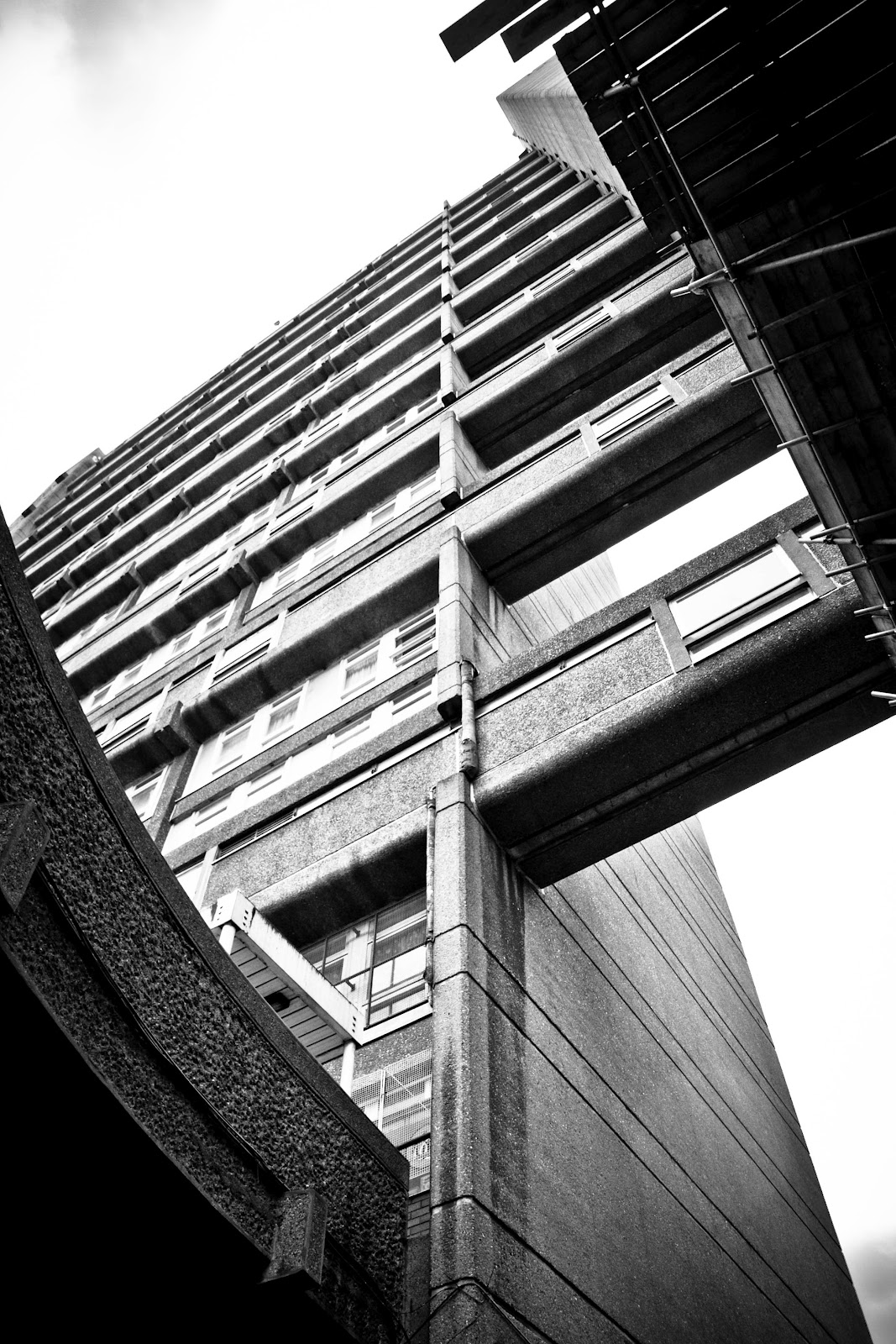
Trellick Tower: The fall and rise of a modern monument

Fosco Lucarelli and
Mariabruna Fabrizi


.

Image: Ernö Goldfinger’s monumental
Trelleck Tower in London (built 1972)

.
Drawing by San Rocco / Salottobuono
Published in San Rocco Magazine
№ 5 — Fall 2012 [Scary Architects]
Reposted from the blog microcities

Recalling his first job experience, a certain gentleman still remembers the horrified faces of his friends after revealing he was just about to start working at Ernö Goldfinger’s architectural firm. In retrospect, he admits, it was pretty much like the reaction of the peasants to young Harker’s sister when he announced that his brother was going to visit Count Dracula.

Few architects, if any, would earn as much public loathing as Goldfinger during the 1960s and ’70s, and it is not by chance that Ian Fleming’s villain was named after him.

Ernö Goldfinger in front of Trellick Tower_45687163_8

Hated for his short temper as well as for his architectural production, Goldfinger — a lifelong Marxist who practiced in Perret’s atelier — embodied the last phase of heroic, utopian modernism, and experienced its subsequent fall in public opinion.

The socialist utopian ideology associated with the Brutalist style was a perfect fit in the context of the British post-war housing shortage, and the development of high-rise buildings in the relatively flat London boroughs was initially touted by the government as a modern, forward-looking solution. If high-density housing was the setting, then concrete was to be the protagonist. For two decades, practicality had been aesthetics: being economical, flexible and indestructible, concrete became a metaphor for “the future” and acquired enough respect to be emphatically exposed on the façades of large buildings.

Starkly aggressive, with its thirty-one floors towering over a low-rise neighborhood, Goldfinger’s 1972 Trellick Tower in London is a tragic syntax comprising raw concrete, deep shadows, and sky bridges evoking the purified silhouette of a mediaeval castle. With its uncompromising materiality — which inelegantly quotes Le Corbusier — the tower is a daring presence in London’s post-war landscape, an expressionistic monument for the masses. Continue reading

Marxism, selfishness, and competition

.
Evan Burger has written up a short piece for Jacobin entitled “Toward a selfish Left.” He summarizes his argument as follows: “The Left doesn’t need a renewed emphasis on morality; instead, we must reclaim the concept of self-interest.” While the rest of the article is rather glib — going so far as to naturalize self-interest at one point (the author urges us to be mindful of “humanity’s inherently self-interested nature”) — its basic point regarding the subpolitical character of most ethical injunctions is sound.

To be sure, “Marxists” and leftists of all stripes have resorted to the most maudlin moralizations in recent decades, hoping to stir the masses from their inertia by appealing to their guilty conscience. Attentive readers of Marx will remember, however, that this has nothing to do with the critical position he advocated for communists:

Communism is quite incomprehensible to [the anarchist and individualist Max Stirner] because the communists do not oppose egoism to selflessness or selflessness to egoism, nor do they express this contradiction theoretically either in its sentimental or in its high-flown ideological form; they rather demonstrate its material source, with which it disappears of itself. The communists do not preach morality at all, as Stirner does so extensively. They do not put to people the moral demand: love one another, do not be egoists, etc.; on the contrary, they are very well aware that egoism, just as much as selflessness, is in definite circumstances a necessary form of the self-assertion of individuals. Hence, the communists by no means want…to do away with the ‘private individual’ for the sake of the ‘general,’ selfless man.

Karl Marx, The German Ideology (1845)

So much for that “hive mind” collectivism libertarians always erroneously ascribe to Marxism and Marx. The freedom of each is a prerequisite for the freedom of all. Bourgeois subjectivity, though it for the first time expresses a widespread sense of individuality (mirroring the shift away from the family toward the individual as the basic productive unit of society), is eventually constrained by the onset of the capitalist mode of production. Continue reading

Notes on “critical regionalism”

An ideological critique

Untitled.
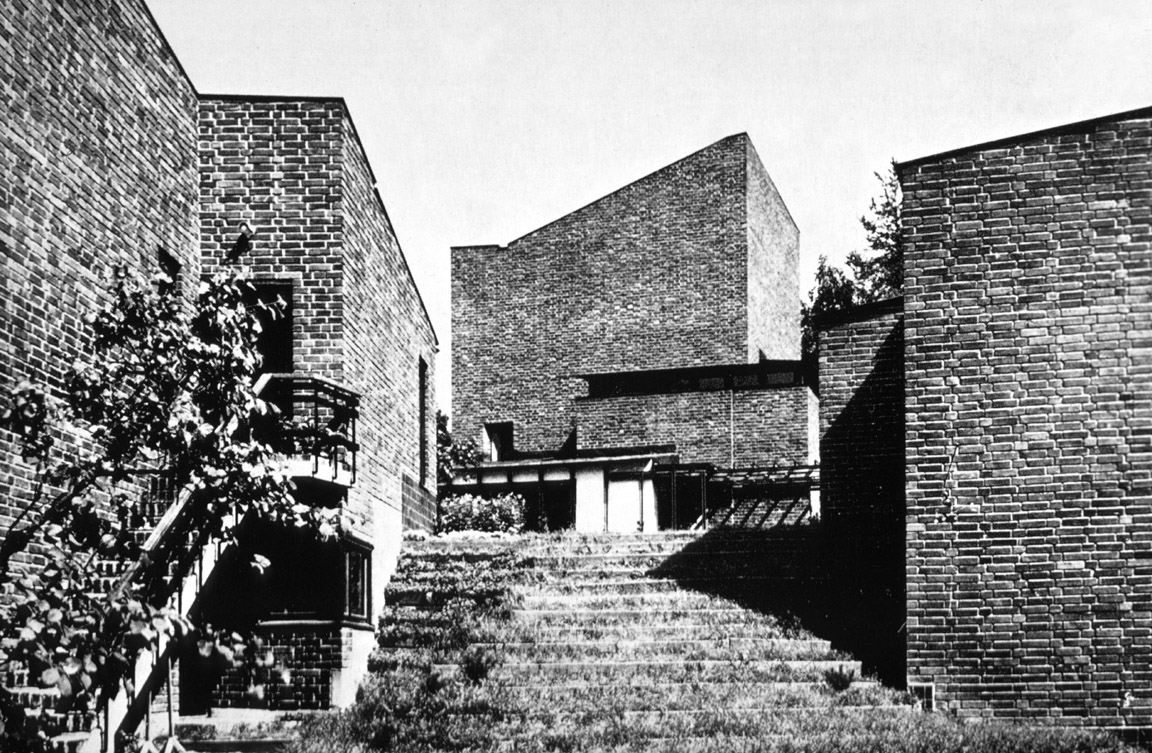
Image: Alvar Aalto, Säynätsalo
town hall in Finland (1952)
untitled2

Frampton’s appropriation of Frankfurt School critical theory in his writings on architectural history is fairly typical of its reception by liberals in the Anglophone West. Still, this is often to be preferred to the uses that have been made of it by many so-called “radicals” within contemporary continental philosophy. Even then, Frampton is exceptionally skilled at identifying some of the central issues and thematics that concerned the critical theorists, and conveys them with remarkable accuracy and lucidity. In the introduction to his landmark Modern Architecture: A Critical History, he writes:

Like many others of my generation I have been influenced by a Marxist interpretation of history, although even the most cursory reading of this text will reveal that none of the established methods of Marxist analysis have been applied. On the other hand, my affinity for the critical theory of the Frankfurt School has no doubt colored my view of the whole period and made me acutely aware of the dark side of the Enlightenment which, in the name of an unreasonable reason, has brought man to a situation where he begins to be as alienated from his own production has from the natural world.[1]

Nevertheless, despite Frampton’s adept deployment of these concepts in his historical inquiries, a number of critics have found his own, positive architectural program — “critical regionalism” — rather problematic. Beginning in the 1980s, Frampton began speaking of critical regionalist models as furnishing “an architecture of resistance.” This he defined as “a cultural density which under today’s conditions could be said to be potentially liberative in and of itself…”[2]

Alvar Aalto,  Säynätsalo town hall (1952)

Alvar Aalto, Säynätsalo town hall (1952)

While the main political signifier for Frampton was in this case clearly “resistance,” critical regionalists such as Alexander Tzonis and Liane Lefaivre (who originally coined the phrase) stressed “identity” as the center around which a counterweight to globalization could be organized.[3] To be sure, though, “identity” carried connotations of political resistance as well. Continue reading

Yesterday’s tomorrow is not today

Hugh Ferriss’ modernity

Untitled.
Image: Rendering by Hugh Ferriss
of the UN Building proposal (1947)
untitled2

What’s so fascinating about [Hugh] Ferriss is what makes him so different to his near-contemporary Iakov Chernikhov. While the latter made fantasy cities out of bizarre amalgams of what did exist and what hadn’t yet been invented, Ferriss drawings take the actually constructed and make it look utterly unreal.

Owen Hatherley, “Fairytales and real estate” (2007)

Unreal City,
Under the brown fog of a winter dawn,
A crowd flowed over London Bridge, so many,
I had not thought death had undone so many

T.S. Eliot, “The Waste Land” (1922)

It’s an odd feeling one gets from time to time, that the future we remember was more futuristic than our own. And yet it’s unmistakable. The moment we inhabit is a peculiar retrogression upon the past; its temporality is all off.

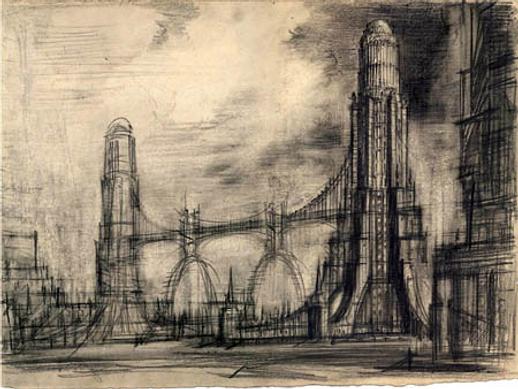
Architectural sketch by Hugh Ferriss, 1917

Architectural sketch by Hugh Ferriss, 1917

Architectural sketch by Iakov Chernikhov, late 1930s

Architectural sketch by Iakov Chernikhov, late 1930s

Hatherley’s observation regarding the perpendicular paths of Ferriss and Chernikhov — paths that converge around the right angle of modernity — extends further than he even imagined. Whether working from unreality to reality or vice versa, the two celebrated draughtsmen charted a collision course from their respective points of origin. This might even be seen to represent a pattern of nonsensuous dissimilarity, inverting the old Benjaminian trope.

Meeting somewhere along the middle in the early 1930s, at least within the realm of ideas, the drawings of Ferriss and Chernikhov thereafter approximate each other visually (in terms of sensuous similarity) the further out one moves diverging from this date. That is to say, Ferriss’ sketches become more pronouncedly gothic the earlier on one looks. A tenebrous crayon rendering from 1917, shown above, amply illustrates this fact. Oppositely, Chernikhov’s sketches began exhibiting numerous gothic features toward the end of the 1930s, becoming progressively gloomier along the way. No one denies the influence of Hugh Ferriss over the comic-book city of Gotham; producers of the new Batman movies just announced would do well to take a look at Chernikhov’s later works for inspiration, especially after their blunder casting Ben Affleck as the dark knight. Continue reading

Event review: Le Corbusier/New York

Sammy Medina and Ross Wolfe

.
Saturday, June 8th, 2013
Center for Architecture
Museum of Modern Art
New York, NY

Originally published at Former People:
A Journal of Bangs and Whimpers
.

“Le Corbusier/New York” was billed as a two-day international symposium focusing on the architect’s relationship to the city, and featured such luminaries within the field as Jean-Louis Cohen, Kenneth Frampton, Peter Eisenman, Stanislaus von Moos, and Mary McLeod, along with a host of other lesser-known critics and historians. Jointly organized by the Center for Architecture together with the Museum of Modern Art, the event was held at the former’s downtown headquarters on the occasion of the latter’s upcoming exhibit, Le Corbusier: An Atlas of Modern Landscapes. Barry Bergdoll, the chief curator of architecture and design at MoMA, was on hand to preside over several rounds of the discussion. With headlining acts like these, the space was predictably packed to the gills. Somewhere around two hundred people attended the symposium.

Le Corbusier in New York, 1946

Le Corbusier in New York, 1946

Beneath this general rubric of Corbusier’s relationship to New York City, the quality of the presentations varied widely. The first batch was composed of papers decidedly more academic, even scholastic, in character. Of these first few twenty-minute talks (though they frequently ran over time), the one by Mardges Bacon “On the Streets of the Vertical City: Le Corbusier in New York, 1935” was perhaps the most compelling. In all likelihood, this owed  its fidelity to the historical record of Corbusier’s actual visit to the city in that year, rather than to speculation about the impact the city might have had in concept — in the abstract. Bacon carefully traced his ambivalent impressions of New York as he encountered it in person for the first time, no longer forced to make do with the visual descriptions or the photographic documentation of others. She explained the great modernist’s awe before the sheer verticality of Manhattan, and his profound admiration for skyscrapers’ use of the latest building materials and techniques. In Corbusier’s view, the real tragedy was that such modern methods were forced to fit the framework of such antiquated zoning laws. Continue reading

Worst architecture in NYC: The Bukharian house

.
Originally published by the Amsterdam-based project run by Mark Minkjan, Failed Architecture.

“Look, architecture is over,” declared longtime New York resident Kevin Walsh in 2008, in response to an article the Gothamist ran on new zoning laws in Forest Hills, Queens. Walsh, founder of the local nostalgia website Forgotten New York, was objecting to some of the remodeling efforts being undertaken the wave of Bukharian Jewish immigrants that began flooding the neighborhood earlier in the decade. Driven from their adoptive homelands in Central Asia by the collapse of the USSR, forced out of backwater republics with basket-case economies such as Uzbekistan or Tajikistan, many of them now pulled up stakes and practically airlifted into Queens. Unfortunately for the borough’s more “indigenous” (i.e., Ashkenazic) Jewish inhabitants, their Mizrahi cousins brought with them their culture’s bizarre building habits and aesthetic preferences.

1-865x648

Ripped out of their native context within the Uzbek architectural vernacular and transplanted into a satellite district halfway out toward Long Island, the mammoth mansions the Bukharians began installing clashed harshly with the gentle gables and turreted masonry of the older, more manorial estates that previously made up this part of the city. Hoping to preserve the neighborhood’s prestige and air of respectability, residents of the “romantic suburb” of Forest Hill Gardens — a quaint Tudoresque cottagescape loosely inspired by the reformist principles of Ebenezer Howard — revived long-forgotten provisions from its building code that’d been collecting dust for years. With the help of some especially prohibitive requirements still on the books, they were largely able to quarantine the unwelcome newcomers. Stylistic elements originating in Bukhara were thus relegated to a series of cramped and out-of-sight blocks, neatly tucked away behind two rows of prewar high-rises across the way from Queens Boulevard, a treacherous twelve-lane thoroughfare. Continue reading

Architecture and politics

“Architecture as politics is by now such an exhausted myth that it is pointless to waste anymore words on it,” sighed Manfredo Tafuri at the outset of his magnum opus, The Sphere and the Labyrinth (1980). Despite Tafuri’s dismissive gesture, many today still insist that architecture possesses considerable political agency. Personally, I’m more inclined to agree with Tafuri. While it would be mistaken to regard architecture and politics as totally unrelated, the precise nature of their interconnection is not at all what most advocates of architecture’s political role seem to think.

And so, without reopening this discussion wholesale, I think there are some basic clarifications that must be made before issuing any judgment about their relationship to architecture. Continue reading

Kunkel reviews Groys for the London Review of Books

The latest issue of the London Review of Books features an article by Benjamin Kunkel on Boris Groys’ Introduction to Antiphilosophy. It’s a fairly good review, with an unexpected emphasis on Adorno — against whom Kunkel contrasts Groys’ aesthetic theory. There are bits and pieces I disagree with, quibbles about some of Kunkel’s passing characterizations of Adorno’s thought, and think he’s a bit unfair to Groys at times. But Kunkel recognizes that Groys’ main value consists in his ability to unsettle and disturb his readers, something I’ve always appreciated in his writings.

Still, considered purely as a review of his most recent collection of essays, Introduction to Antiphilosophy, Kunkel’s piece falls well short. In fact, his entire focus is on one essay out of the entire volume, in which Groys revisits the Gesamtkunstwerk theme in tracing out a genealogy of participatory aesthetics. Otherwise, the rest of the review goes over Groys’ long career as a theorist-provocateur, which is admittedly an interesting narrative, but spends most of its time on his first book on Stalinist aesthetics and his 2010 nostalgia piece on The Communist Postscript. Left completely out of the picture are some of the more interesting essays in the book, though on the whole it’s a rather uneven text. Continue reading

Critical comments on Nick Axel’s recent gloss of Walter Benjamin, “Critique of violence” (1921)

History or metaphysics?

Untitled.
Image: Walter Benjamin as a young man,
photographed smoking a cigarette (1922)
untitled2

Nick Axel recently wrote up an exegetical piece going over Walter Benjamin’s 1921 essay, “The critique of violence” on his blog, Awaking Lucid (mentioned in the last post). I came across it in connection with the other piece Axel wrote, “What is the problem?”, in which Benjamin’s essay likewise plays a crucial role.

Perhaps I’d need the aid of Agamben here, as he is Axel’s primary interlocutor in reading Benjamin, but as things stand I find his account of the essay virtually unrecognizable. At first I thought I must just be misremembering its contents, but upon rereading it I’m left even more confused. Though Axel begins by suggesting that the relation between ethics and violence is his overriding concern, and that Benjamin’s article only interests him insofar as it elucidates this relation, it’s sometimes difficult to distinguish between his concerns and those he ascribes to Benjamin. He writes:

Benjamin starts by declaring that the force of law becomes violent when it infringes on ethical issues, and that it is therefore in relation to law that both ethics and violence exist. Although this strongly echoes the reflex mentioned above with ethics and violence composing the two ends of a spectrum, this juridical framework is fundamentally inadequate as this would sanction violence as ethical as long as history records it as righteous, as is often the case (if not the impetus) of those who write history and depend on its words for the maintenance of their powerful status as embodiments of law.

For one thing, the main tension does not in my view consist in an opposition of ethics to violence. Indeed, “ethics” is almost nowhere to be found in the essay. (Perhaps Axel takes Benjamin to mean “ethics” whenever he speaks of “justice,” and thus ethical/unethical to just/unjust? This seems to me slightly more plausible). Rather, there is the fundamental opposition between means and ends in modes of justification, and then in the sphere of legality between natural and positive law. There is a further gradation between “legitimate” (sanctioned) and “illegitimate” (unsanctioned) uses of violence.

What strikes me most about this text is not what it says about the complexities of violence and its potential deployment or non-deployment toward an end irrespective of place and time, but rather the way Benjamin was attempting to work through the political exigencies of his day. Violence was a salient issue in 1921 because the world had just witnessed the greatest concentrated bloodbath in history to that point. Not only from the interimperialist war, but from the many domestic struggles throughout and the revolutionary struggles between 1917-1923. How could violence be justified in one case and not in the other? Why was it that the unjust slaughter of millions in the trenches of Northern France was perfectly legal according to agreed-upon international rights of war, while the violent attempt to overthrow unjust social relations was everywhere decried as illegal? Continue reading